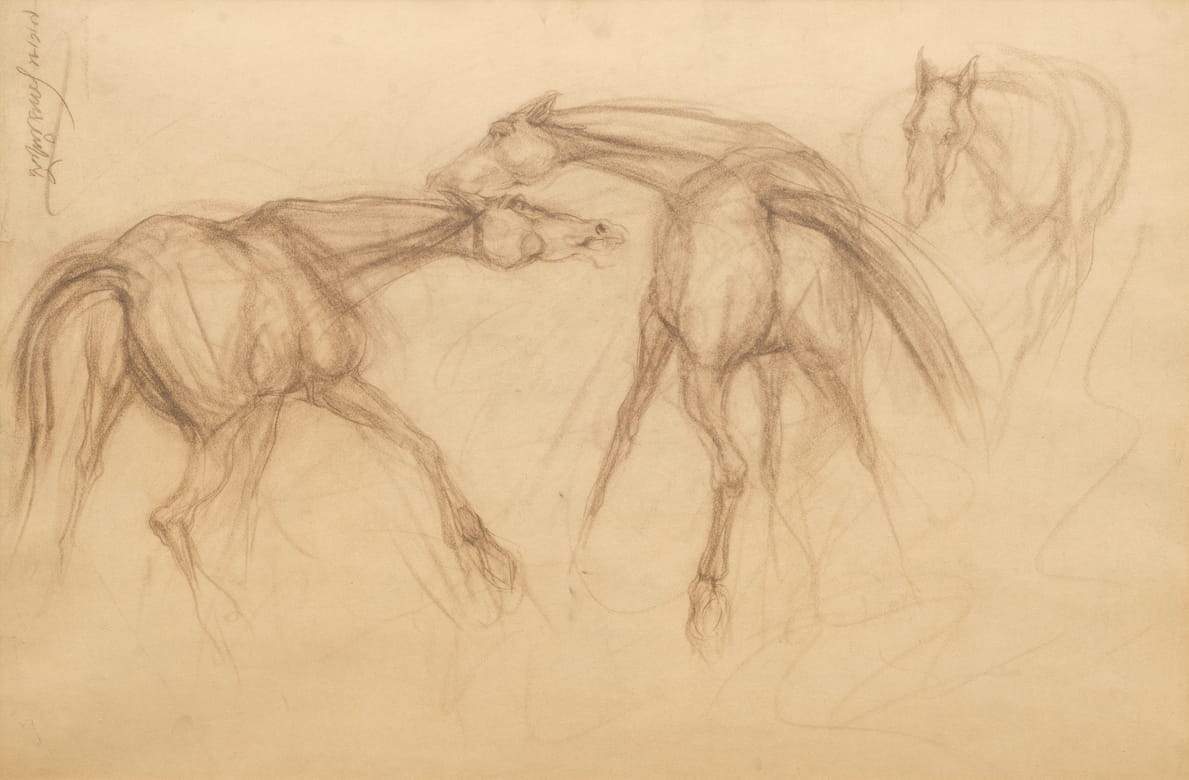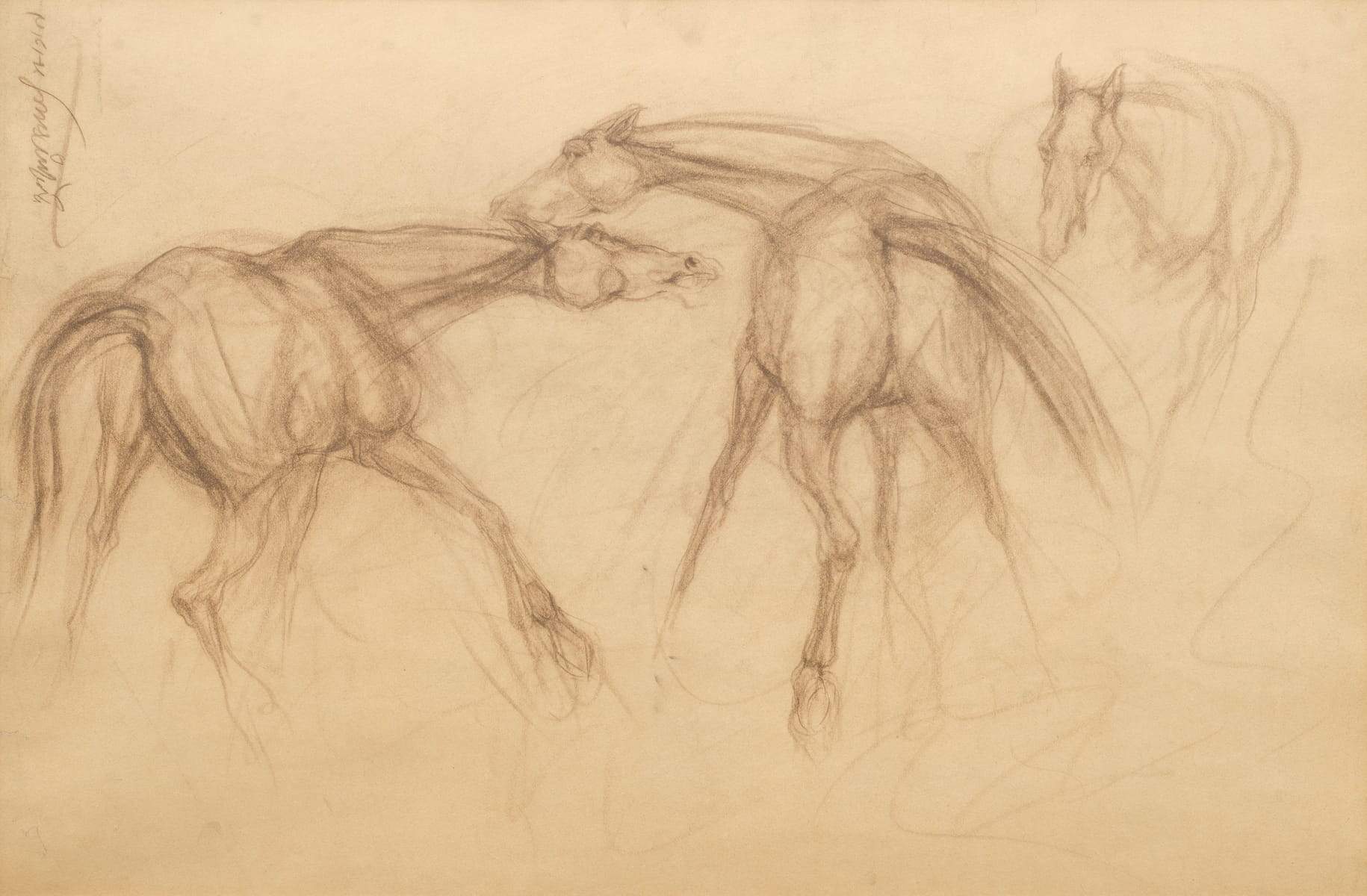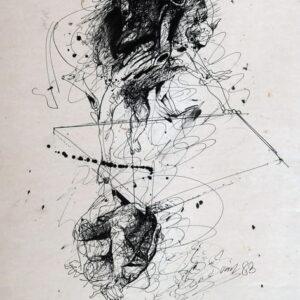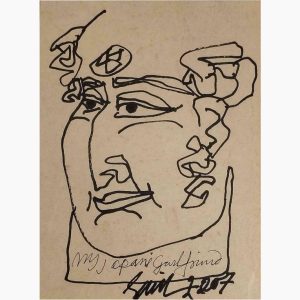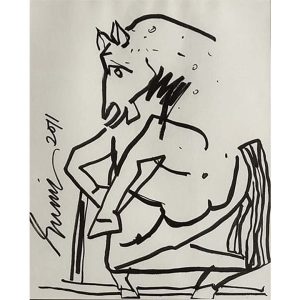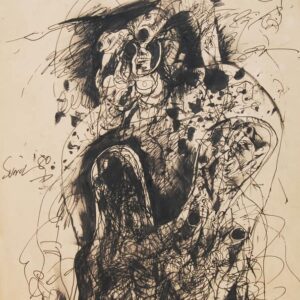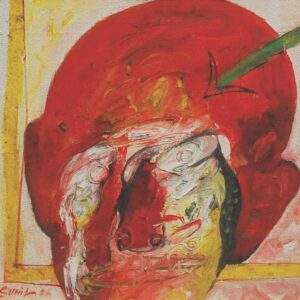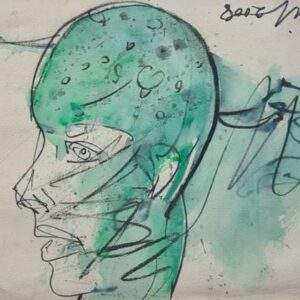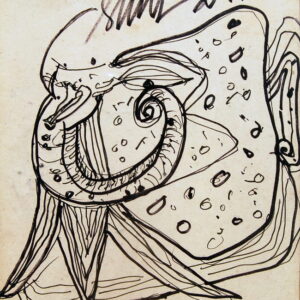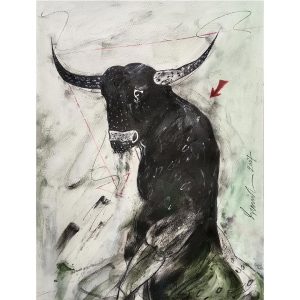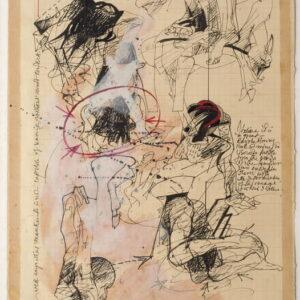
Sunil Das | Early Horses-I | Conte on Paper | 29 x 18.5 inches | 1960
This dynamic drawing by Sunil Das captures the raw energy and expressive intensity for which the artist became widely celebrated. Known especially for his powerful depictions of horses and bulls, Sunil Das approached these subjects not merely as animals, but as embodiments of instinct, movement, and untamed vitality. In this sketch, the horses appear locked in an animated interaction, their forms vibrating with tension and motion. Executed with loose yet confident lines, the drawing reveals the artist’s remarkable understanding of anatomy and gesture. Rather than focusing on precise detailing, Das uses rapid, fluid strokes to evoke the muscular structure and restless temperament of the horses. Their elongated necks and intertwined movement create a dramatic rhythm across the composition, suggesting both confrontation and intimacy.
The unfinished quality of the work is particularly compelling. The visible sketch lines and fading contours allow the viewer to witness the artist’s process — as though the horses are still emerging from the paper itself. This spontaneity gives the drawing a sense of immediacy and life, a hallmark of Sunil Das’s practice. The work feels less like a static study and more like a fleeting moment captured in motion.
The monochromatic palette further heightens the emotional force of the composition. Without the distraction of color, attention is drawn entirely to line, form, and energy. The empty surrounding space amplifies the movement of the figures, allowing the horses to dominate the visual field with their restless presence.
More than an animal study, this drawing reflects Sunil Das’s fascination with primal emotion and existential energy. His horses often symbolized freedom, struggle, passion, and survival — themes deeply connected to the modern human condition. Through expressive draftsmanship and emotional intensity, the artist transforms a simple sketch into a powerful meditation on movement and life itself.
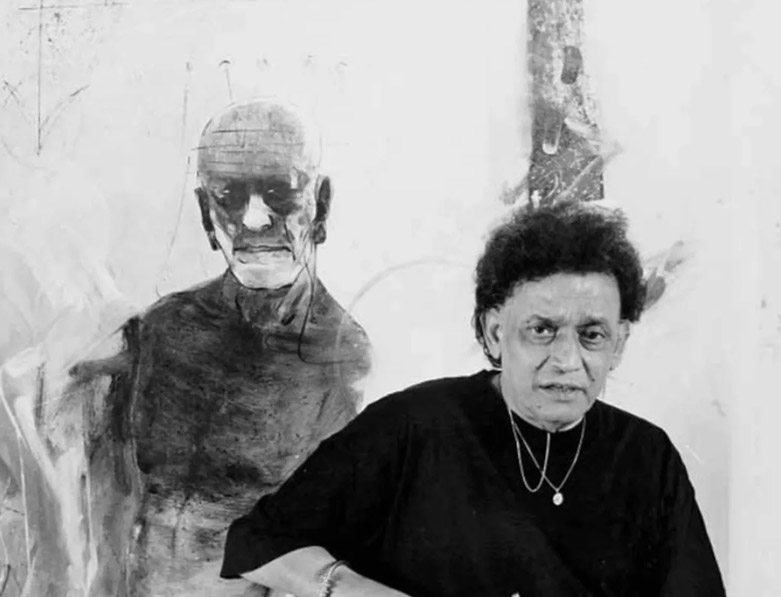 Sunil Das is undoubtedly a multi-dimensional artist known for his furiously experimental and enterprising style. Born in 1939 in Calcutta, India, he studied at the Govt College of Art & Craft in Calcutta. On a scholarship from the French Government, he studied at the Ecole Nationale Superieure des Beaux-Arts in Paris.
The artist has painted across several oeuvres, each one distinctive and to which he brought his singular version. Not confining himself to using brush & pen while painting (even using the palms of his hands or his fingers) his paintings not only express the physical attributes of his subjects but also their associative ones. It was in the course of his travels that he chanced to spend a few months in Spain, where he developed his passion for horses and bulls.
The artist has won many medals and awards, including from the state government and the Lalit Kala Akademi. He has also been a part of juries and art bodies in India, France & Brazil. In 2014, he was conferred with the Padma Shri Award by the Government of India.
The artist passed away in 2015.

If you’d prefer the artwork to arrive ready to hang, please get in touch with us to arrange framing and shipping at applicable charges.
Please note: Customs duties and import taxes may apply at your destination in accordance with your country’s regulations. Refer to our International Shipment document for guidance and support.
| Medium | |
|---|---|
| Height | |
| Width | |
| Surface | |
| Style |