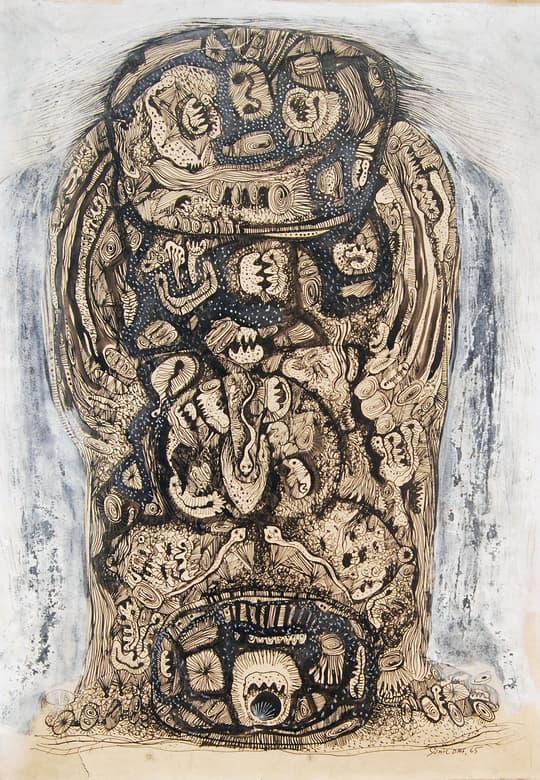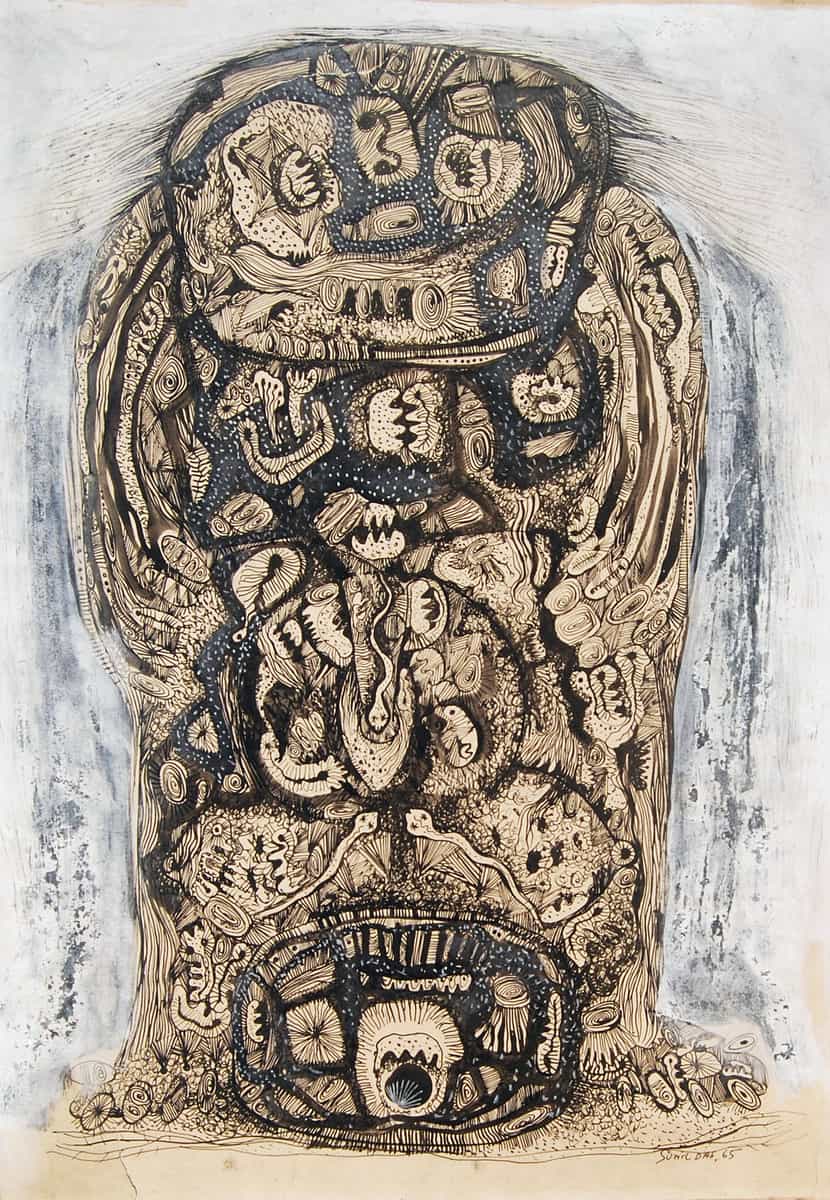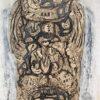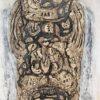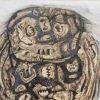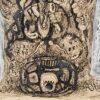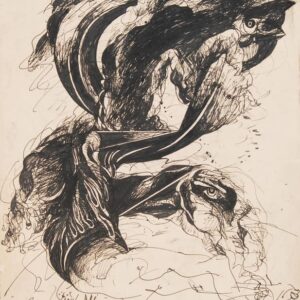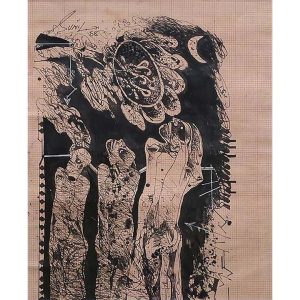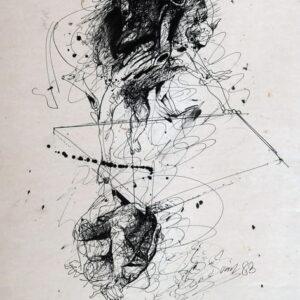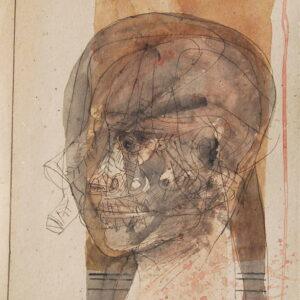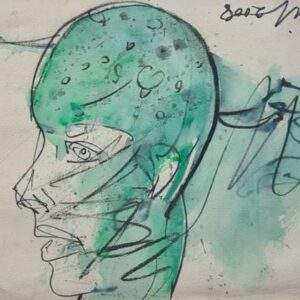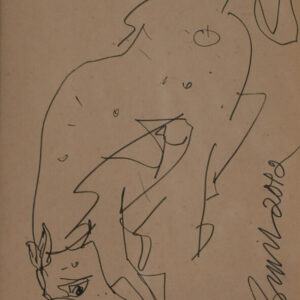
Sunil Das | Under Water Series | Ink & Acrylic on Board | 23 x 16.5 inches | 1965
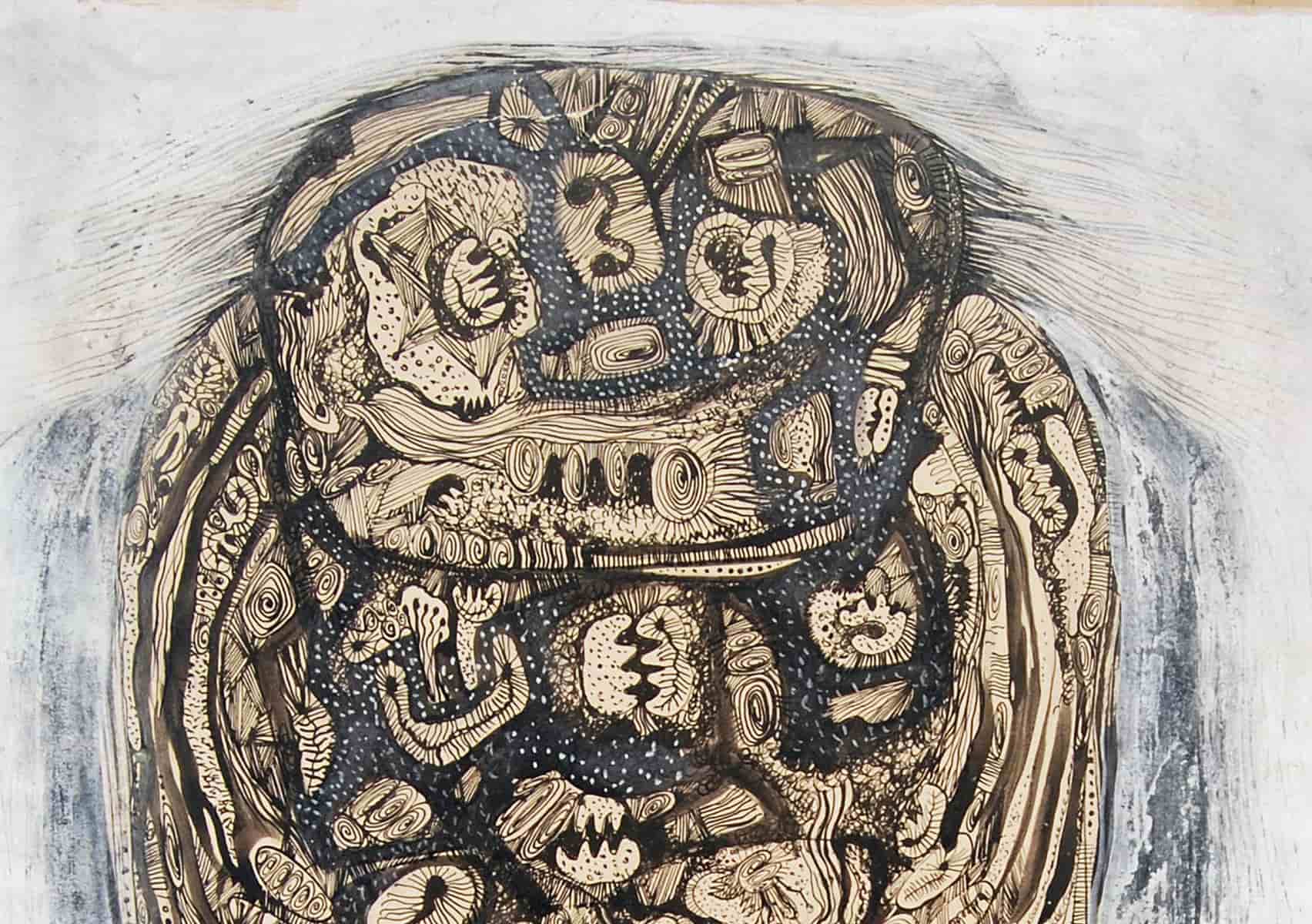
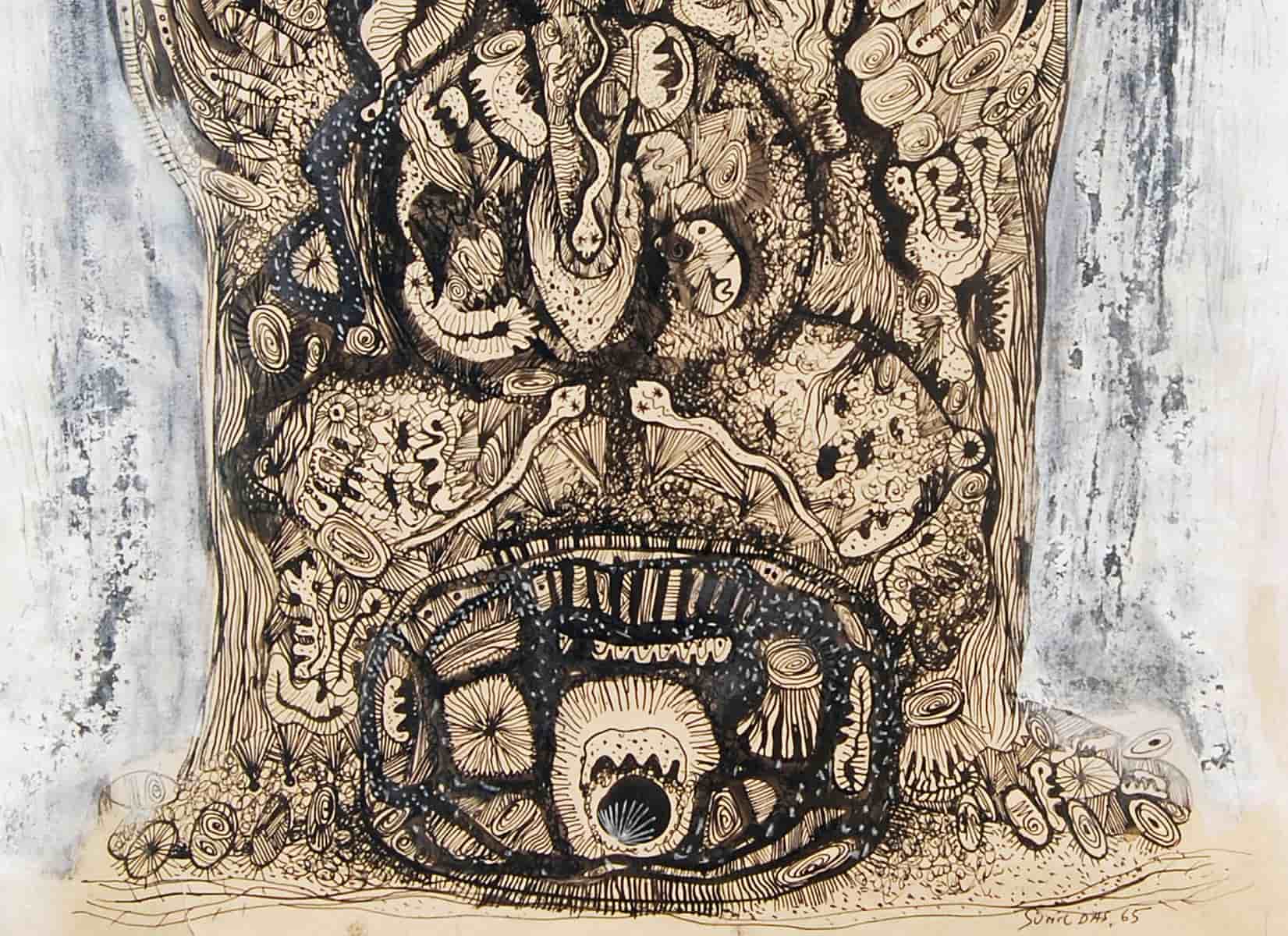
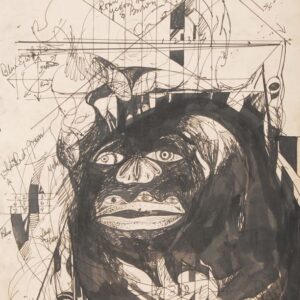
This striking work from the Under Water Series by Sunil Das, created in 1965, reveals the artist’s extraordinary ability to transform abstraction into something deeply organic and alive. Executed in ink and acrylic on board, the composition resembles a mysterious underwater organism or an ancient fossil-like form emerging from the depths of imagination. At first glance, the artwork appears almost sculptural — dense with intricate textures, flowing patterns, and rhythmic markings that pull the viewer inward.
The surface is richly layered with detailed linear work, cellular motifs, and biomorphic forms that seem to echo marine life, coral structures, microscopic organisms, and subterranean landscapes all at once. Sunil Das creates a hypnotic visual language where every inch of the composition feels active and breathing. The monochromatic palette enhances the dramatic intensity of the work, allowing the complexity of the lines and textures to take centre stage.
What makes this piece especially compelling is its balance between chaos and harmony. The densely packed imagery carries a meditative rhythm, almost resembling an imagined ecosystem where forms continuously evolve and merge into one another. There is no fixed narrative, yet the work evokes feelings of discovery, mystery, and quiet contemplation — as though the viewer is peering into a hidden world untouched by time.
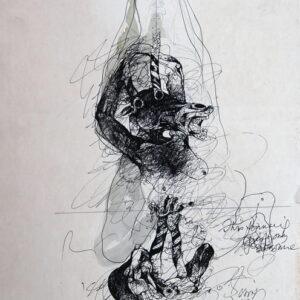
Unlike the aggressive energy often associated with Sunil Das’ figurative works, this painting reveals a more introspective and experimental side of the artist. The meticulous detailing and tactile quality of the composition demonstrate his fascination with nature, structure, and subconscious imagery. The artwork stands as a remarkable example of mid-century modern Indian abstraction, carrying both intellectual depth and emotional resonance.
Its aged surface and hand-drawn intricacies give the work an archival presence, making it not only visually captivating but also historically significant within the evolution of Sunil Das’ artistic journey.
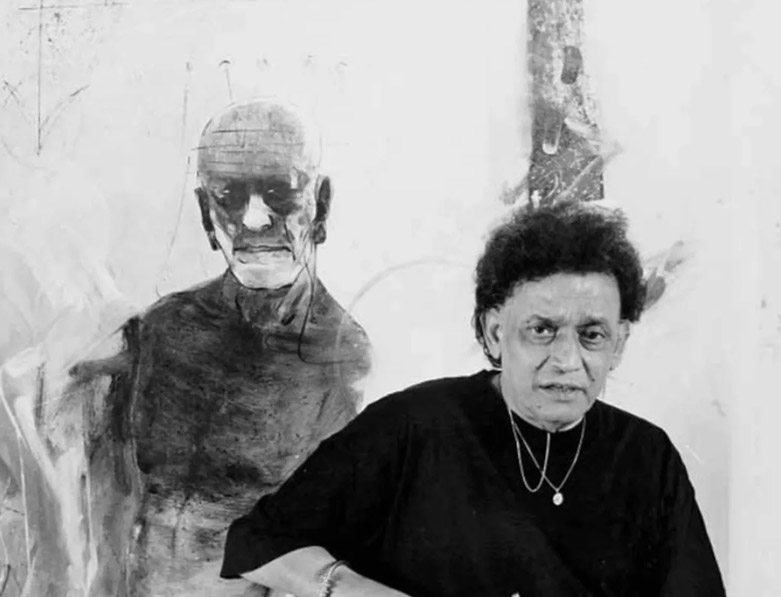 Sunil Das is undoubtedly a multi-dimensional artist known for his furiously experimental and enterprising style. Born in 1939 in Calcutta, India, he studied at the Govt College of Art & Craft in Calcutta. On a scholarship from the French Government, he studied at the Ecole Nationale Superieure des Beaux-Arts in Paris.
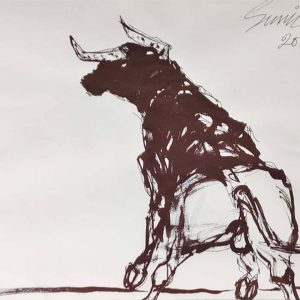
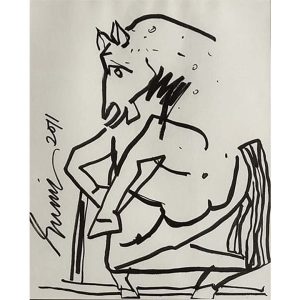
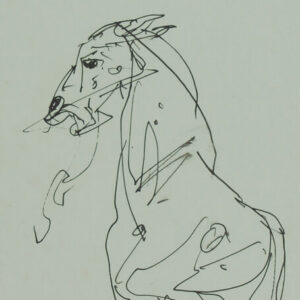
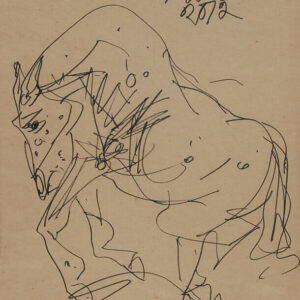
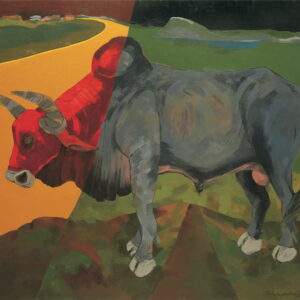
The artist has painted across several oeuvres, each one distinctive and to which he brought his singular version. Not confining himself to using brush & pen while painting (even using the palms of his hands or his fingers) his paintings not only express the physical attributes of his subjects but also their associative ones. It was in the course of his travels that he chanced to spend a few months in Spain, where he developed his passion for horses and bulls.
The artist has won many medals and awards, including from the state government and the Lalit Kala Akademi. He has also been a part of juries and art bodies in India, France & Brazil. In 2014, he was conferred with the Padma Shri Award by the Government of India.
The artist passed away in 2015.

If you’d prefer the artwork to arrive ready to hang, please get in touch with us to arrange framing and shipping at applicable charges.
Please note: Customs duties and import taxes may apply at your destination in accordance with your country’s regulations. Refer to our International Shipment document for guidance and support.
| Medium | |
|---|---|
| Height | |
| Width | |
| Surface | |
| Style |