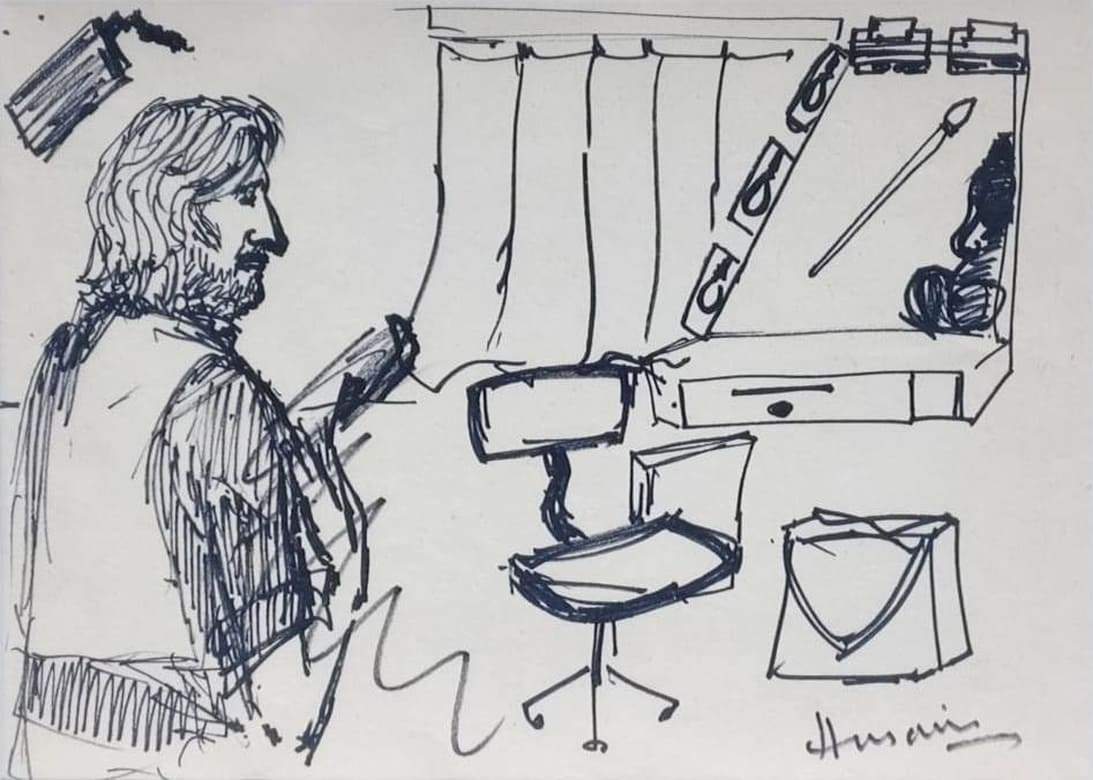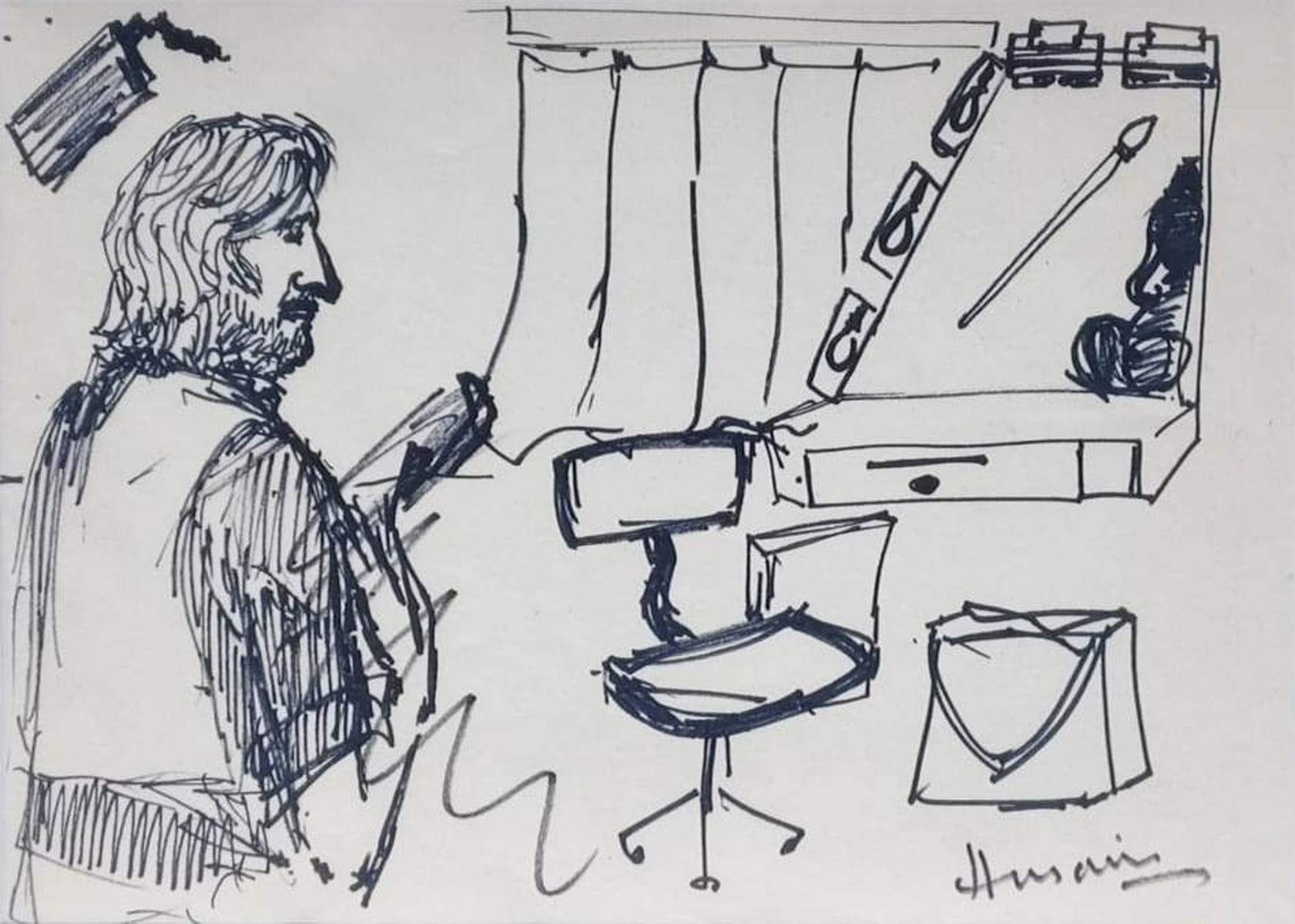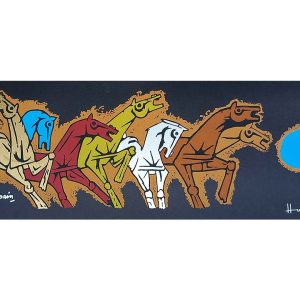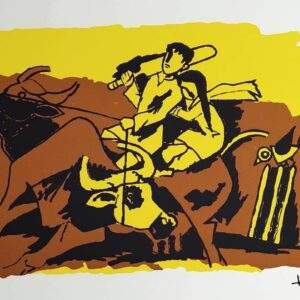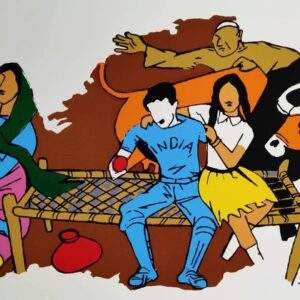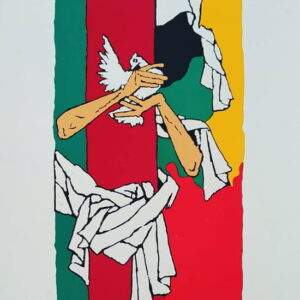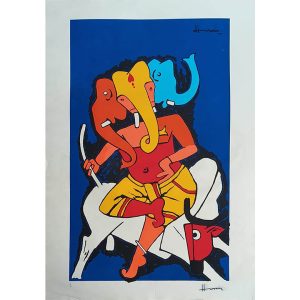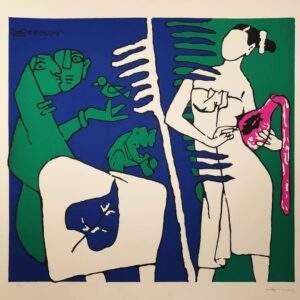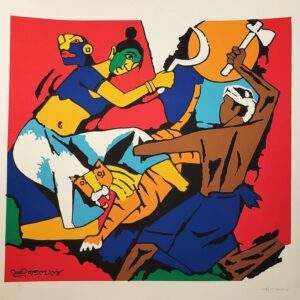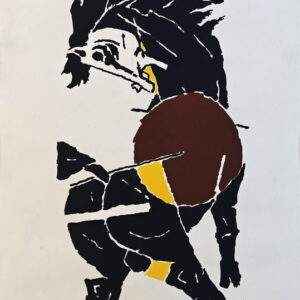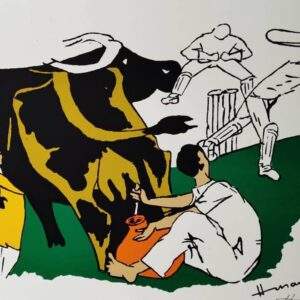
M.F. Husain | Untitled | Marker on Paper | 10 x 14 inches
Spontaneous, bold, and expressive, this piece offers a rare, personal glimpse into M.F. Husain’s creative atmosphere. Executed with his signature speed and confidence in felt-tip marker, the line art depicts the artist in reflection amidst his studio tools — drafting tables, brushes, and desk setups. The gestural quality of the lines brings a wonderful sense of immediacy, making it feel less like a static portrait and more like a captured moment in time.
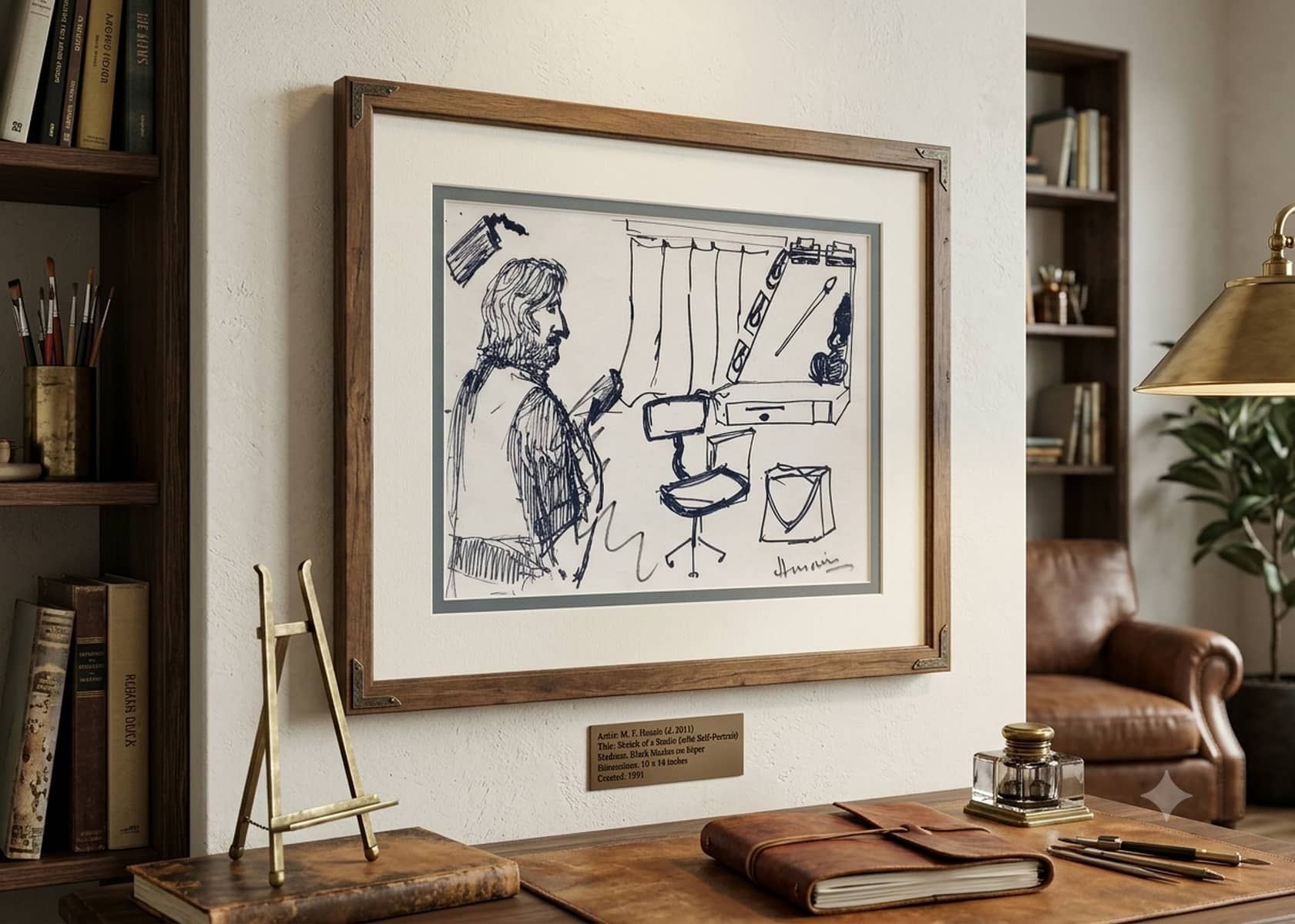
An authentic 10 x 14-inch marker-on-paper sketch by M.F. Husain capturing a intimate glimpse into the artist’s studio. Framed elegantly with a generous off-white window mat and a classic dark wood mould, this piece highlights Husain’s energetic, fluid linework. A refined addition for seasoned collectors looking to anchor a contemporary or modern Indian art collection with a personal piece by a Master.
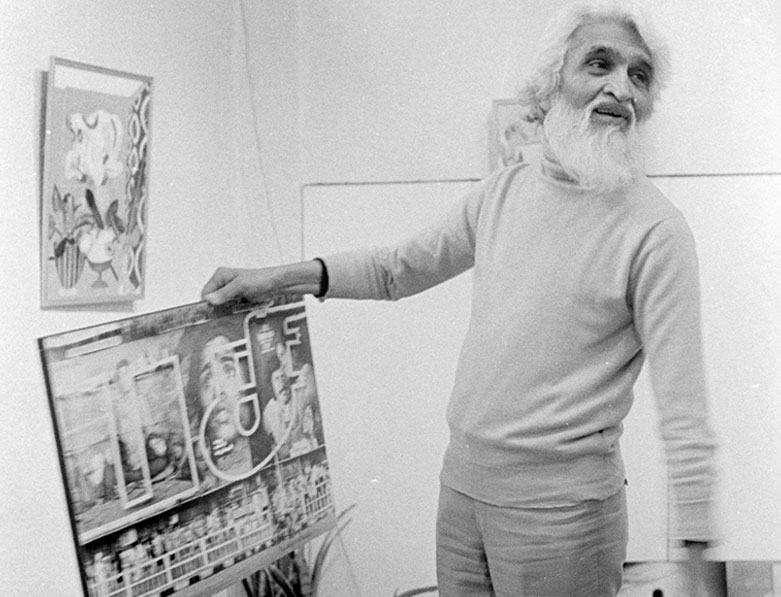 In the galaxy of modern masters, one name that is synonymous with twentieth century Indian Art, is M. F. Husain.
Born in Pandharpur, Maharashtra, on 17 September 1913, Husain came to Bombay in 1937 to become a painter, where he slept on footpaths and painted under streetlights. A self-taught artist, he began his career painting cinema posters and hoardings, and, in 1941, started making toys and furniture designs.
He imagined a secular language for modern Indian art that translated India’s ‘composite culture’ into a rich mosaic of colours. As a member of the Progressive Artists’ Group, launched in 1947, Husain heralded a new freedom for Indian art in the post-Independence decades. A peripatetic painter, Husain covered both geographical and conceptual territories, and transited at will between painting and poetry, assemblage and performance, installation and cinema. He experimented with text and images, and painted alongside musicians to translate music’s elusiveness into the accuracy of brushstroke. His first film, a short film titled Through the Eyes of a Painter, won the Golden Bear at the Berlin International Film Festival in 1967.

If you’d prefer the artwork to arrive ready to hang, please get in touch with us to arrange framing and shipping at applicable charges.
Please note: Customs duties and import taxes may apply at your destination in accordance with your country’s regulations. Refer to our International Shipment document for guidance and support.
| Medium | |
|---|---|
| Surface | |
| Height | |
| Width | |
| Style |