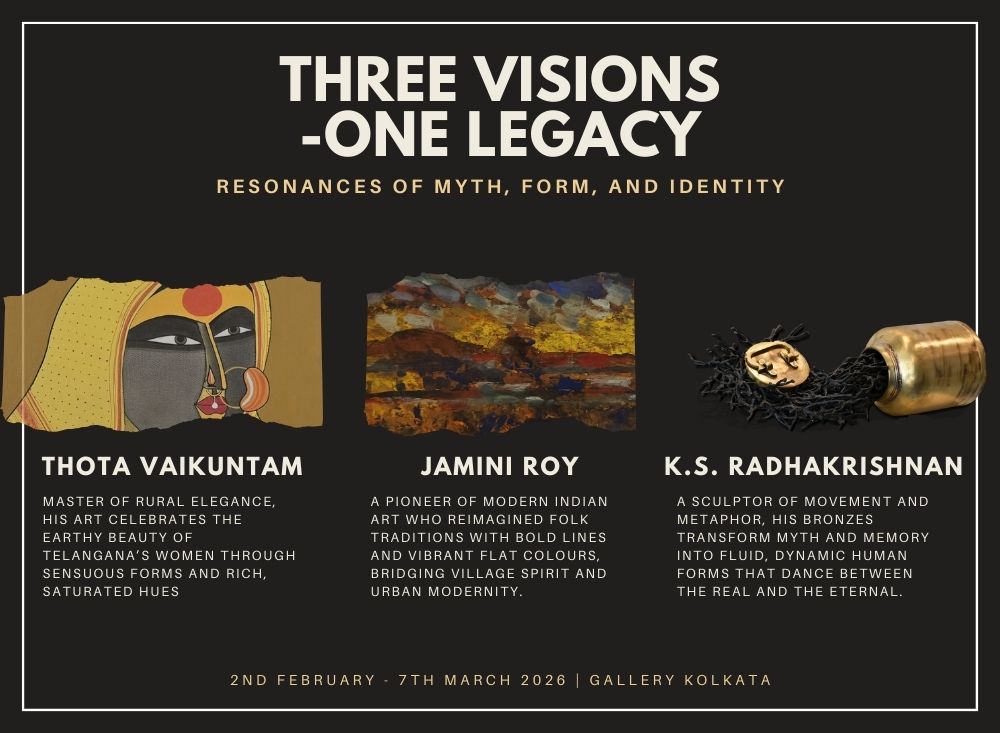
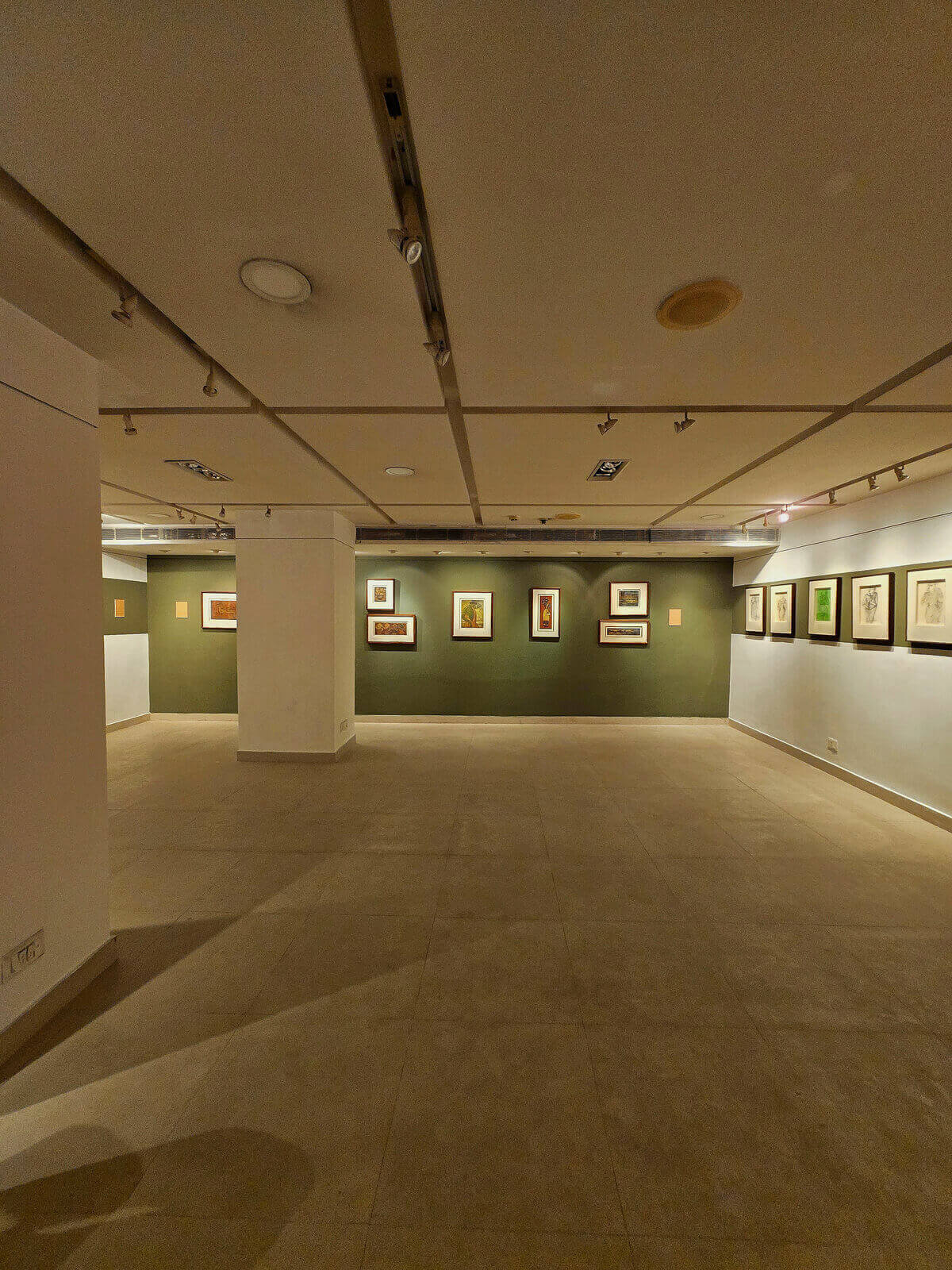
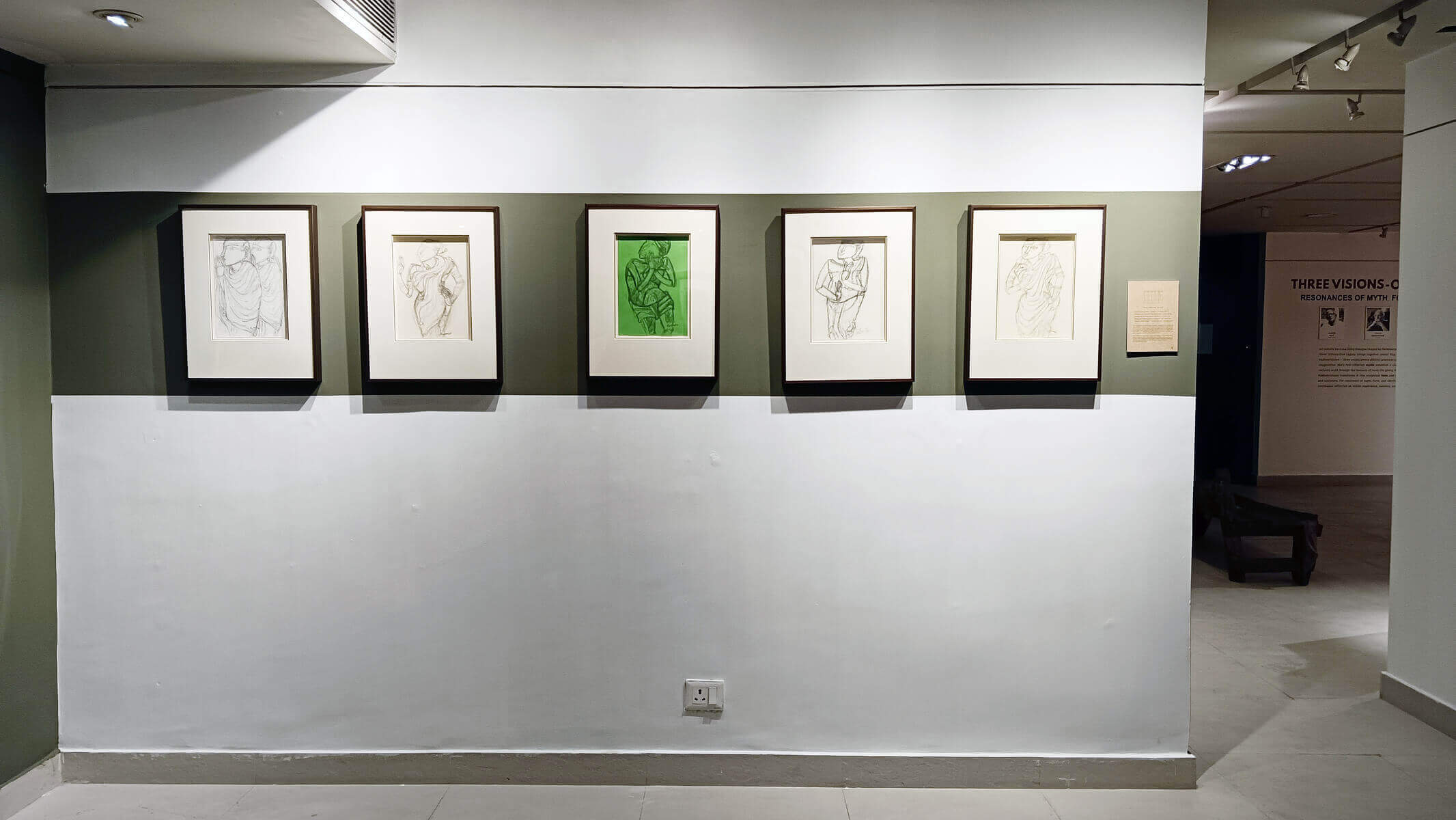
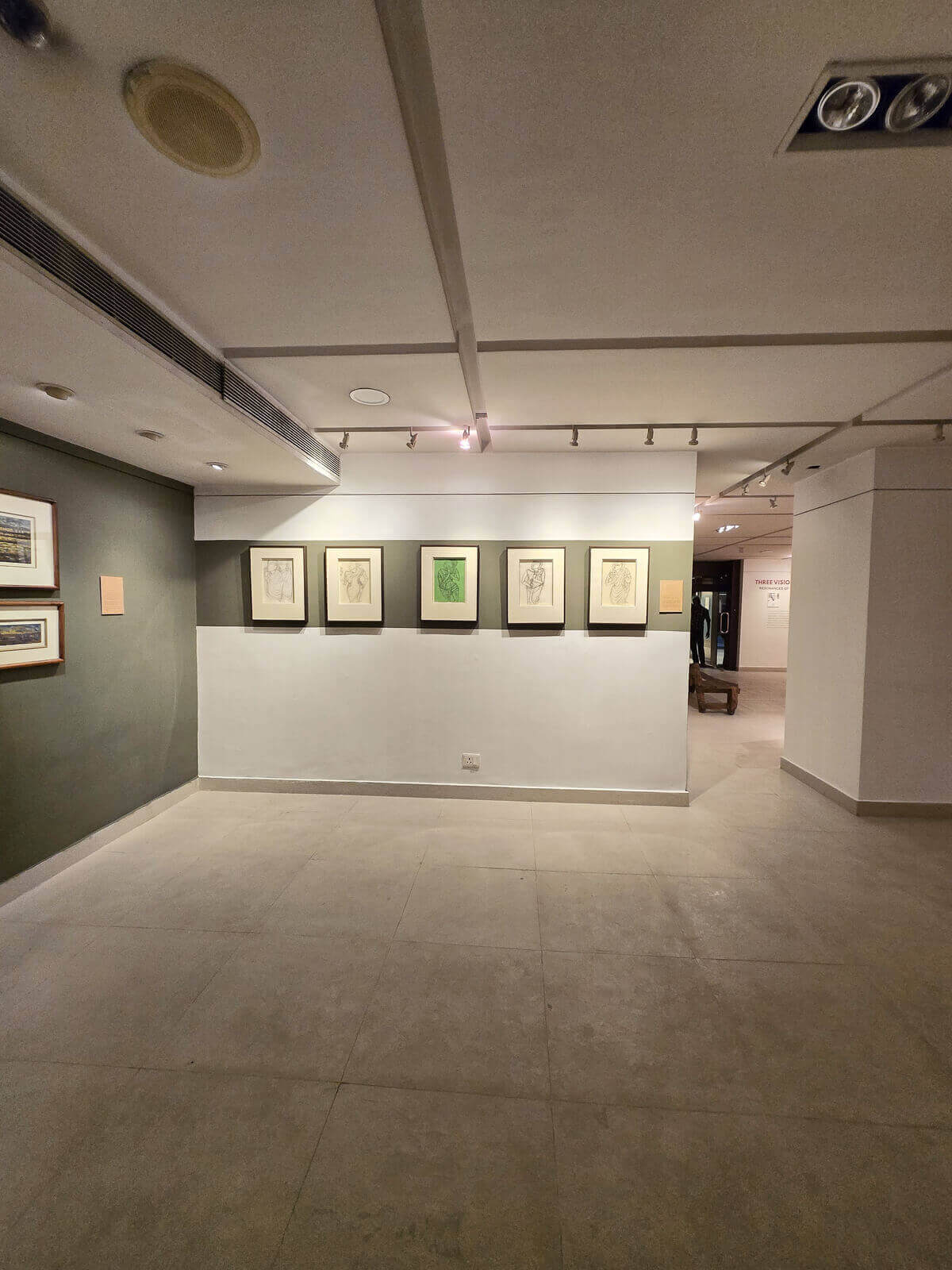
Three Masters whose artistic journeys, though distinct, converge in their deep engagement with Indian Identity, Mythology, and Form.
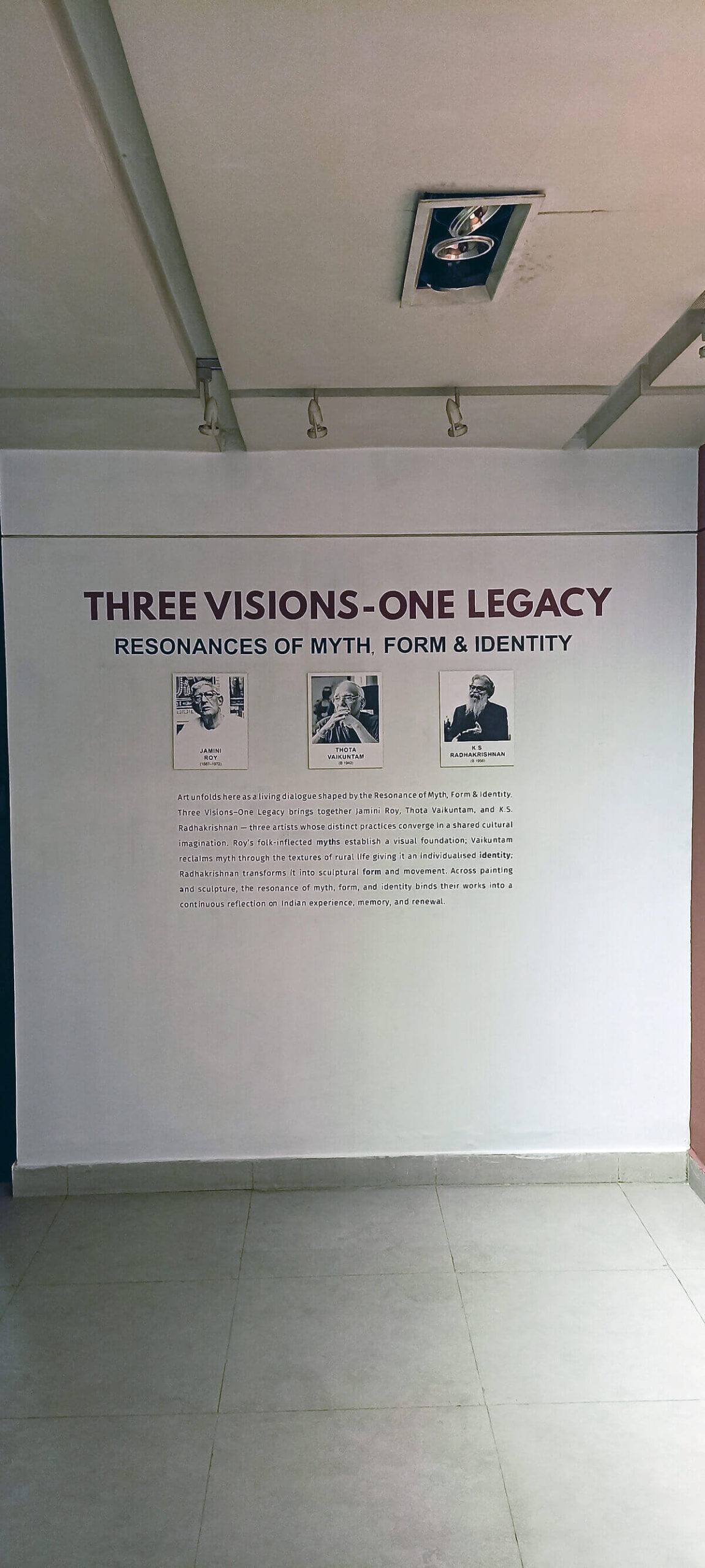
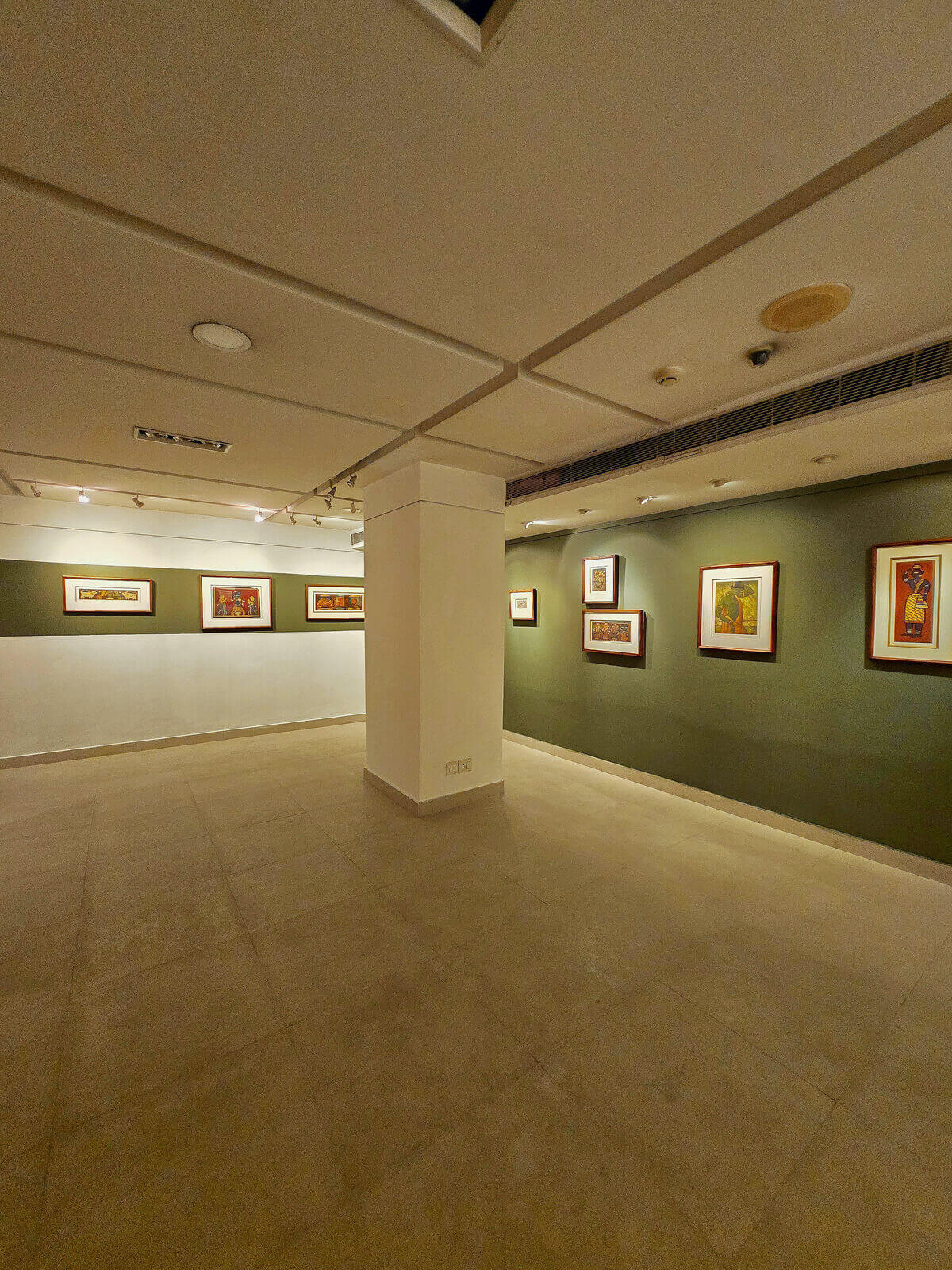
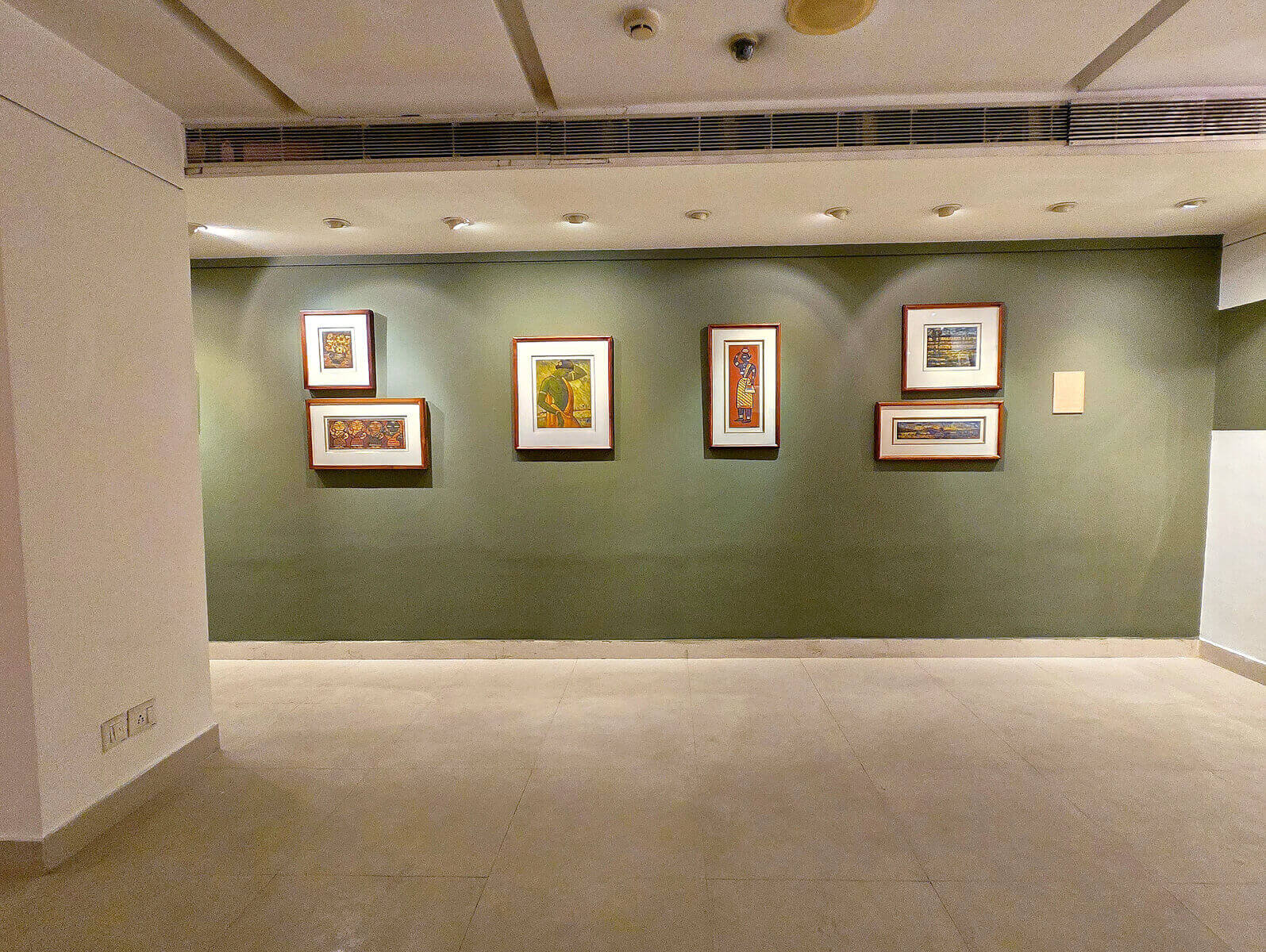
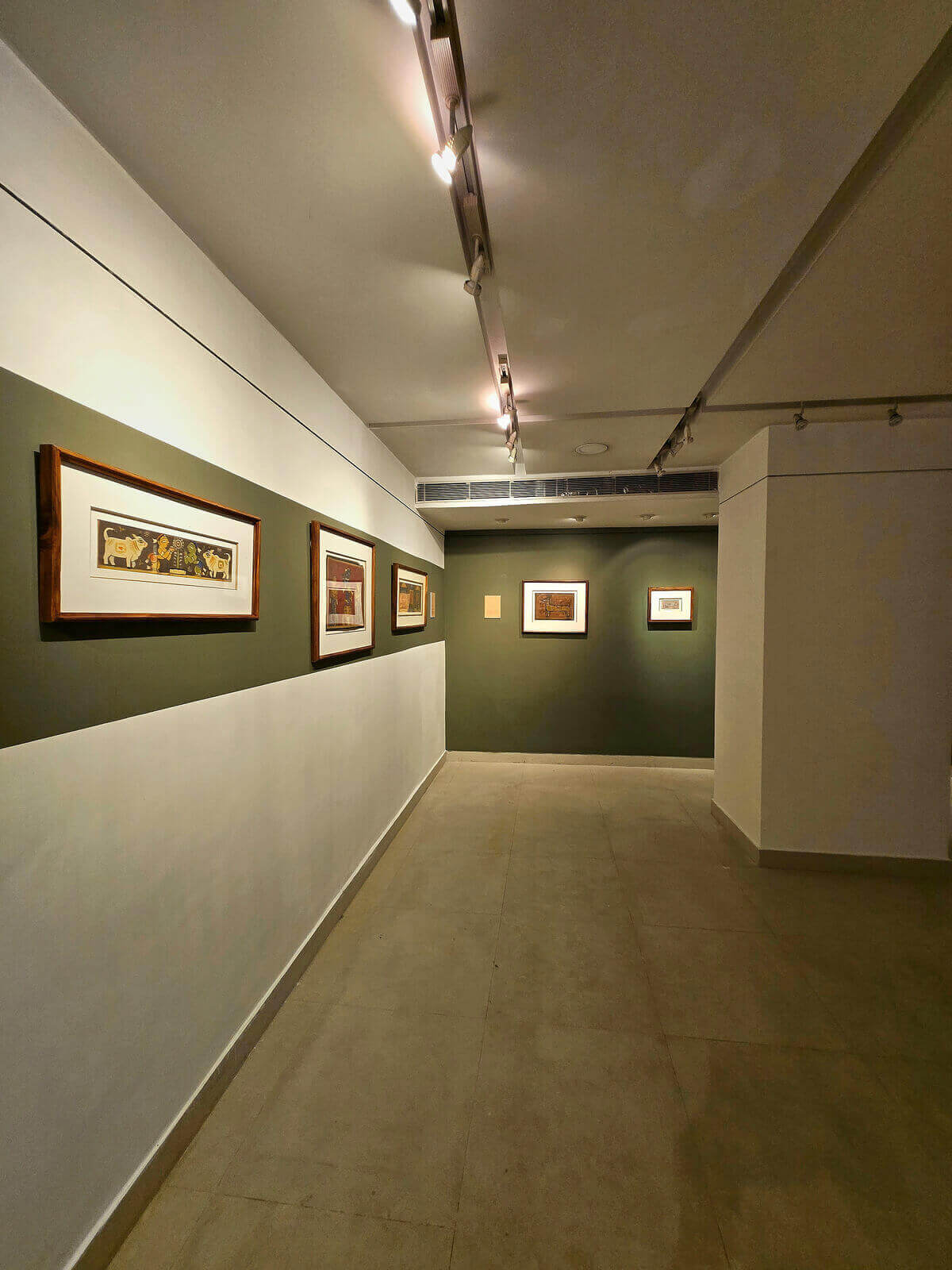
Art, at its most profound, is a dialogue—between the artist and the viewer, between tradition and innovation, between the past and the present. In the exhibition “Three Visions, One Legacy: Resonances of Myth, Form, and Identity,” we bring together the works of Jamini Roy, Thota Vaikuntam, and K.S. Radhakrishnan, three masters whose artistic journeys, though distinct, converge in their deep engagement with Indian identity, mythology, and form.
Each of these artists has carved a unique path in Indian art, yet their works resonate with one another in unexpected ways. Roy’s modernist folk paintings, Vaikuntam’s vibrant depictions of Telangana’s rural life, and Radhakrishnan’s dynamic bronze sculptures all share a commitment to redefining Indian visual culture. They do not merely depict India; they embody its spirit, drawing from its myths, traditions, and everyday life to create works that transcend time and geography.
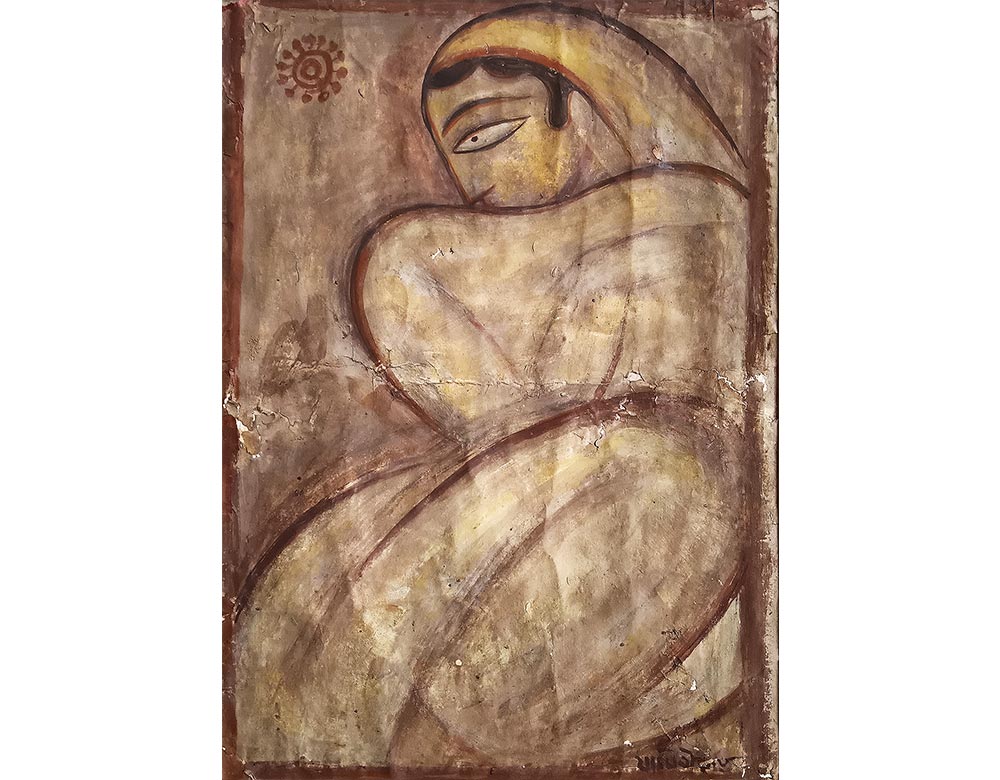
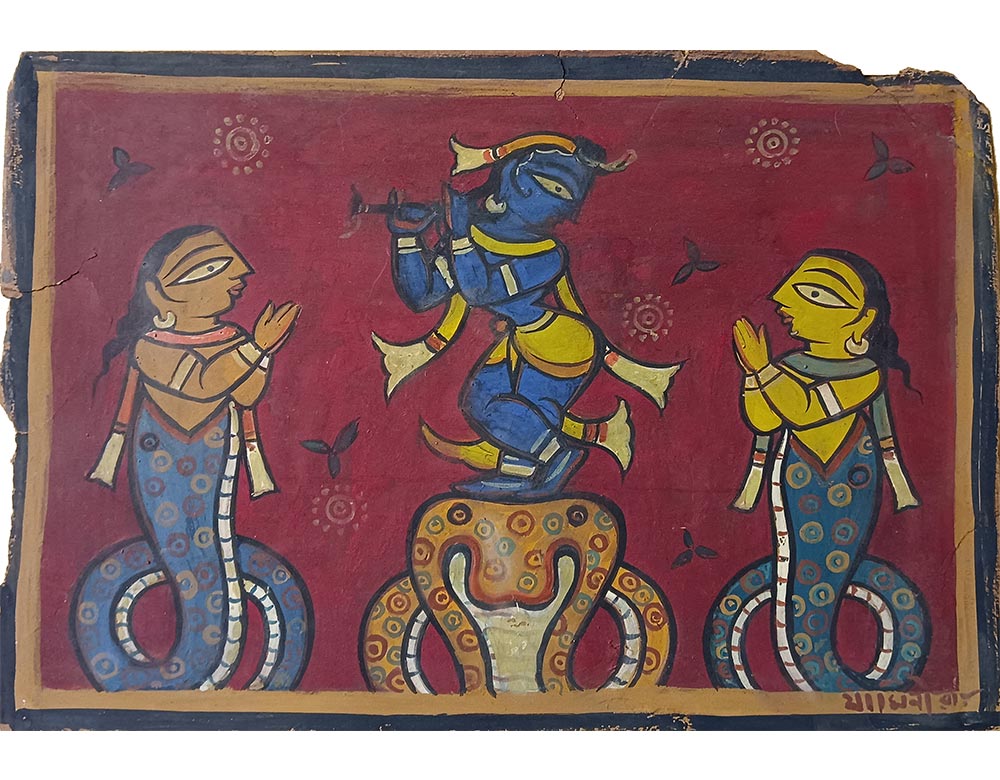
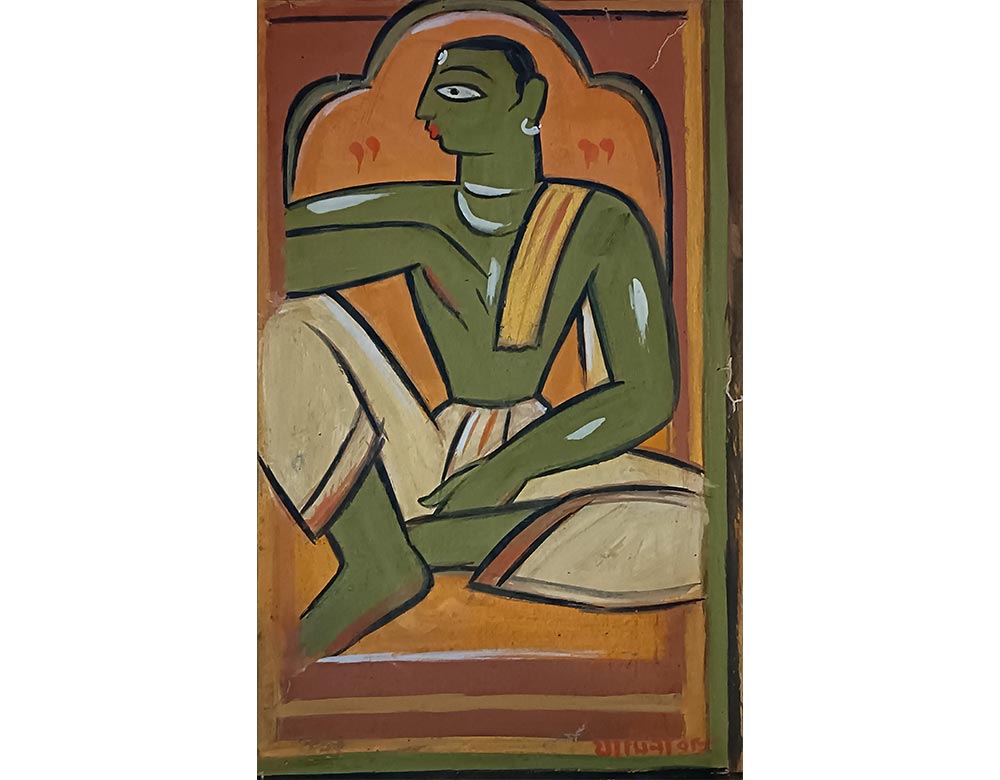
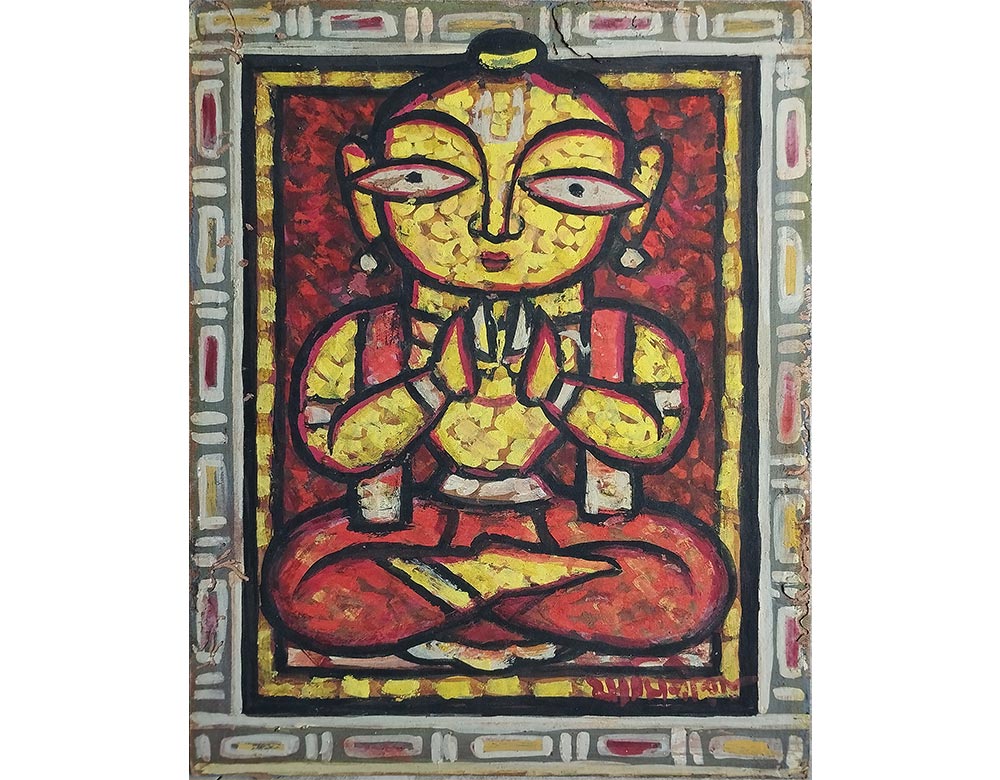
Jamini Roy: The Mythmaker of Modern Indian Folk Art
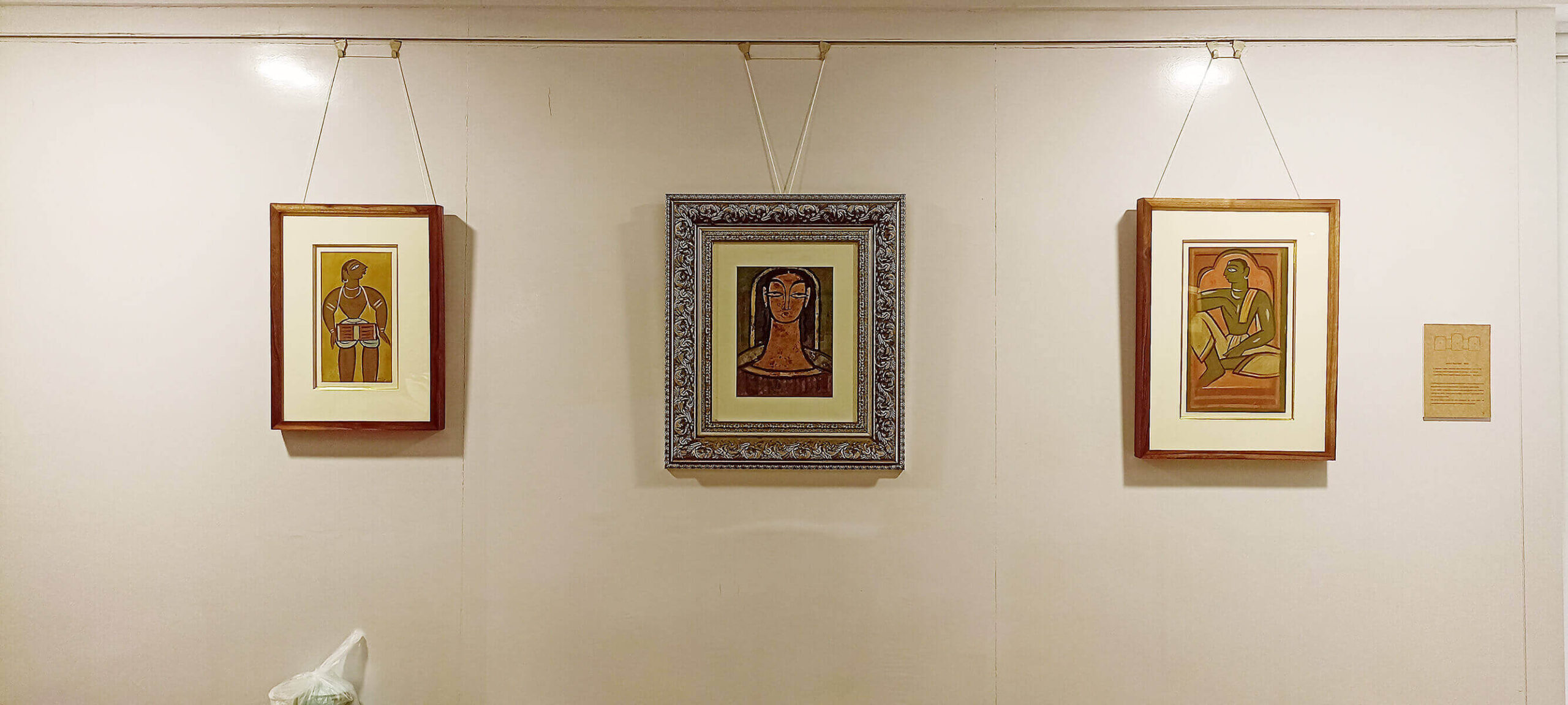
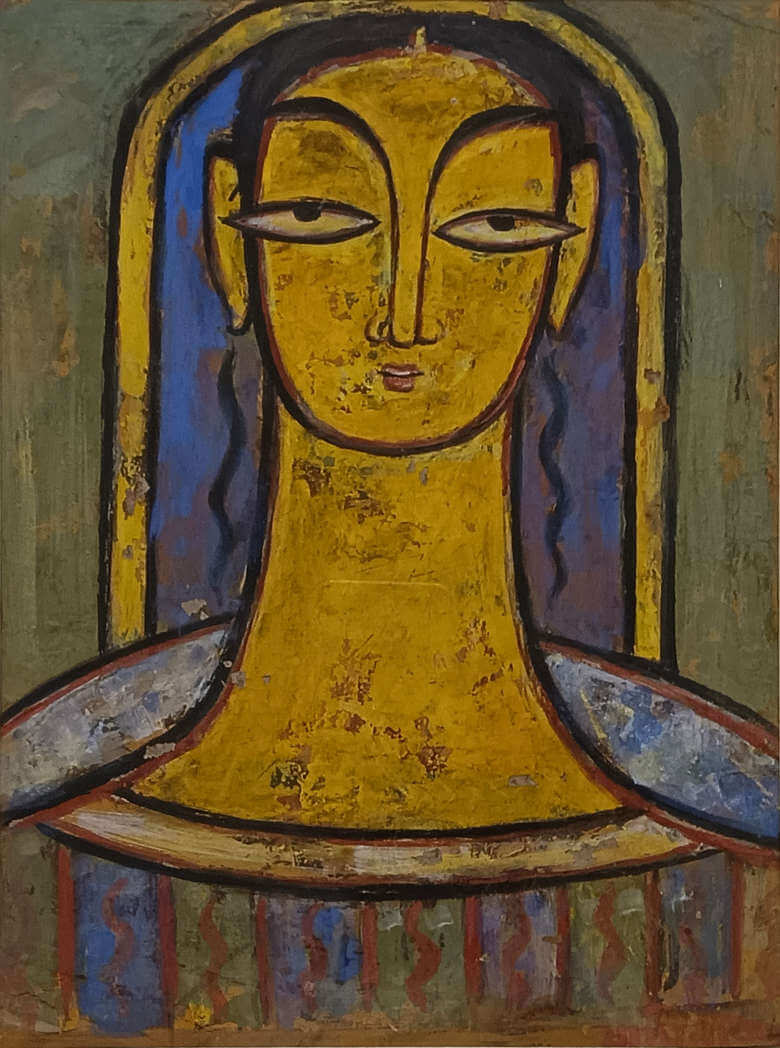
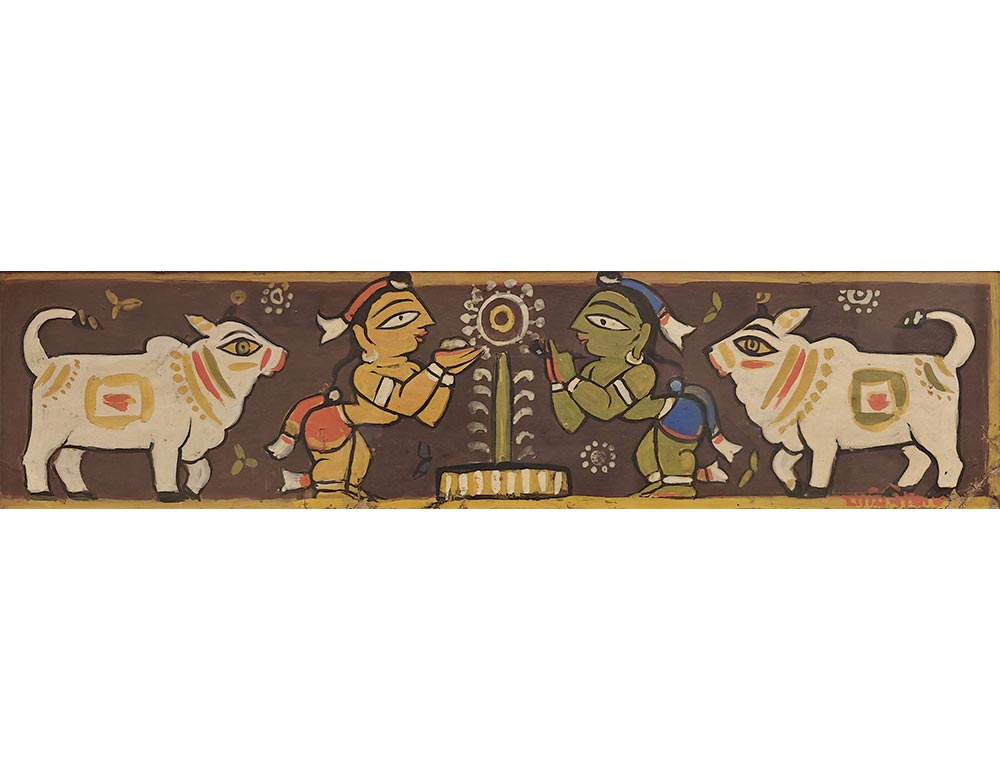
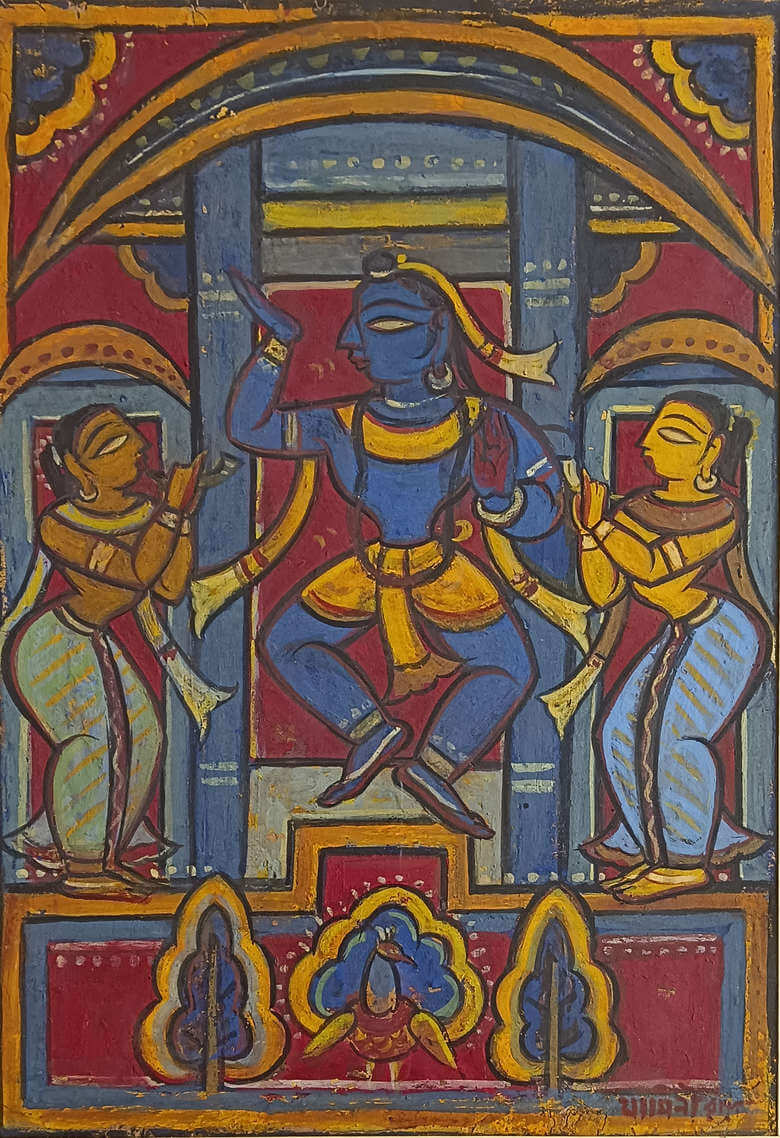
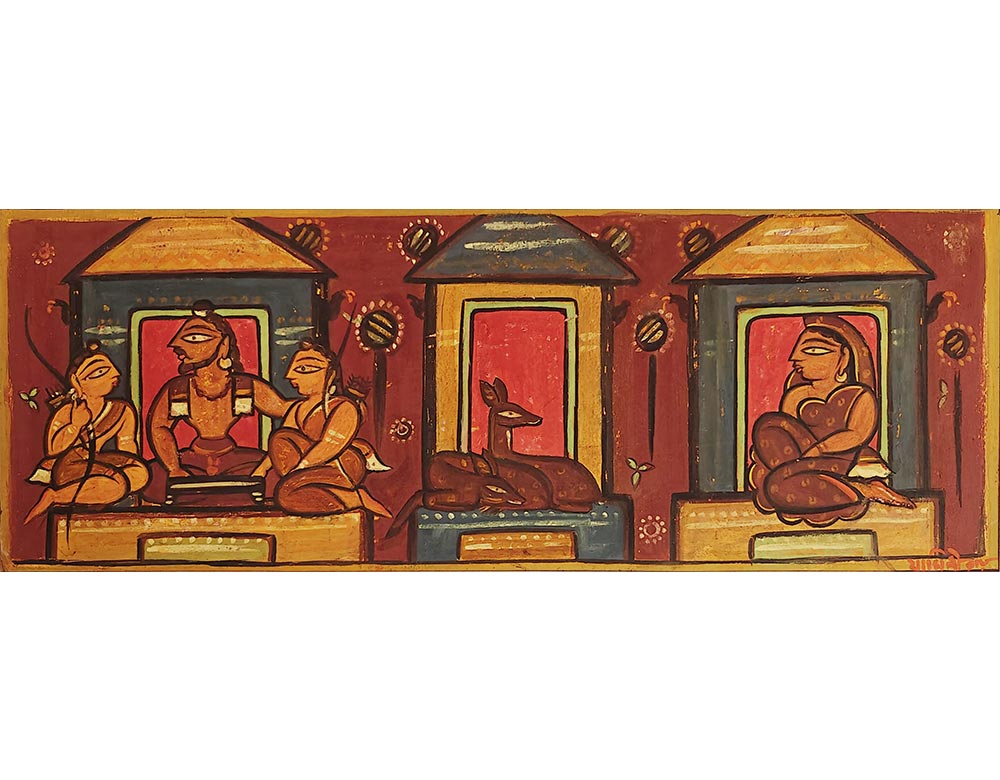
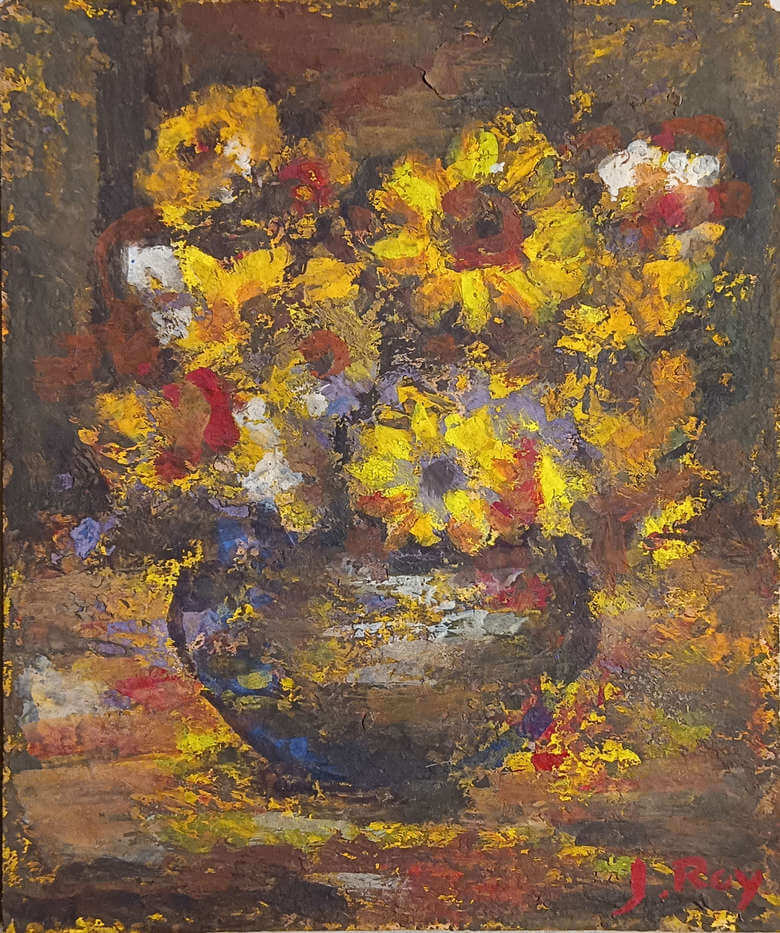
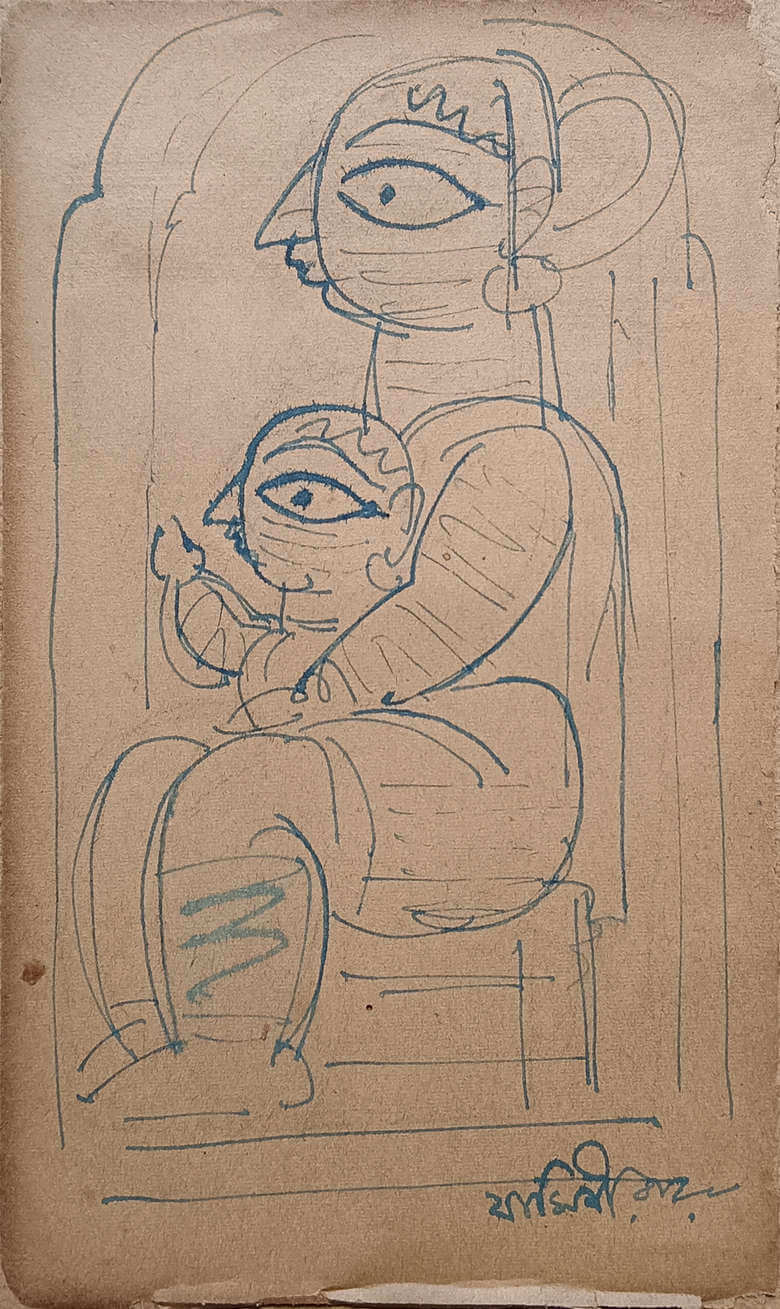
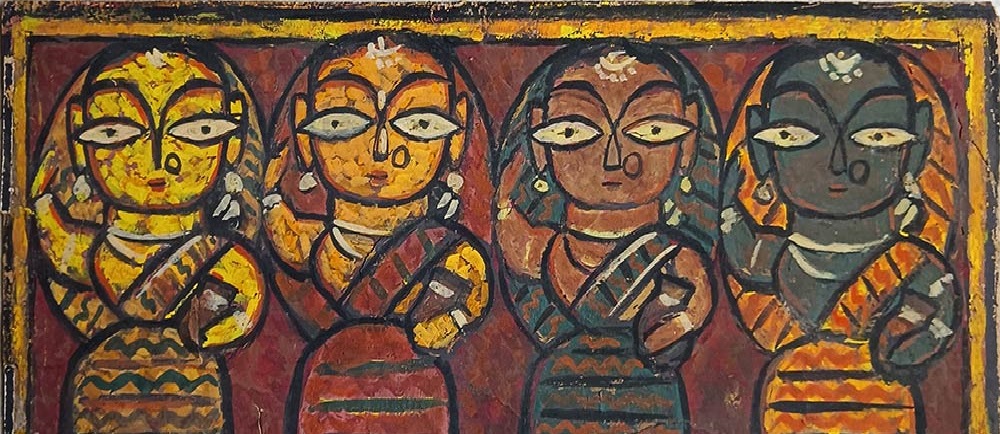
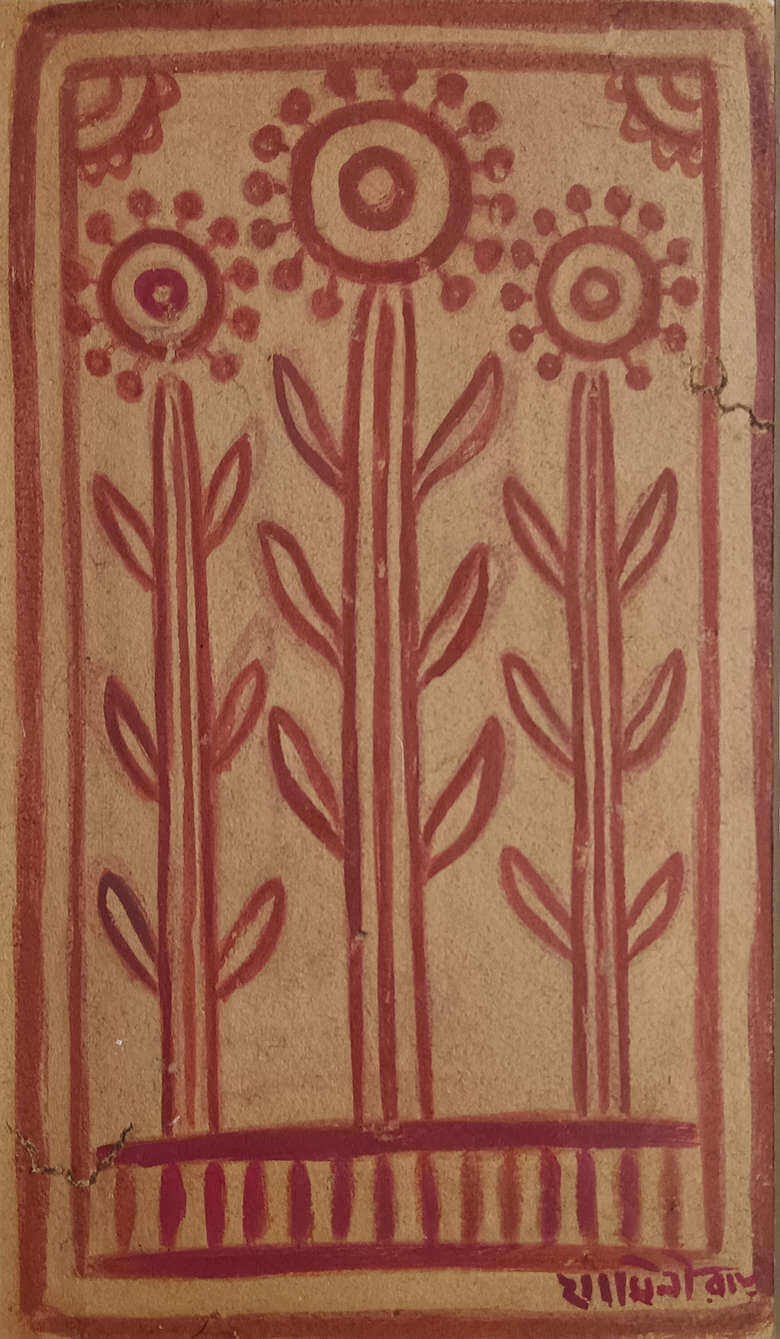
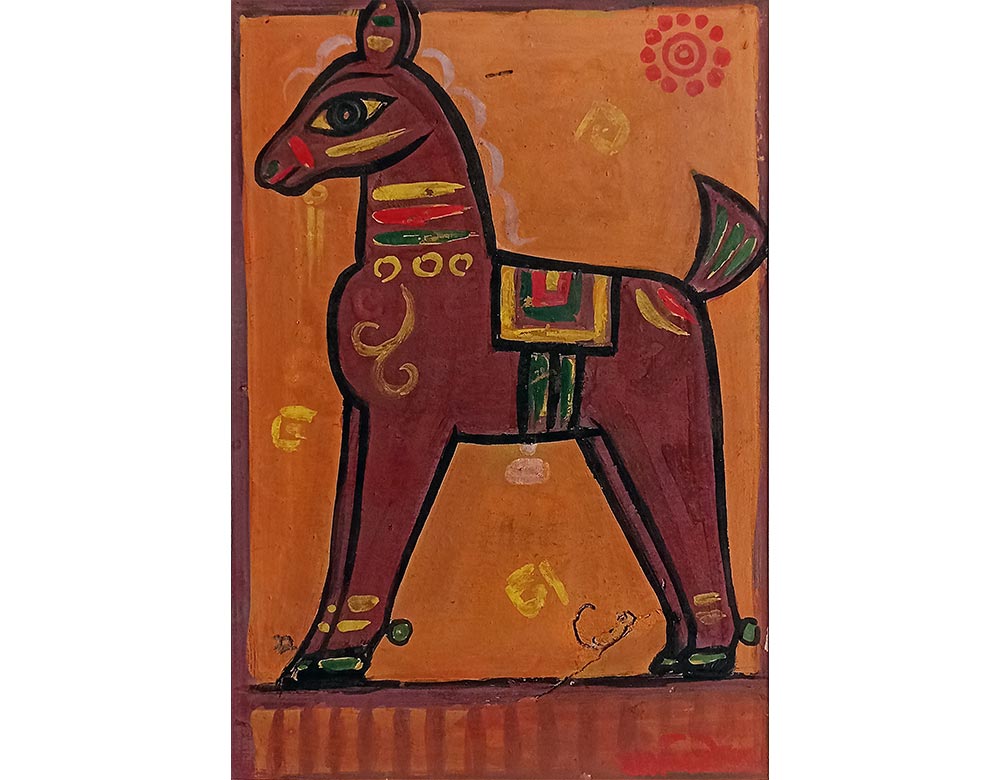
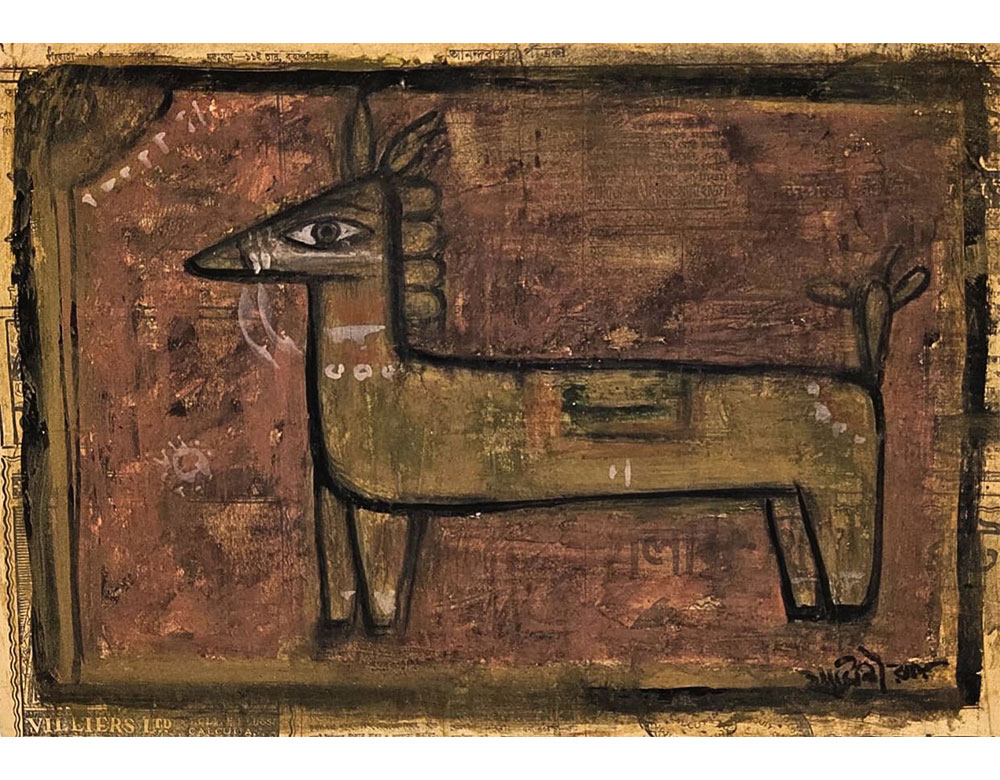
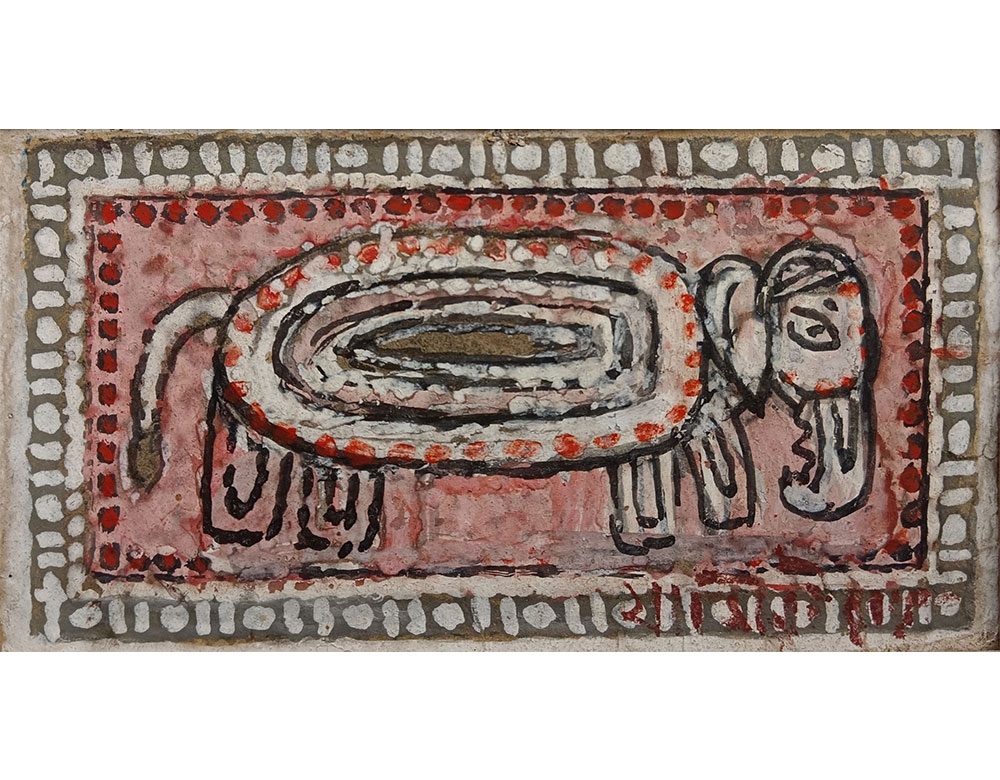
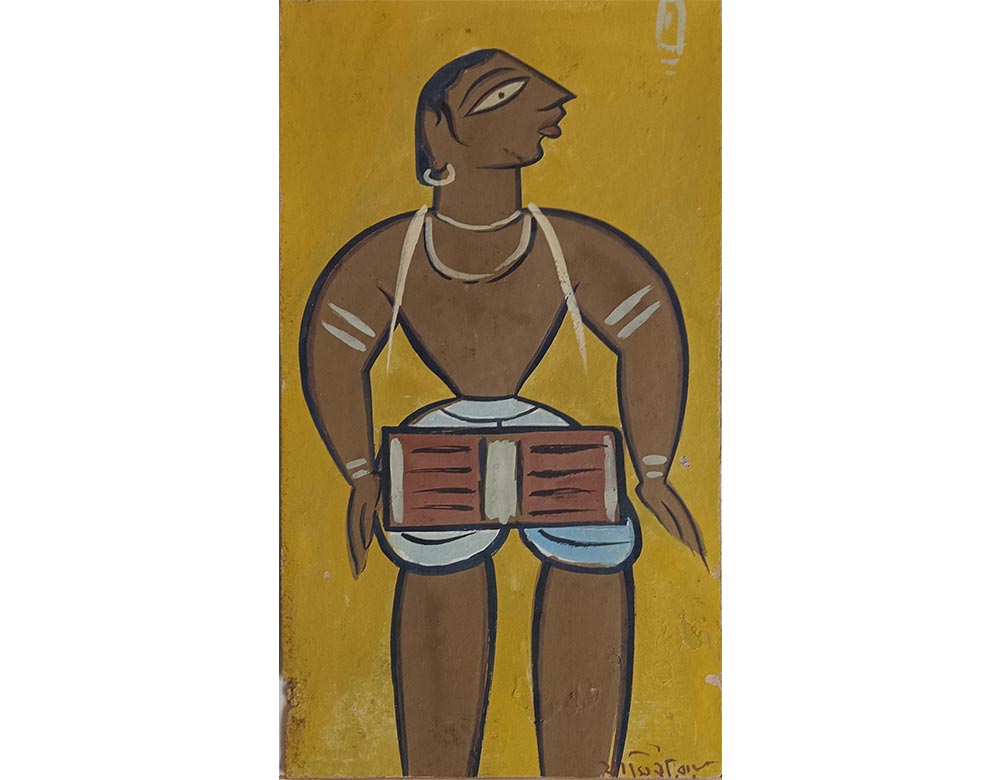
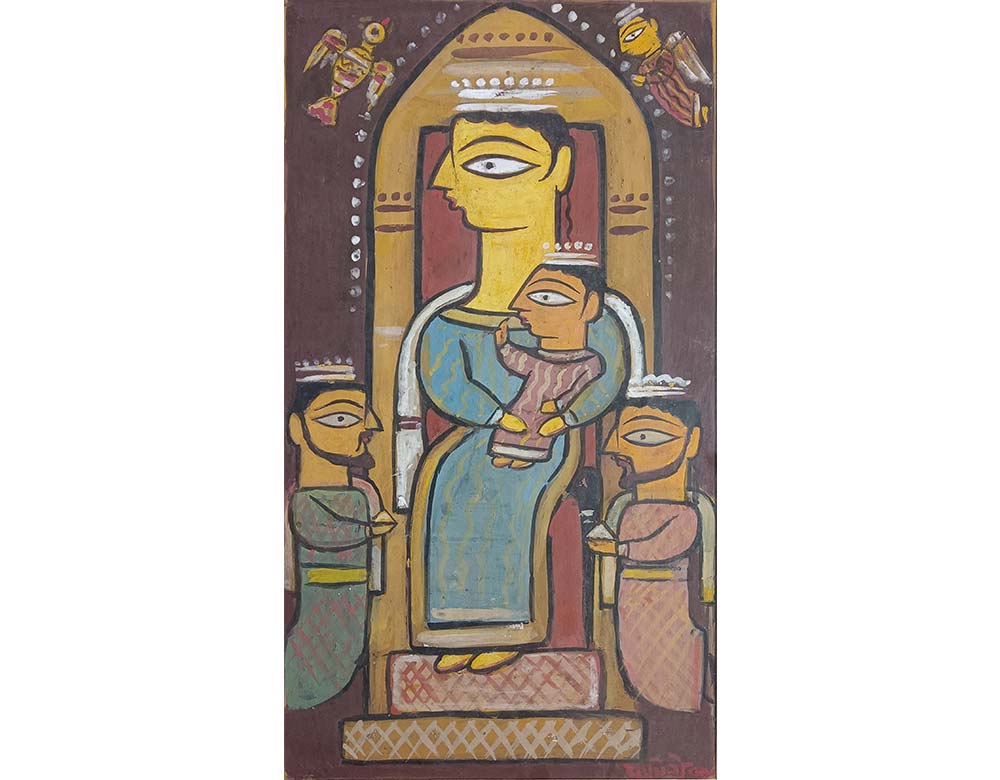
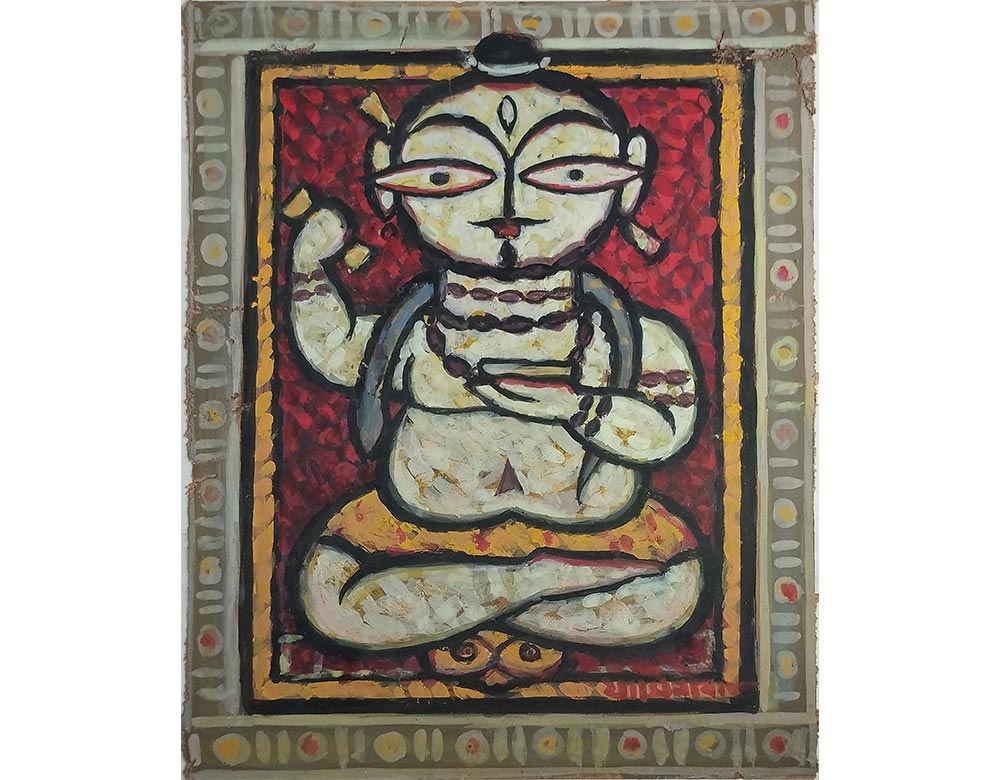
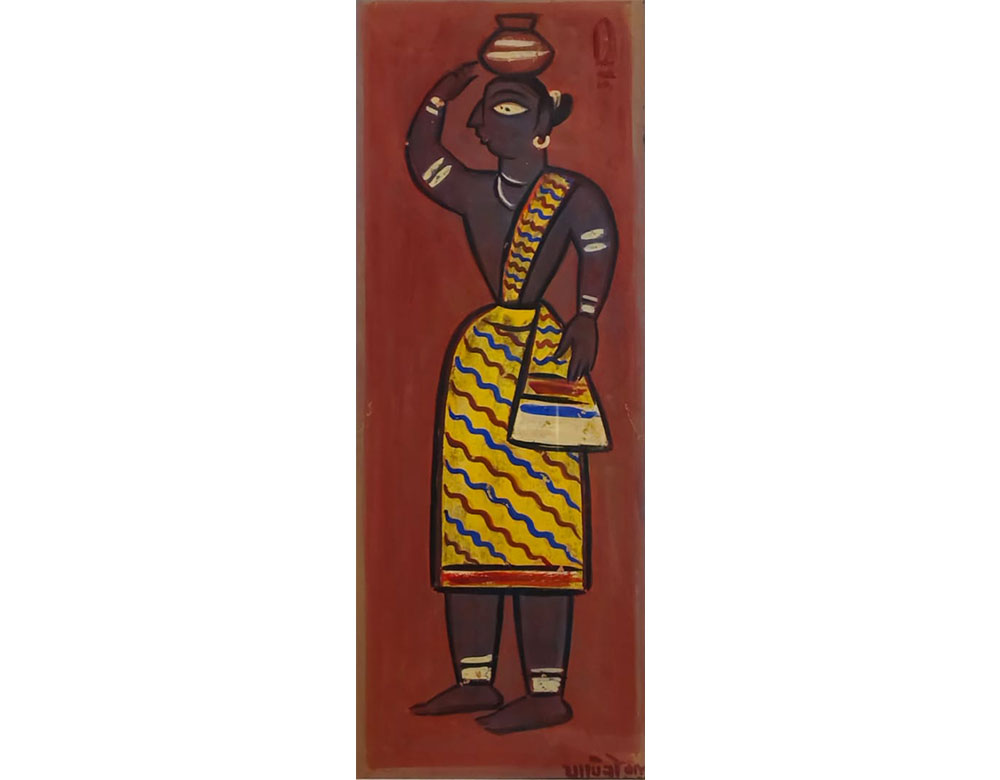
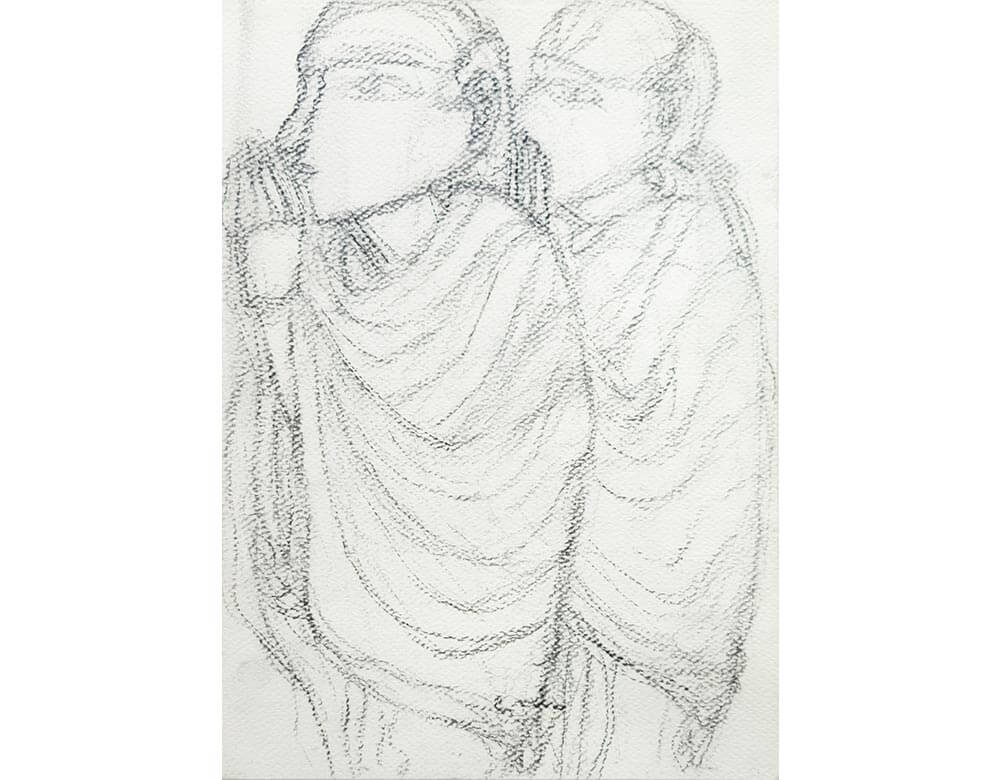
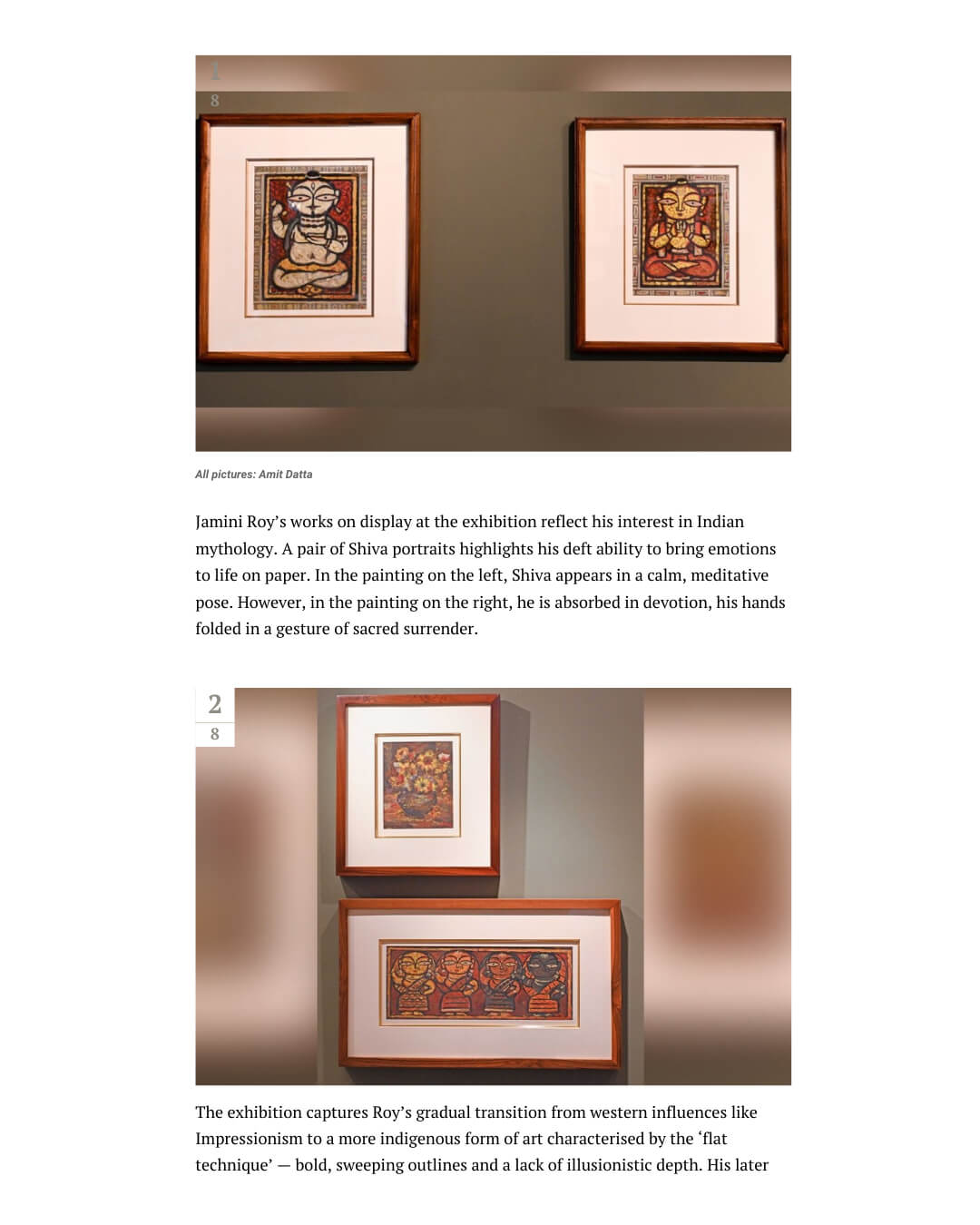
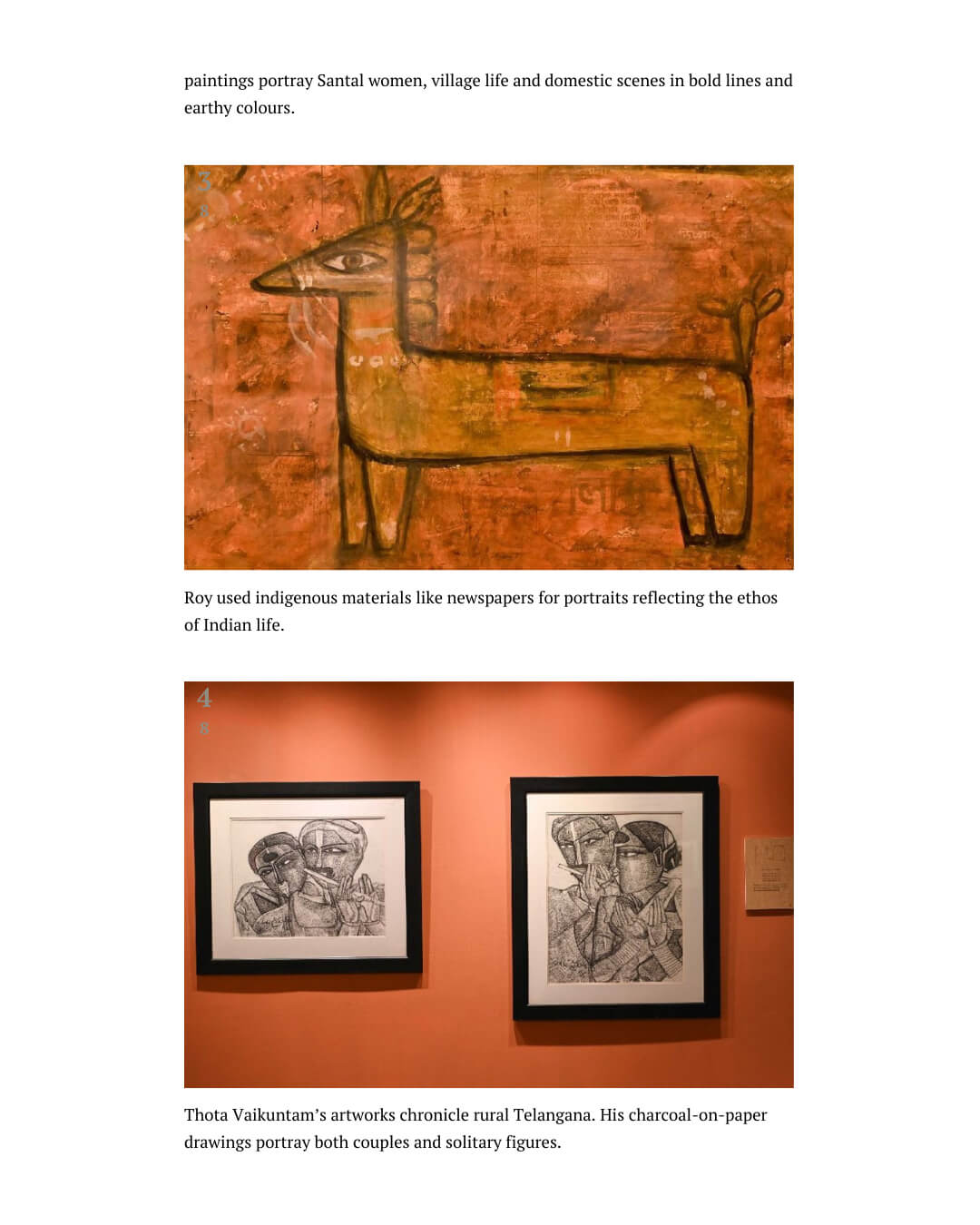
Jamini Roy (1887–1972) was a pioneer who rejected Western academic realism in favor of a distinctly Indian visual language. Trained in the European tradition at the Government College of Art in Kolkata, Roy soon realized that true artistic expression lay not in imitation but in reinvention. He turned to Bengali folk traditions, particularly the Kalighat Pat style, to develop his signature aesthetic—bold lines, flattened forms, and earthy colors. Roy’s paintings are deeply mythological, drawing from the Ramayana, Krishna legends, and rural Bengali life. His figures – whether divine or human-are stylized yet deeply expressive, their almond-shaped eyes and rhythmic compositions evoking the timeless quality of Indian miniature paintings. His works are not just visual artifacts but cultural statements, reclaiming Indian artistic heritage at a time when colonial influences dominated the art scene.
In this exhibition, Roy’s works serve as the foundation of myth, establishing a visual lexicon that Vaikuntam and Radhakrishnan build upon in their own ways. His paintings, though static, possess an inner dynamism, a sense of movement that connects them to Vaikuntam’s theatrical compositions and Radhakrishnan’s kinetic sculptures.
Thota Vaikuntam: The Chronicler of Rural Telangana
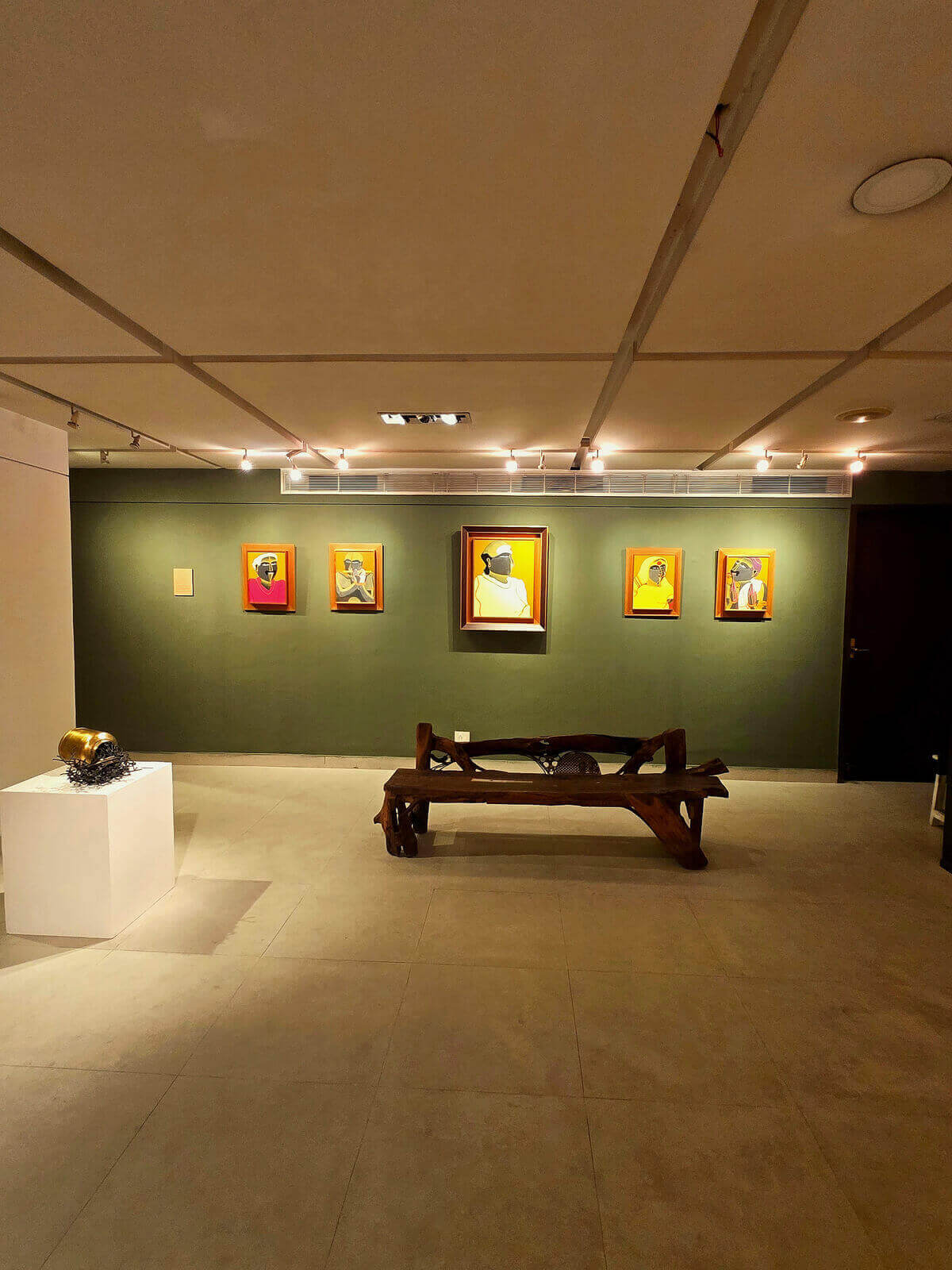
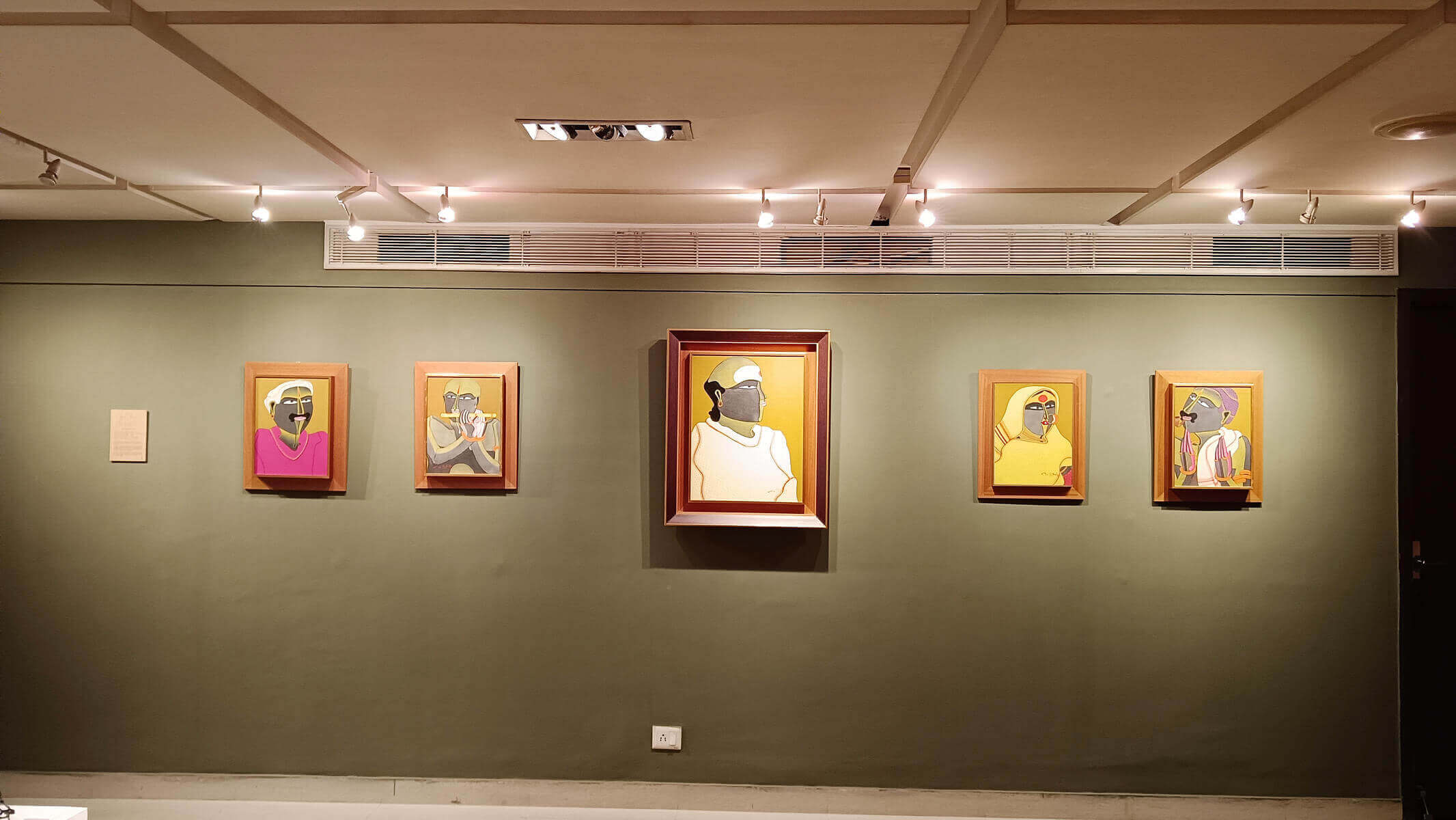
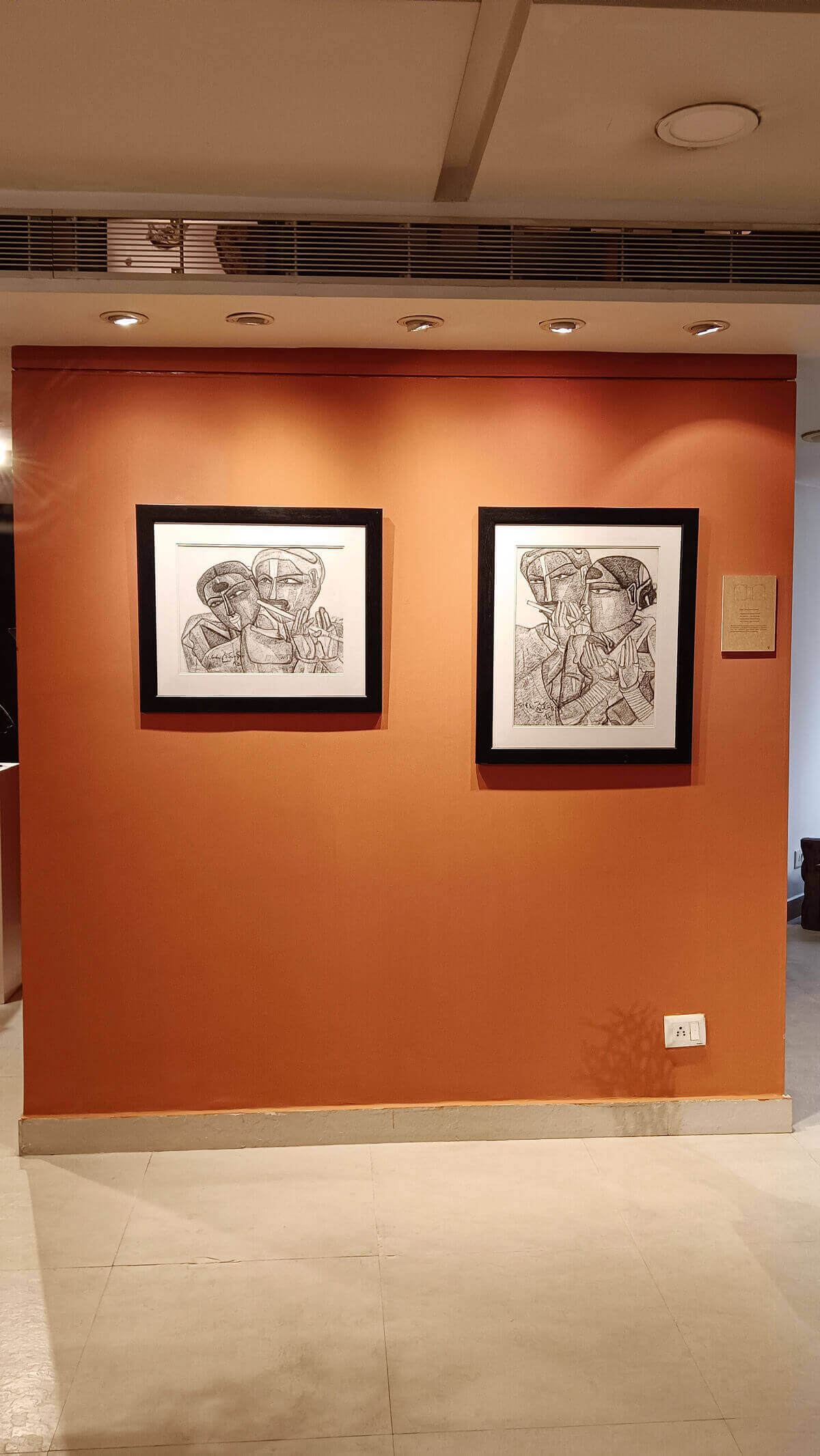
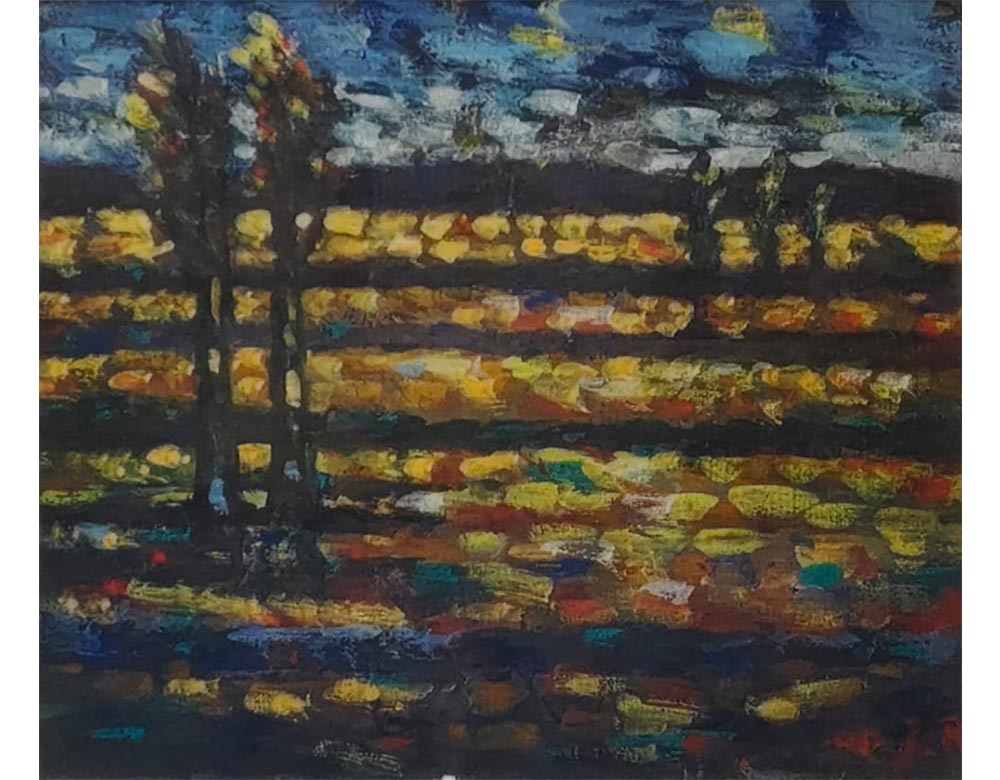
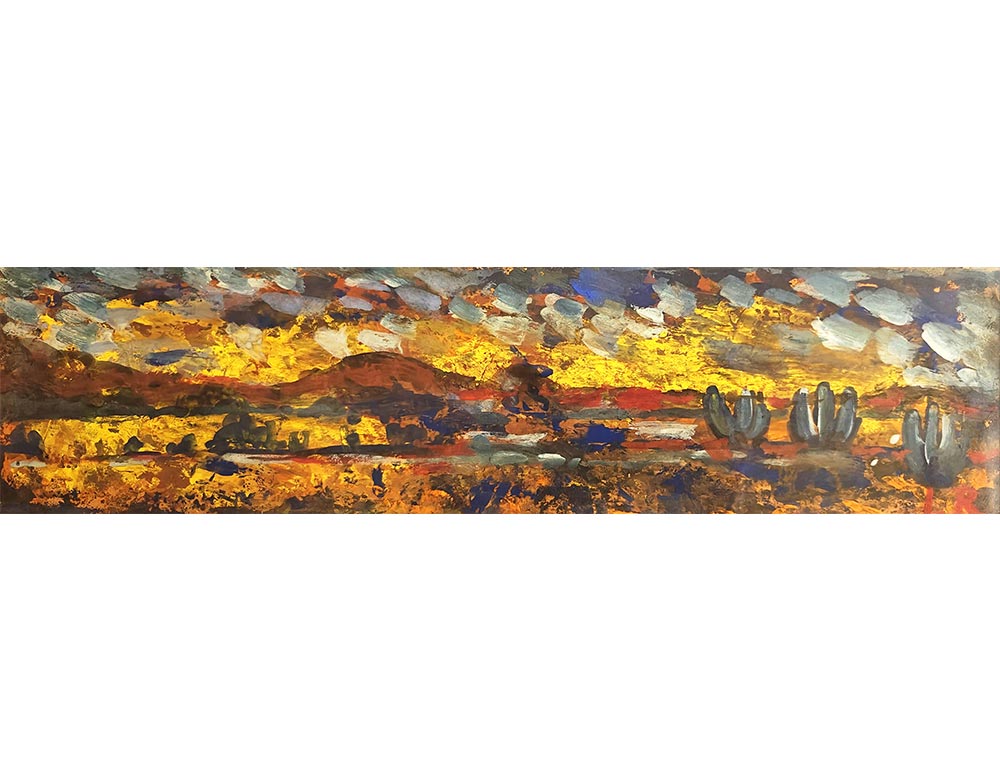
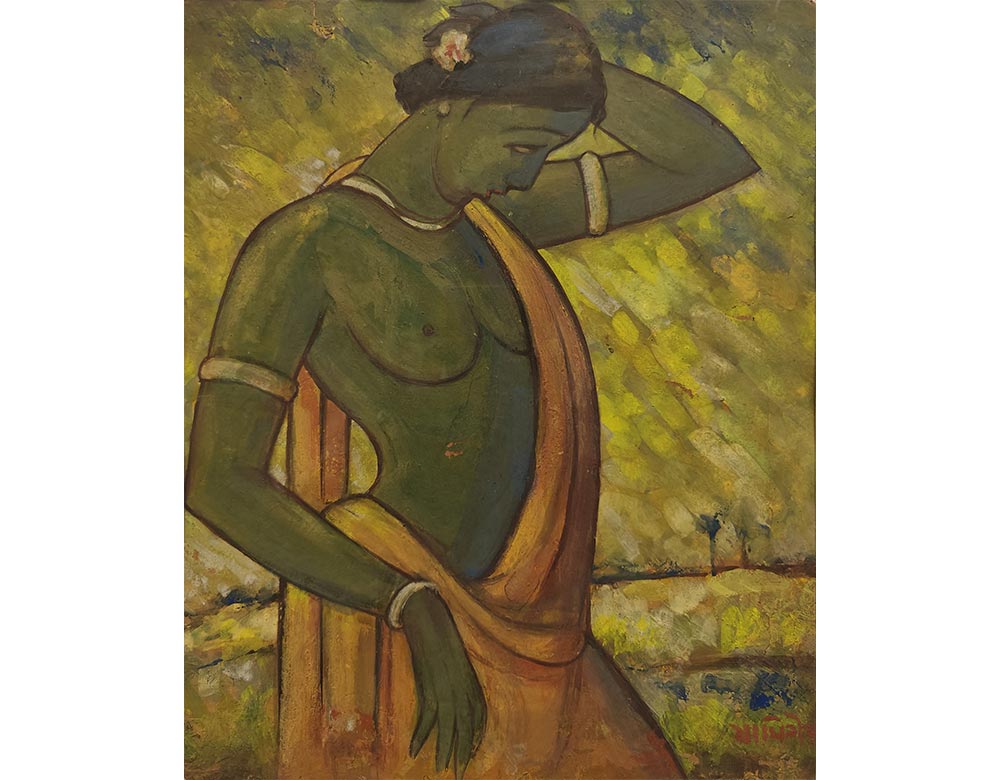
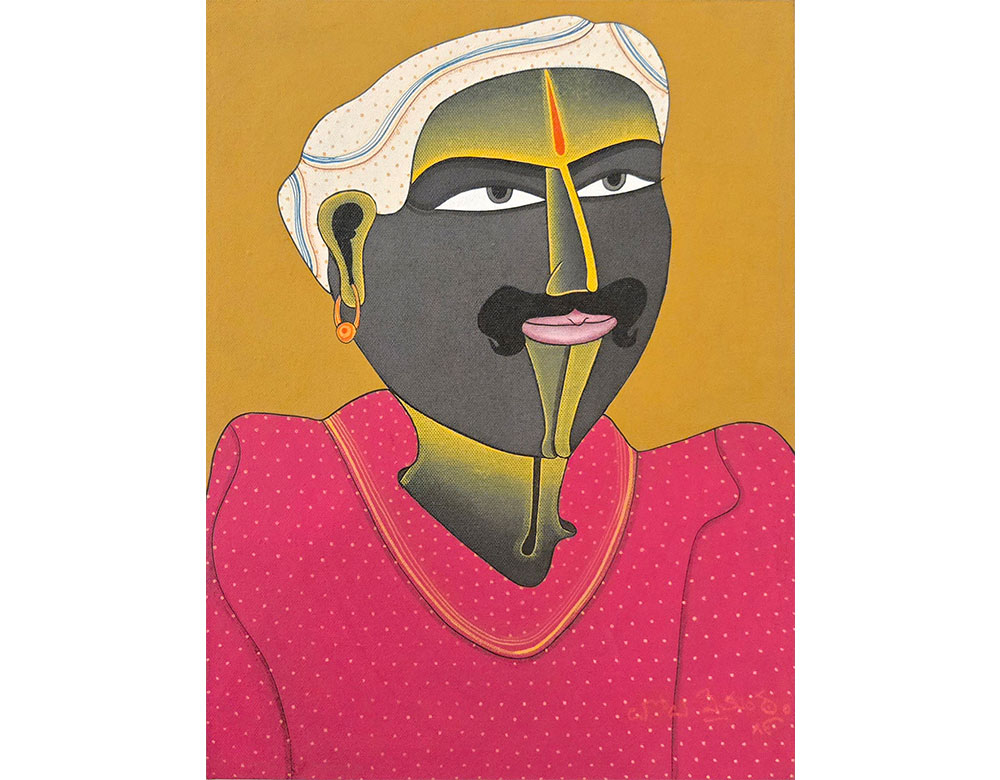
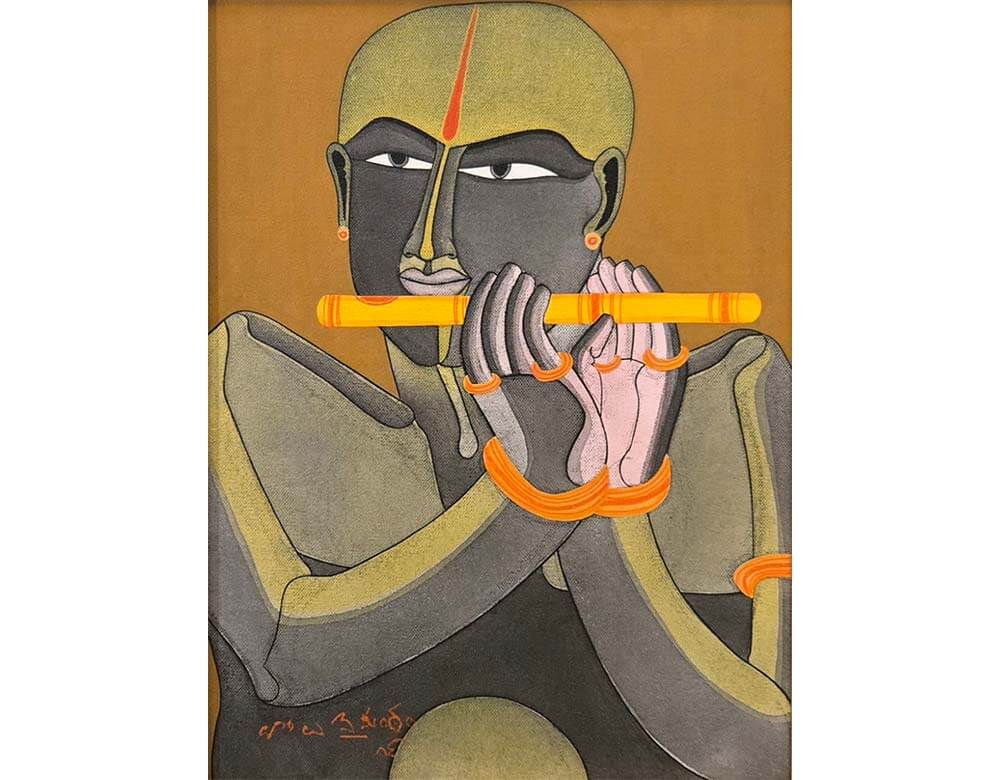
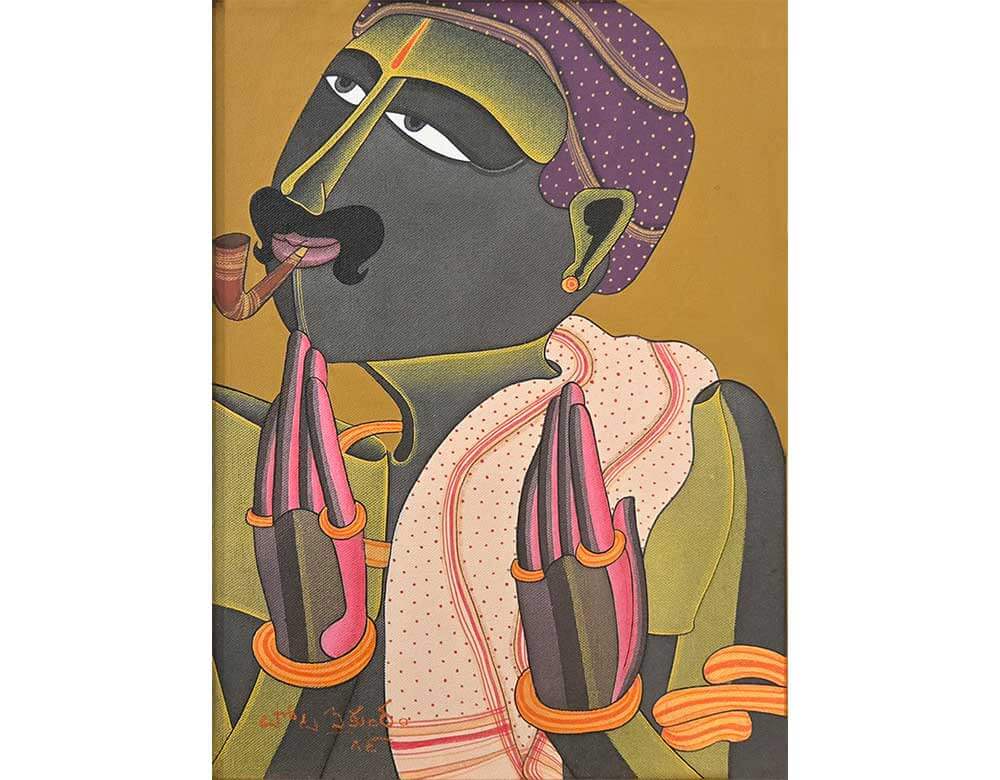
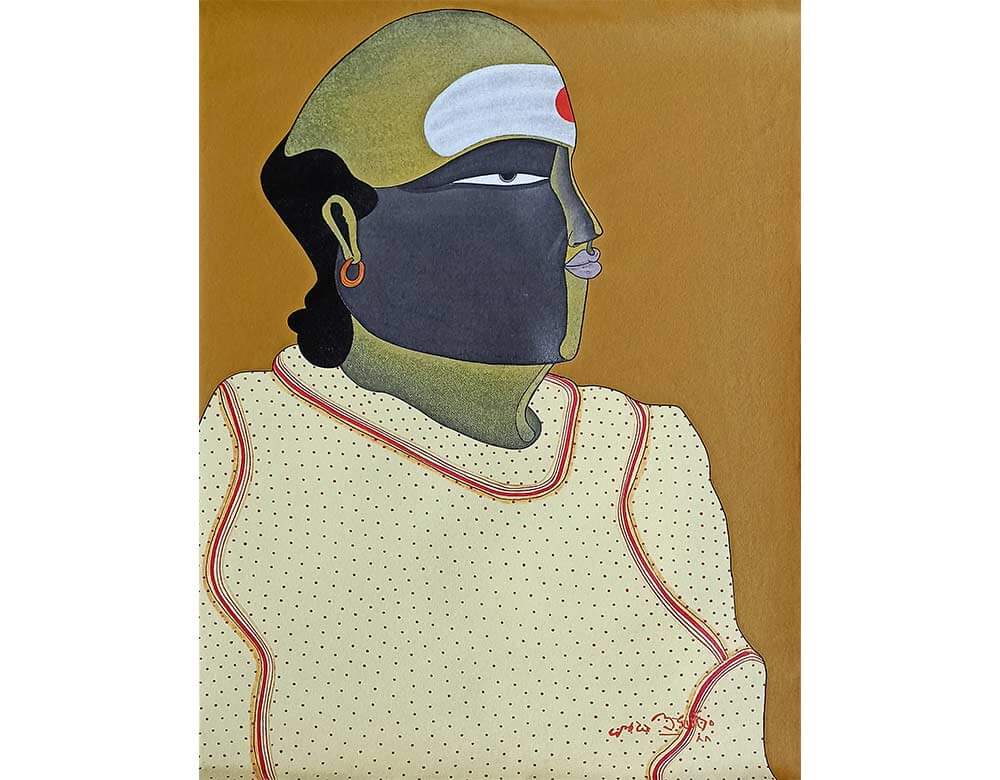
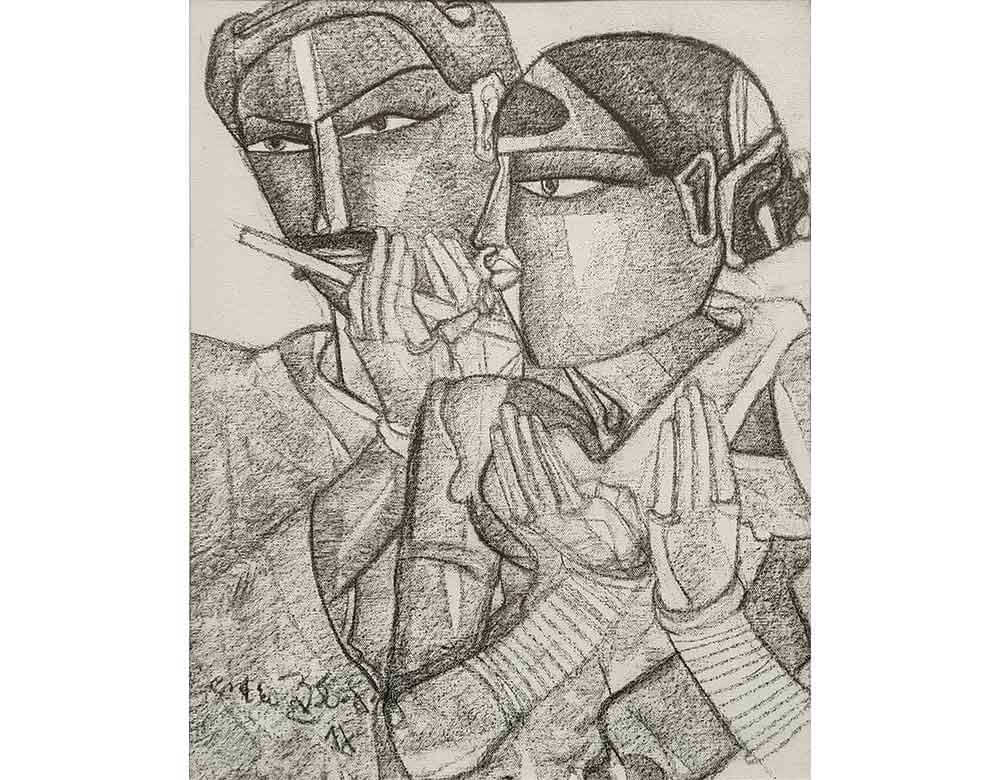
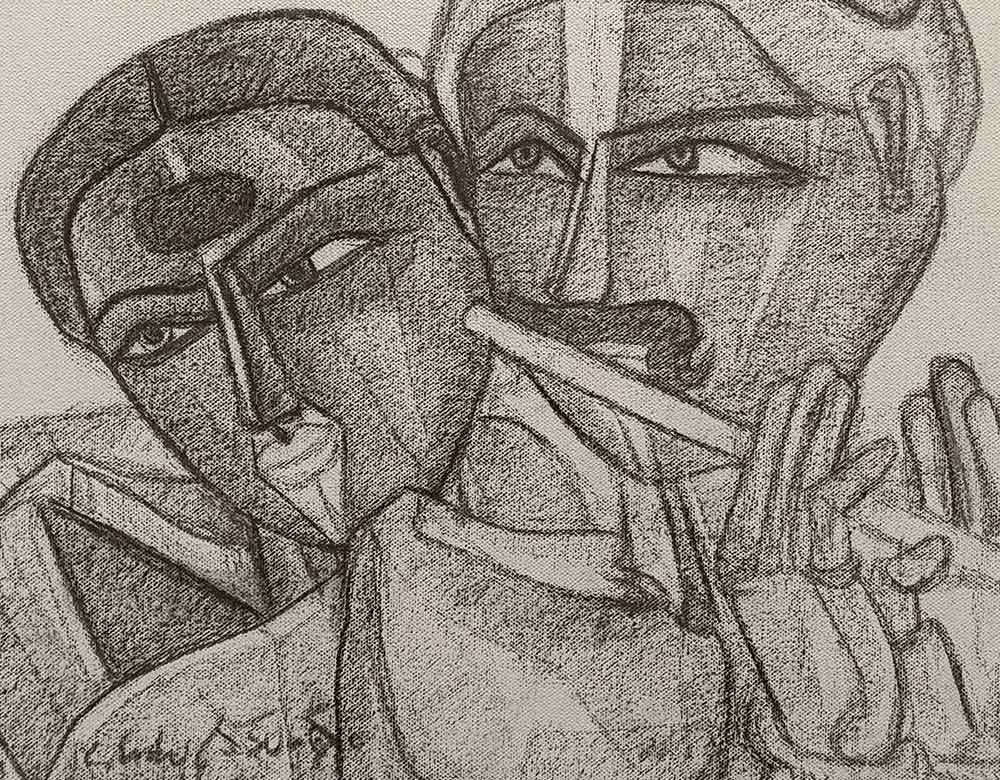
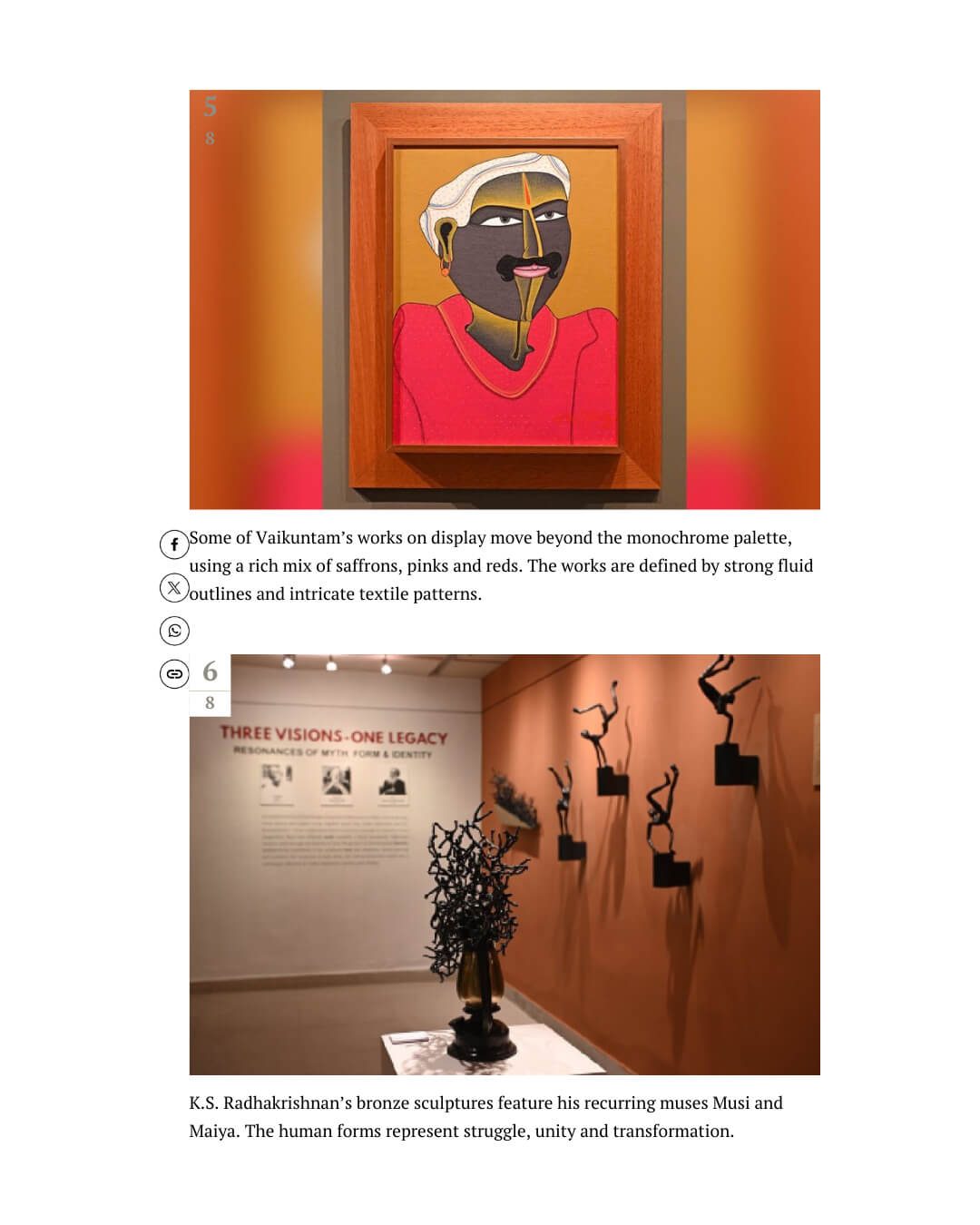
Thota Vaikuntam (b. 1942) is a master of figurative storytelling, capturing the essence of Telangana’s rural life with striking simplicity and vibrancy. His subjects—predominantly women draped in bright sarees, adorned with vermillion bindis and heavy jewelry—are both iconic and intimate. His use of bold primary colors and flattened perspectives echoes Roy’s approach, yet his figures possess a theatrical presence, as if caught mid-performance.
Vaikuntam’s work is deeply rooted in identity—his subjects are not idealized but real, drawn from his childhood memories of village life. His paintings celebrate the strength and resilience of rural women, much like Roy’s depictions of goddesses and mother figures. The mythic undertones in his work are subtle but present; his women, though ordinary, carry an aura of divine presence, much like the characters in Roy’s paintings.
Placed alongside Roy’s works, Vaikuntam’s paintings create a dialogue between tradition and modernity. While Roy’s figures are timeless, Vaikuntam’s are contemporary embodiments of the same cultural ethos. His compositions, though static, possess an implied movement, a sense of narrative unfolding-an element that connects him to Radhakrishnan’s sculptural dynamism.
K.S. Radhakrishnan: The Sculptor of Movement & Myth
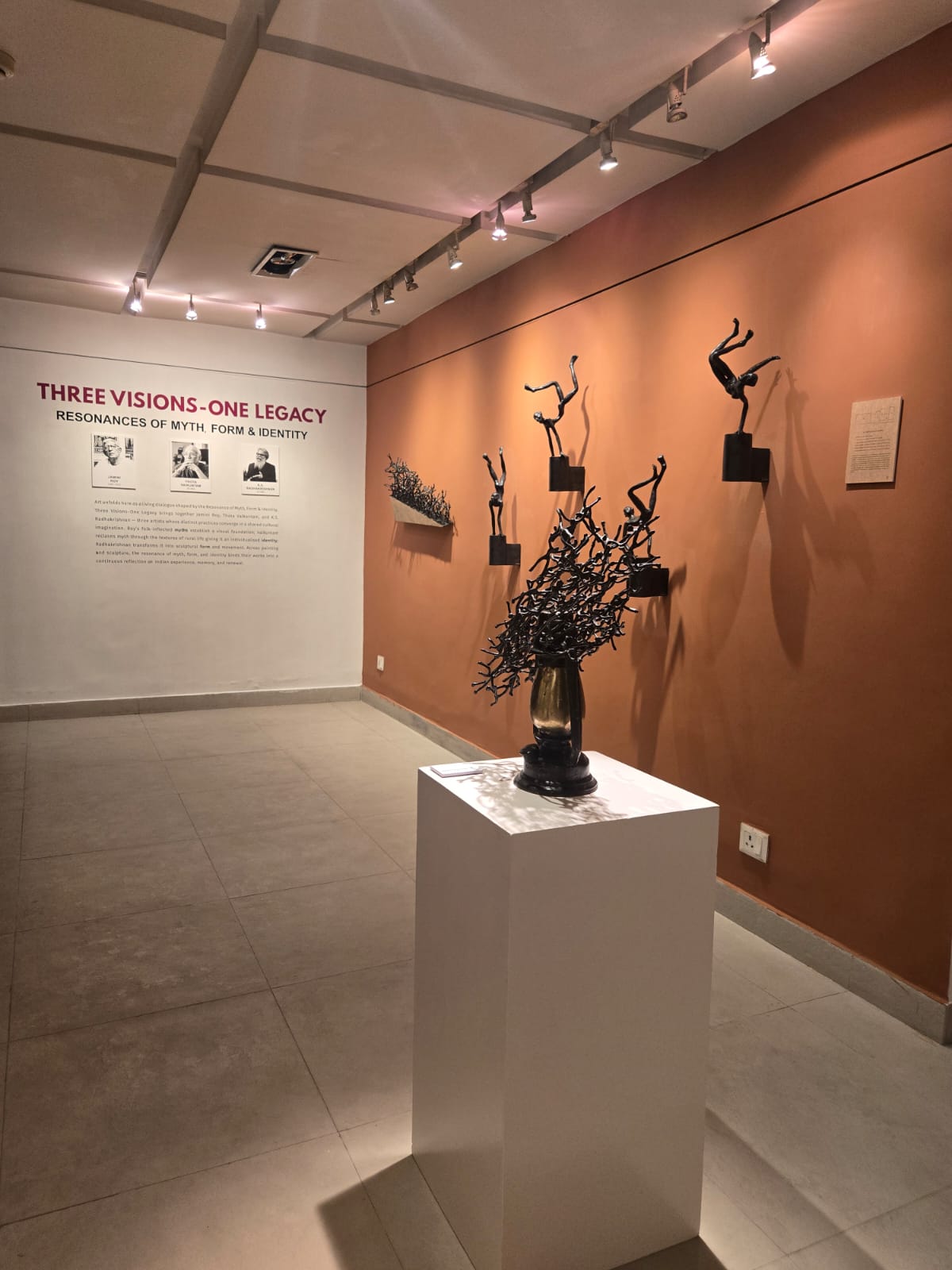
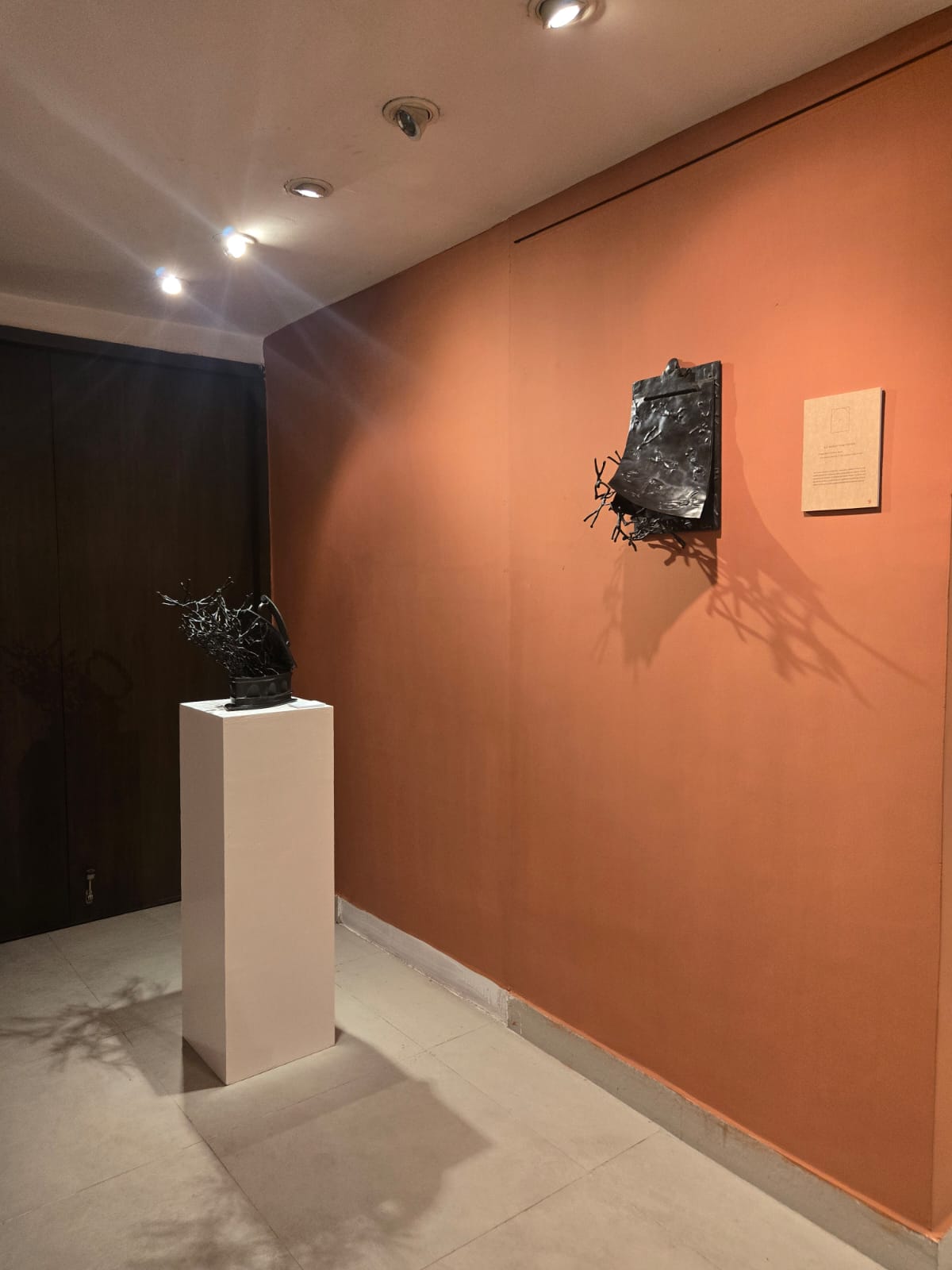
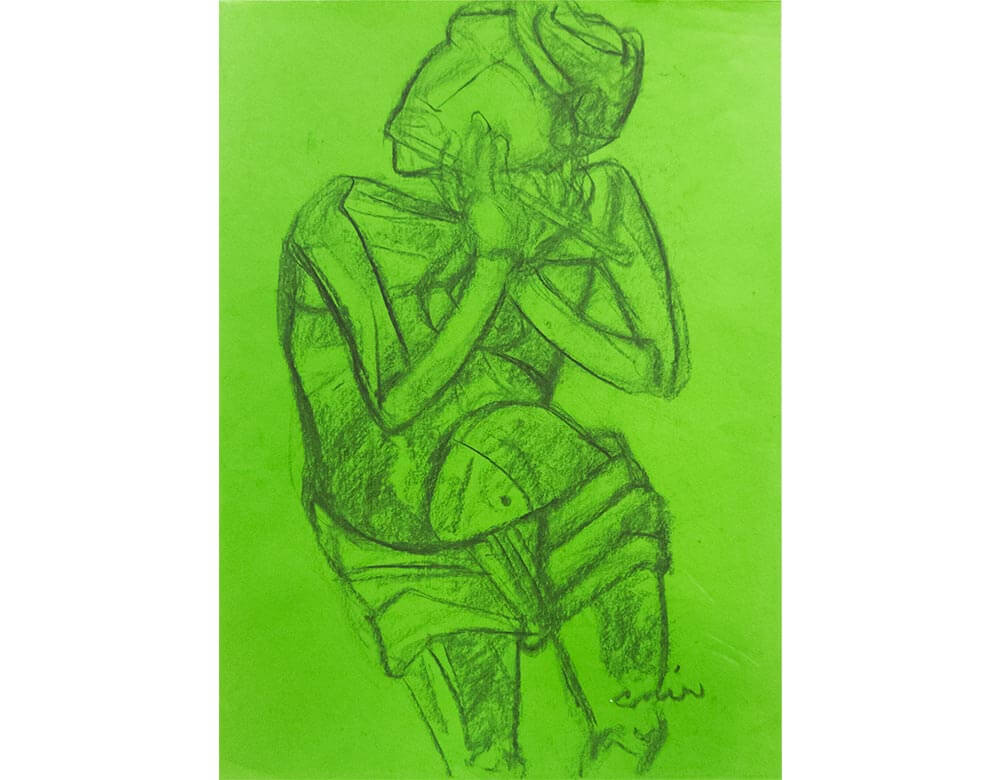
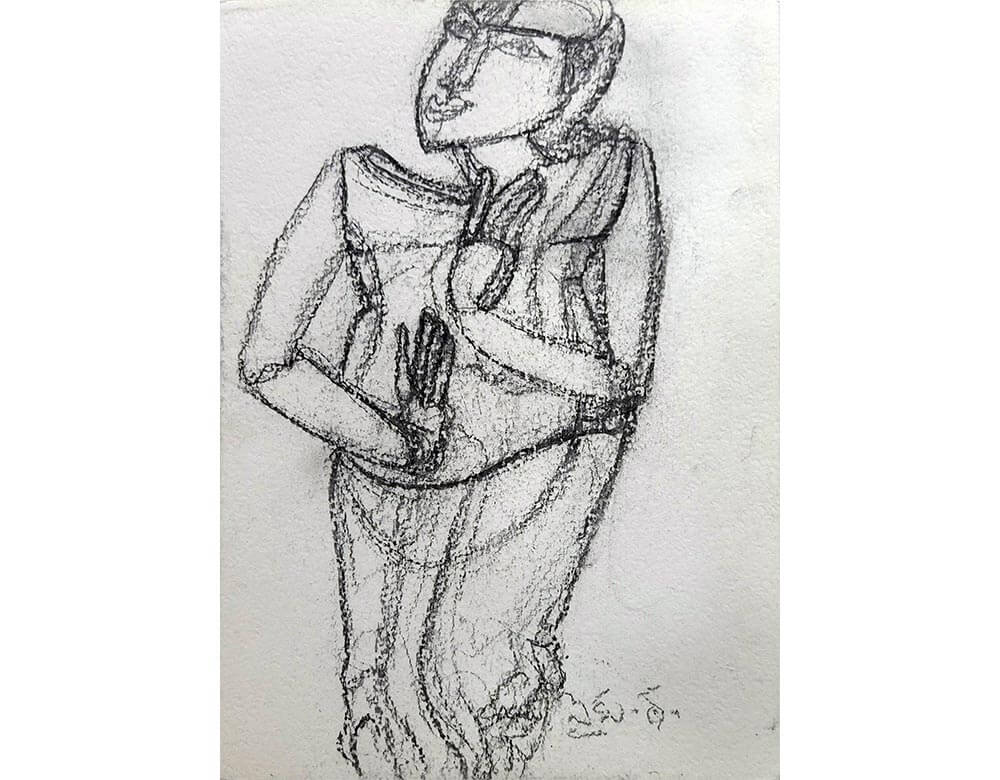
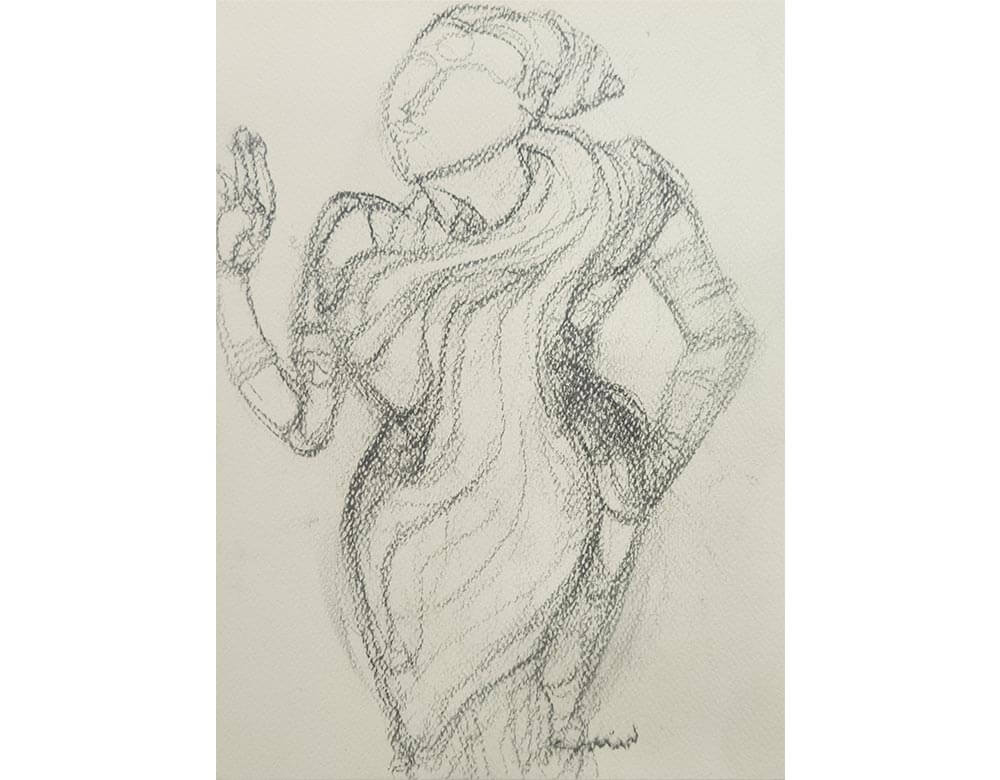
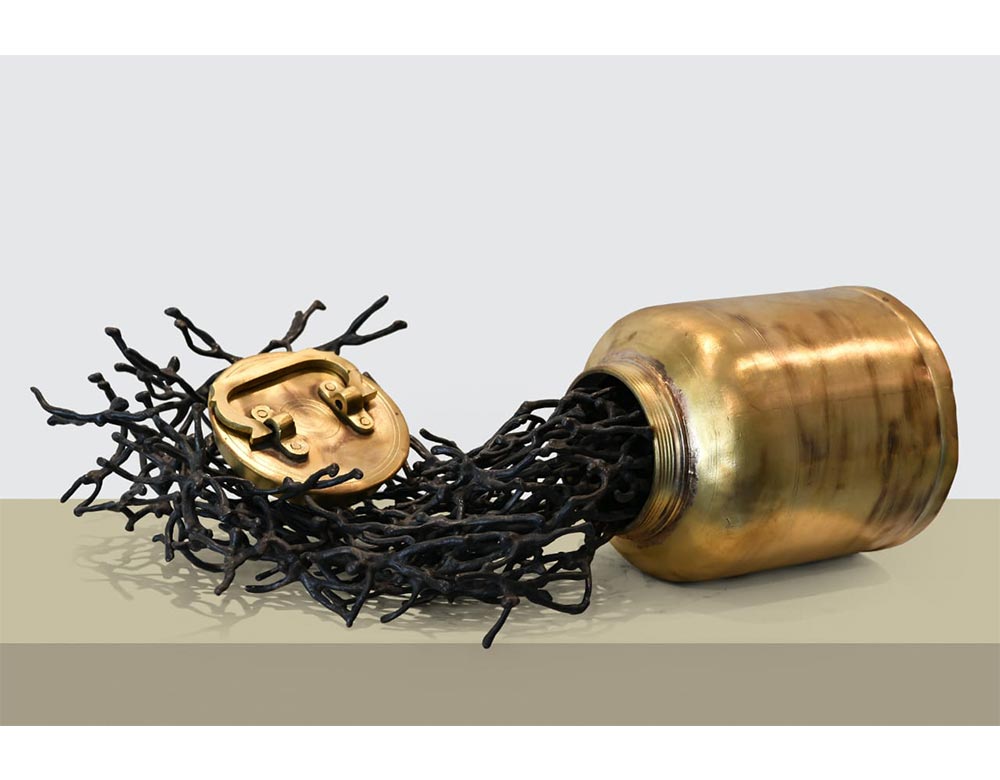
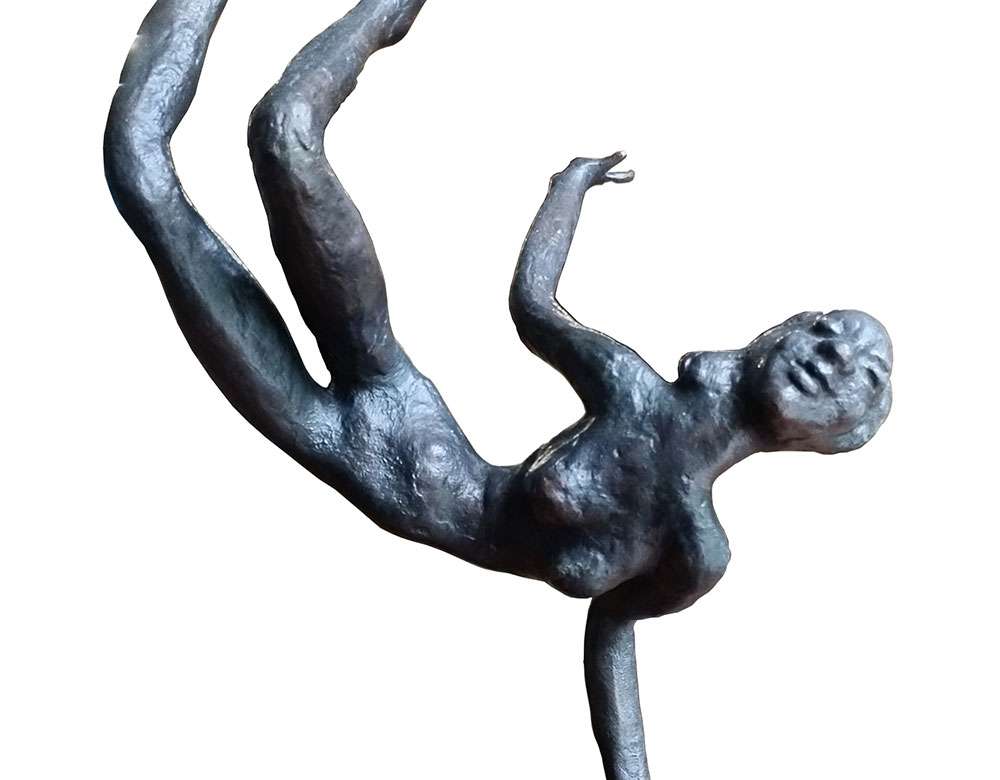
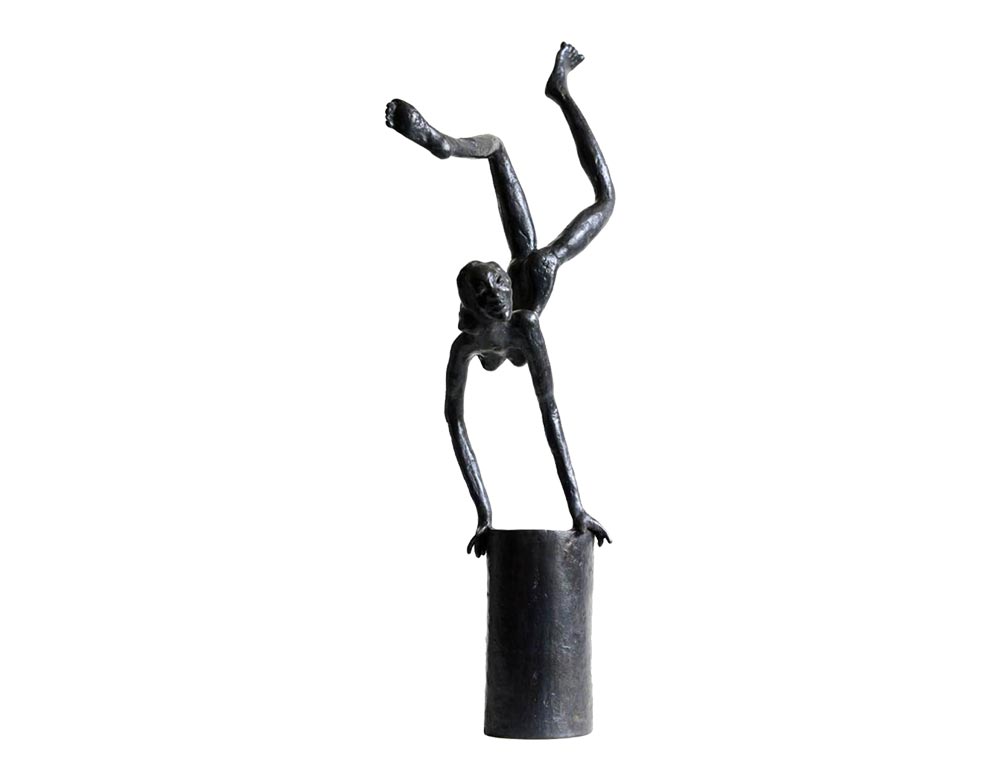
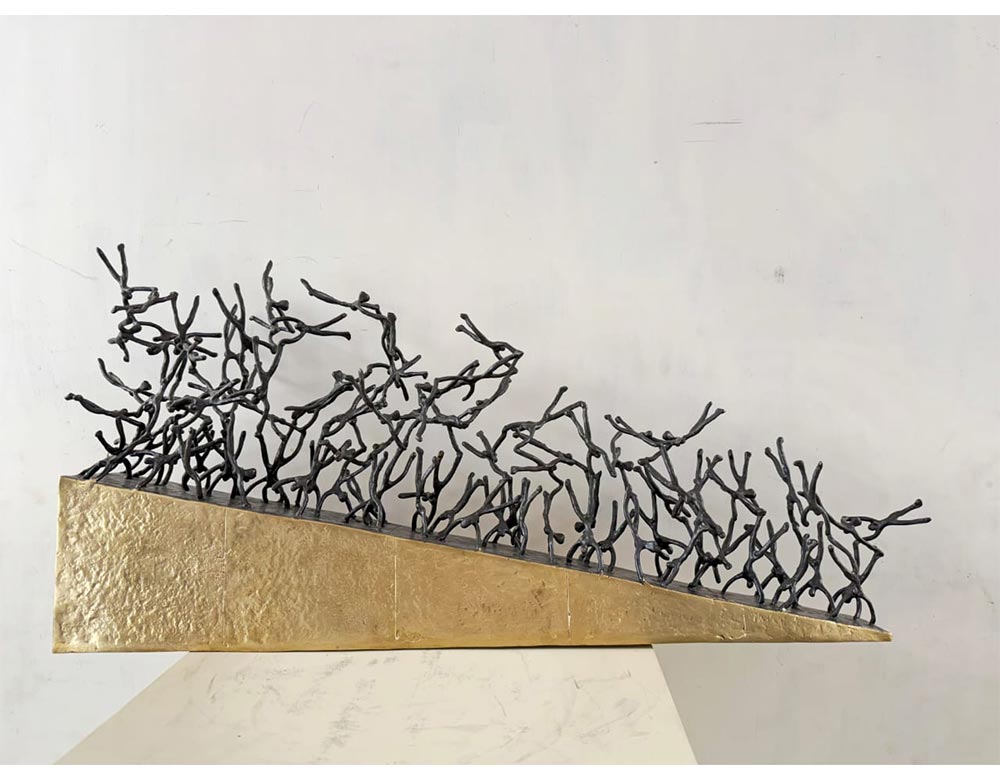
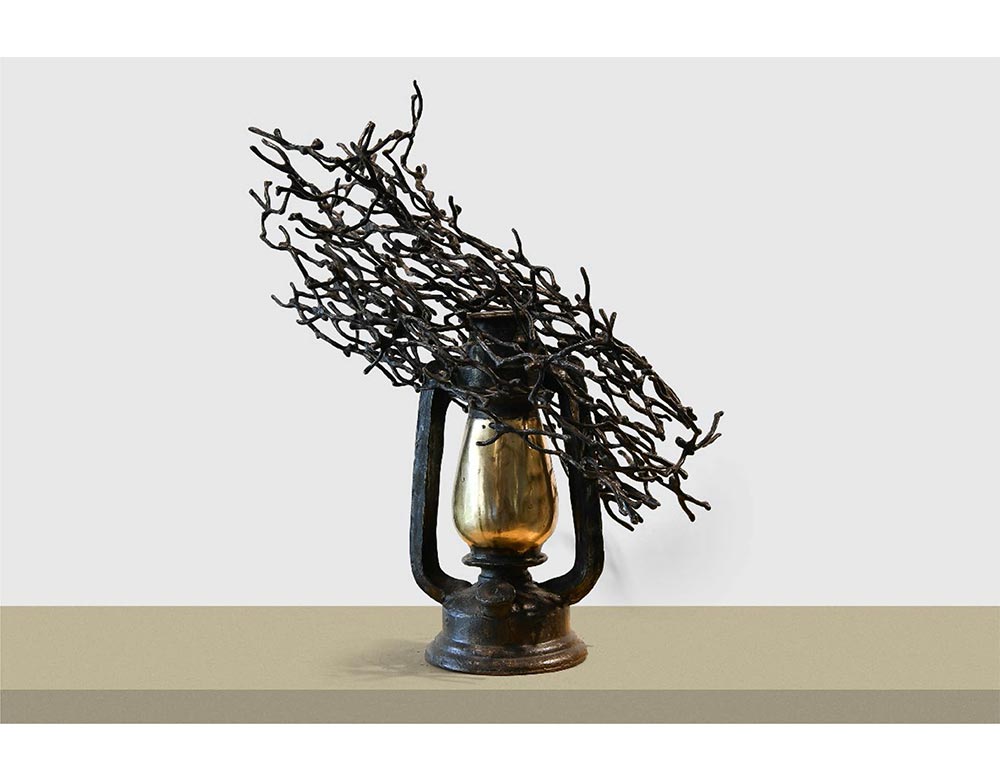
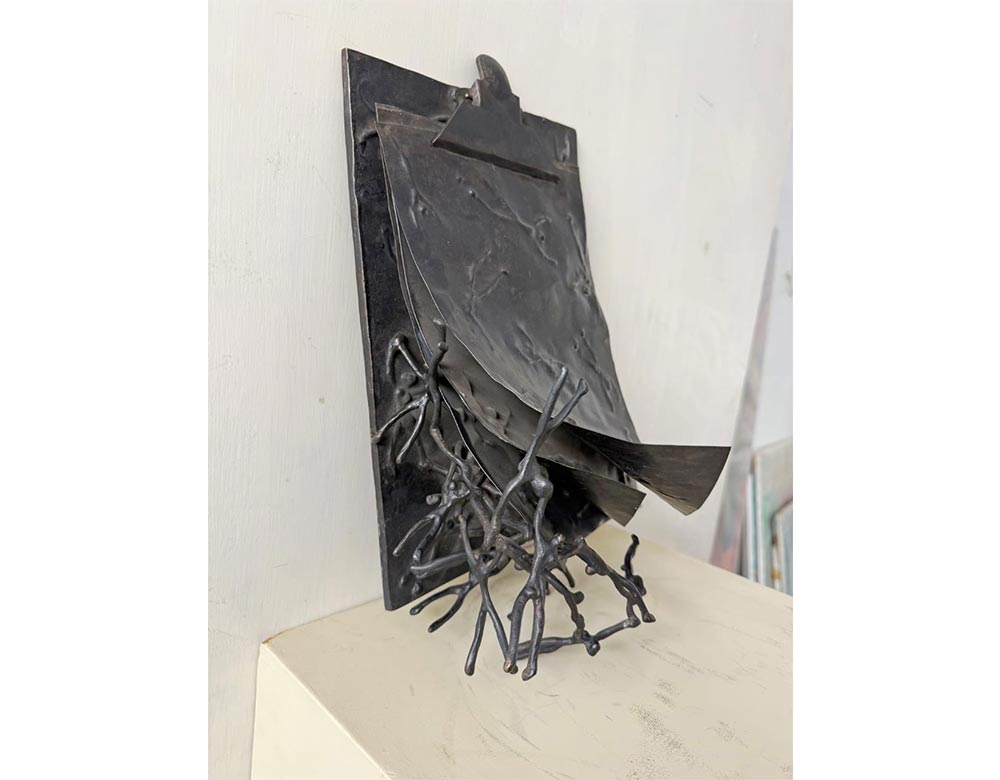
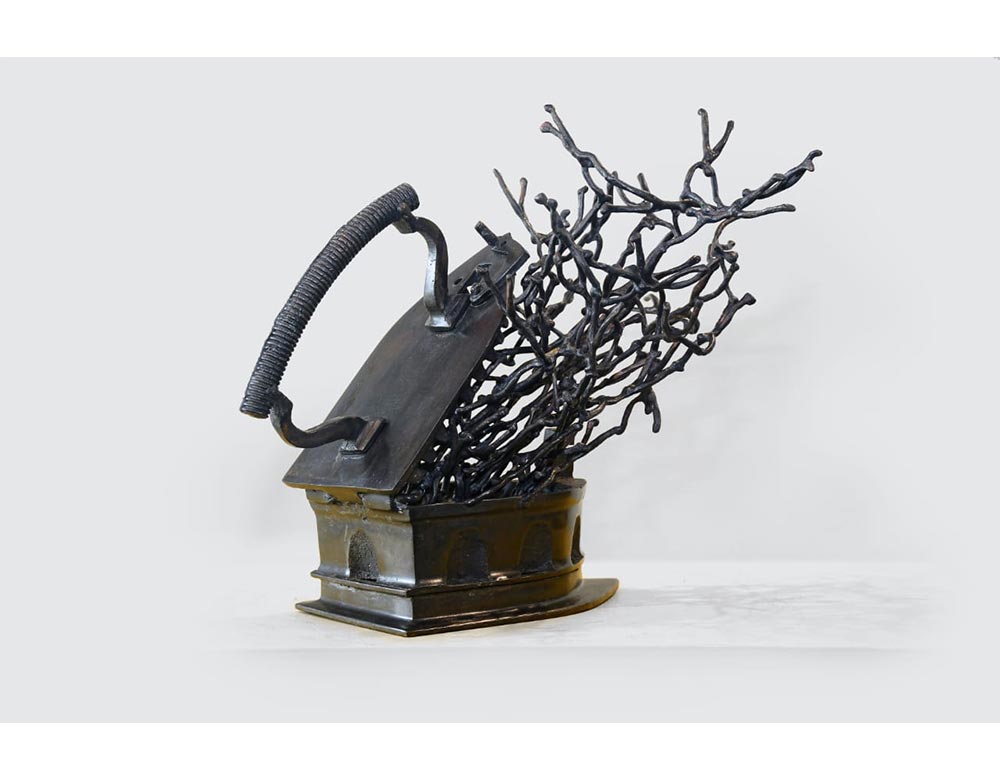
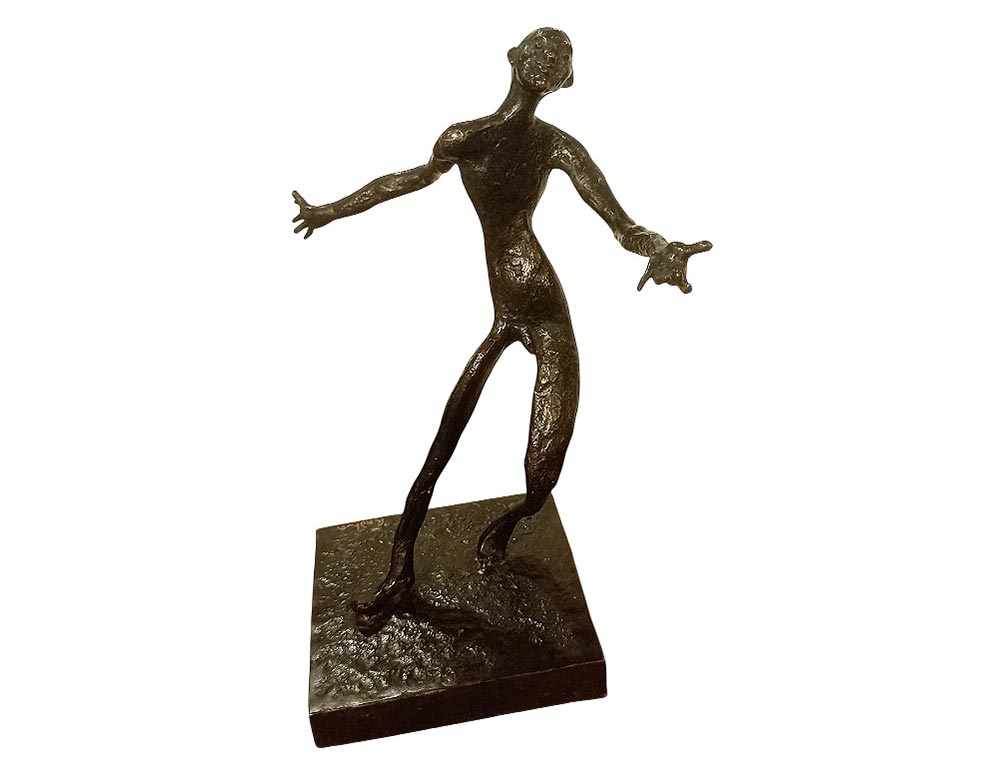
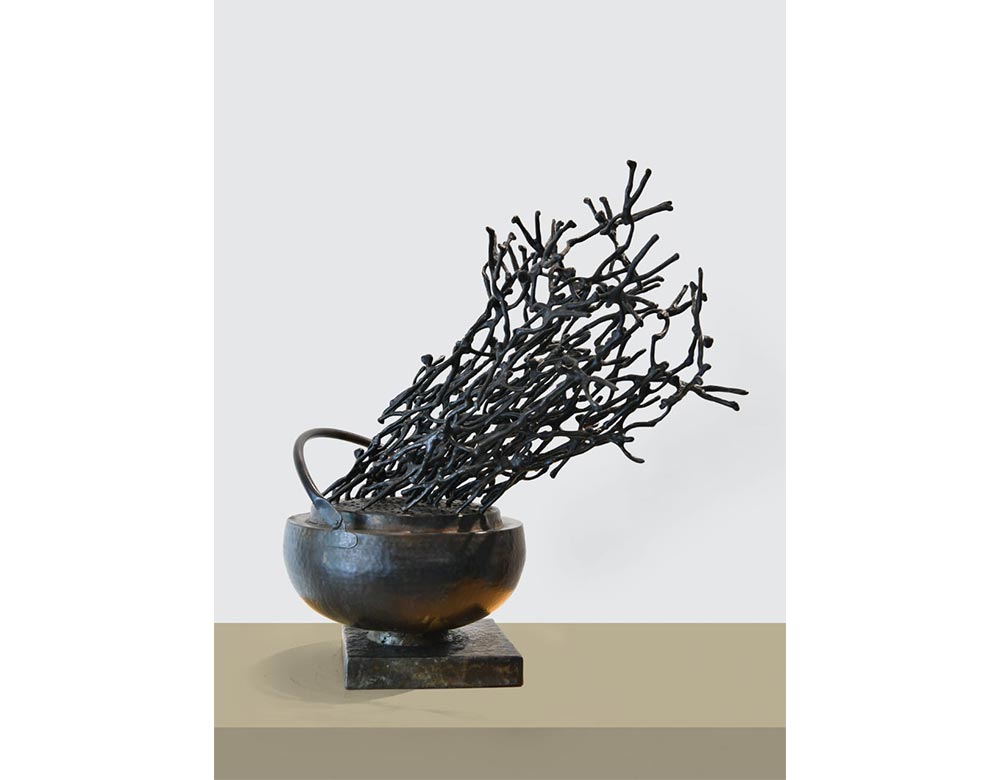
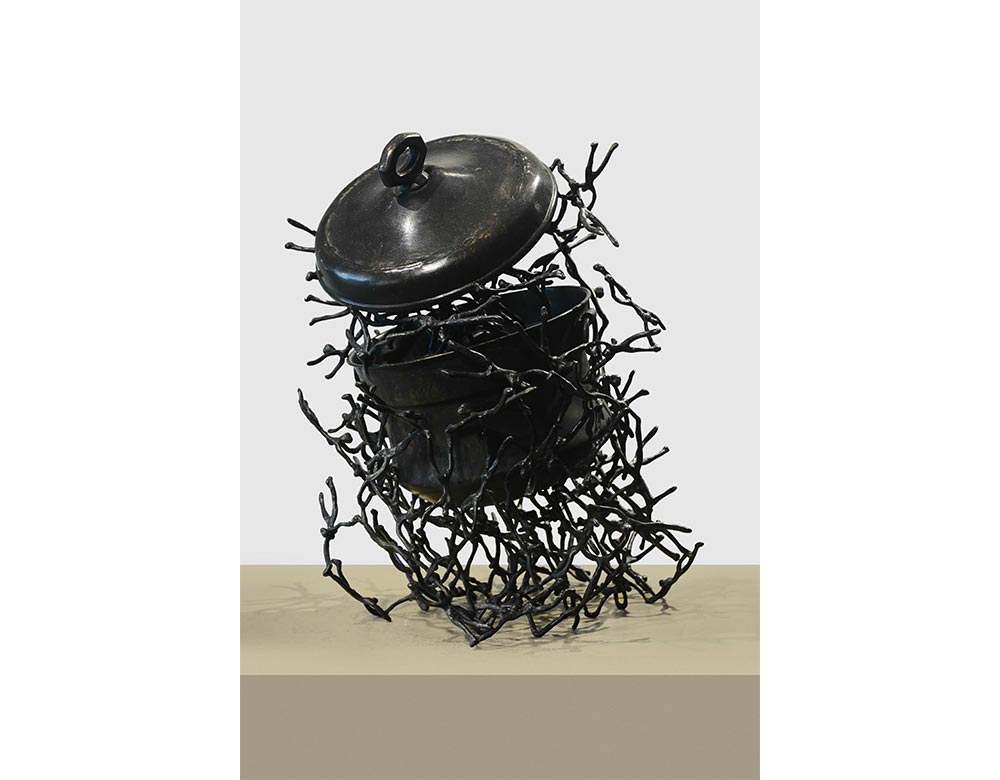
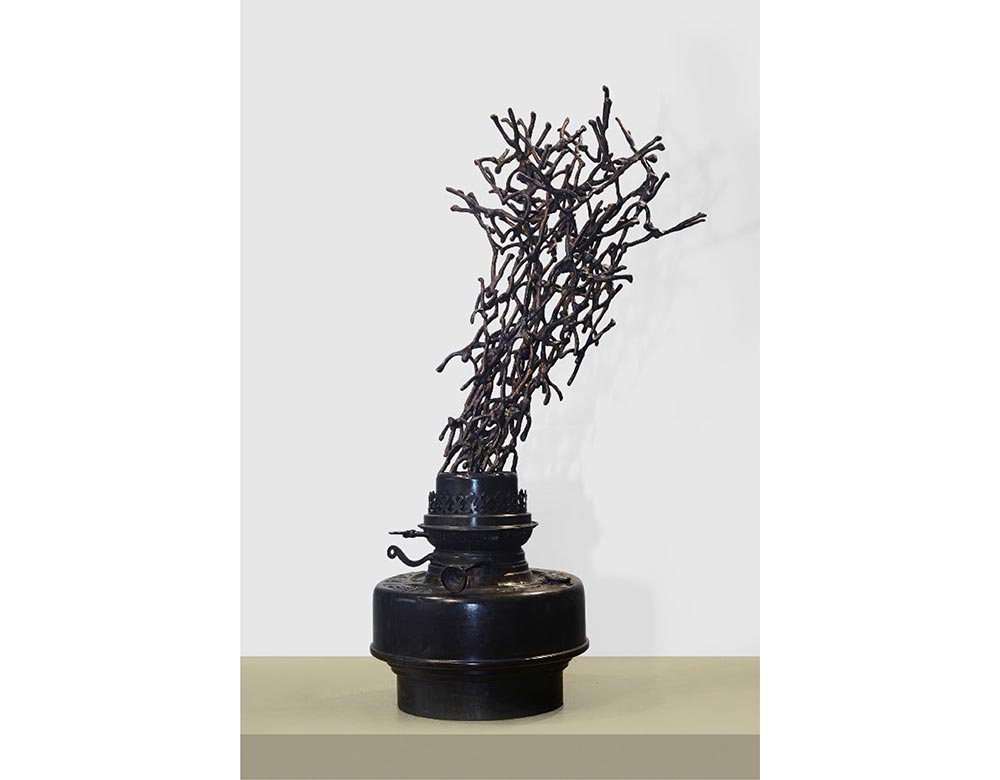
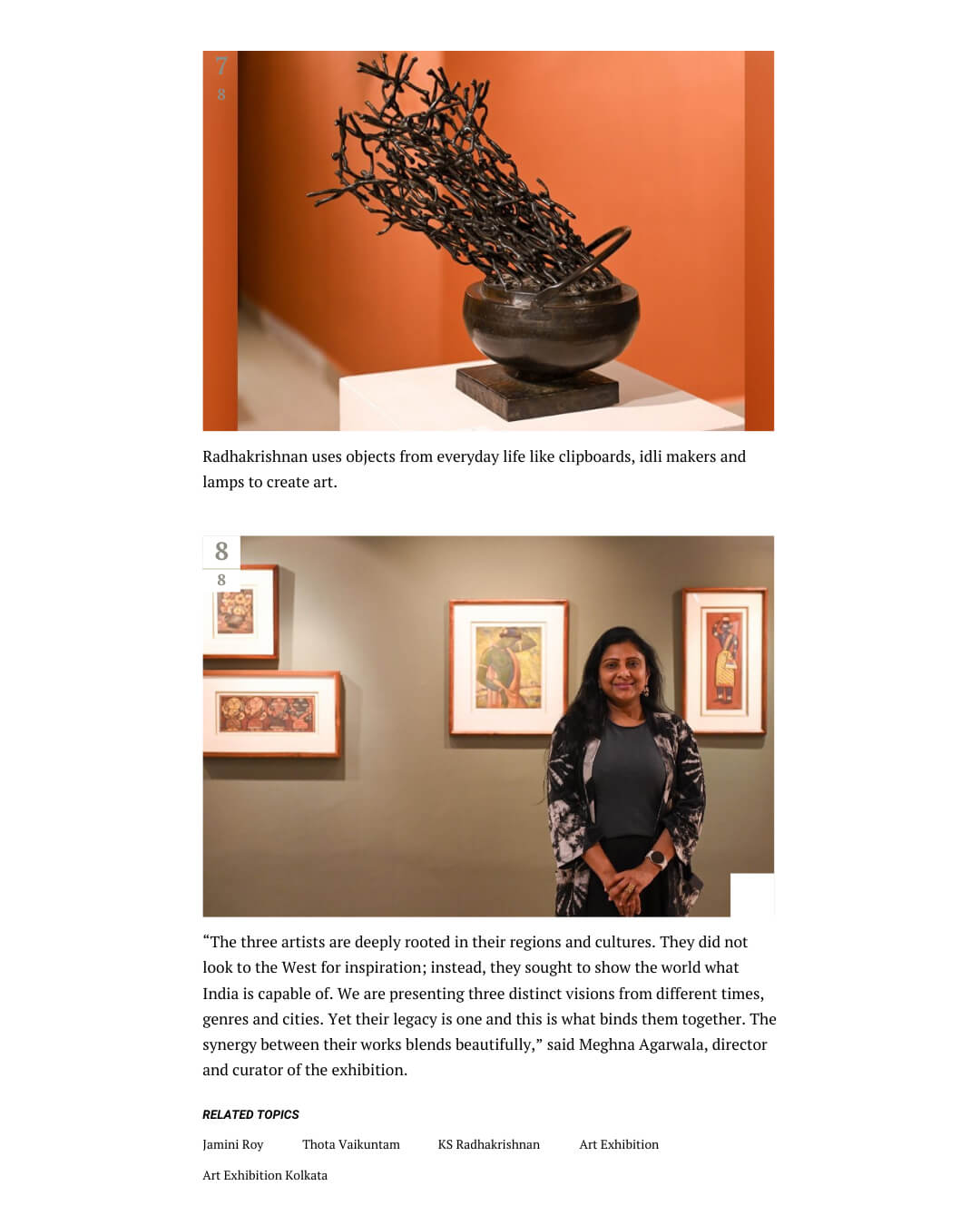
K.S. Radhakrishnan (b. 1956) is one of India’s most celebrated contemporary sculptors, known for his bronze figures that seem to defy gravity. His recurring characters, Musui and Maiya, embody the anima and animus, the male and female archetypes that populate his sculptural universe. His works are not static objects but kinetic experiences, capturing the essence of movement, migration, and transformation.
Radhakrishnan’s sculptures resonate with both Roy and Vaikuntam in their mythic undertones and engagement with identity. His figures, though abstracted, carry the same expressive energy as Roy’s painted characters and Vaikuntam’s theatrical compositions. His sculptures often depict figures in flight, balancing precariously, or caught mid-motion, creating a sense of narrative tension that mirrors the implied movement in Vaikuntam’s paintings.
Placed within this exhibition, Radhakrishnan’s works act as bridges between the painted and the sculptural, transforming the static into the dynamic. His figures, much like Roy’s mythological characters and Vaikuntam’s rural subjects, are rooted in Indian identity, yet they transcend their immediate contexts to become universal symbols of human experience.
A Legacy That Lives On
This exhibition is not just a showcase of three artists-it is a conversation across time and space, to the enduring power of Indian visual culture. Roy, Vaikuntam, and Radhakrishnan, though separated by generations and mediums, share a common vision-one that celebrates myth, form, and identity as the pillars of artistic expression.
Their works, placed together, do not merely coexist; they interact, challenge, and enrich one another, creating a dynamic experience for the viewer. The legacy they leave behind is not just in their individual works but in the resonances they create, ensuring that Indian art continues to evolve while remaining deeply rooted in its traditions.
Short read ….
The exhibition “Three Visions, One Legacy: Resonances of Myth, Form, and Identity” is structured to highlight the interactions between these three artists.
Resonances of Myth:
Roy’s mythological paintings establish the visual and narrative foundation.
Vaikuntam’s rural subjects reinterpret myth in everyday life.
Radhakrishnan’s sculptures transform myth into movement, embodying the eternal cycle of creation and transformation.
Resonances of Form:
Roy’s bold lines and flattened figures influence Vaikuntam’s graphic compositions.
Vaikuntam’s theatrical presence connects to Radhakrishnan’s sculptural dynamism.
Radhakrishnan’s bronze figures echo the expressive gestures found in both Roy and Vaikuntam’s works.
Resonances of Identity:
Roy’s folk-inspired aesthetic reclaims Indian artistic heritage.
Vaikuntam’s celebration of Telangana’s rural life grounds the exhibition in contemporary Indian identity.
Radhakrishnan’s universal human figures expand the conversation beyond India, making it globally relevant.