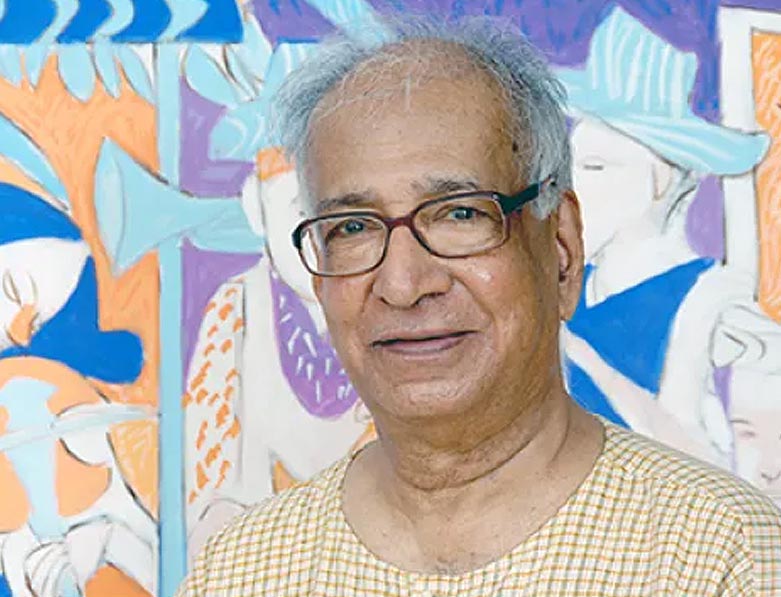
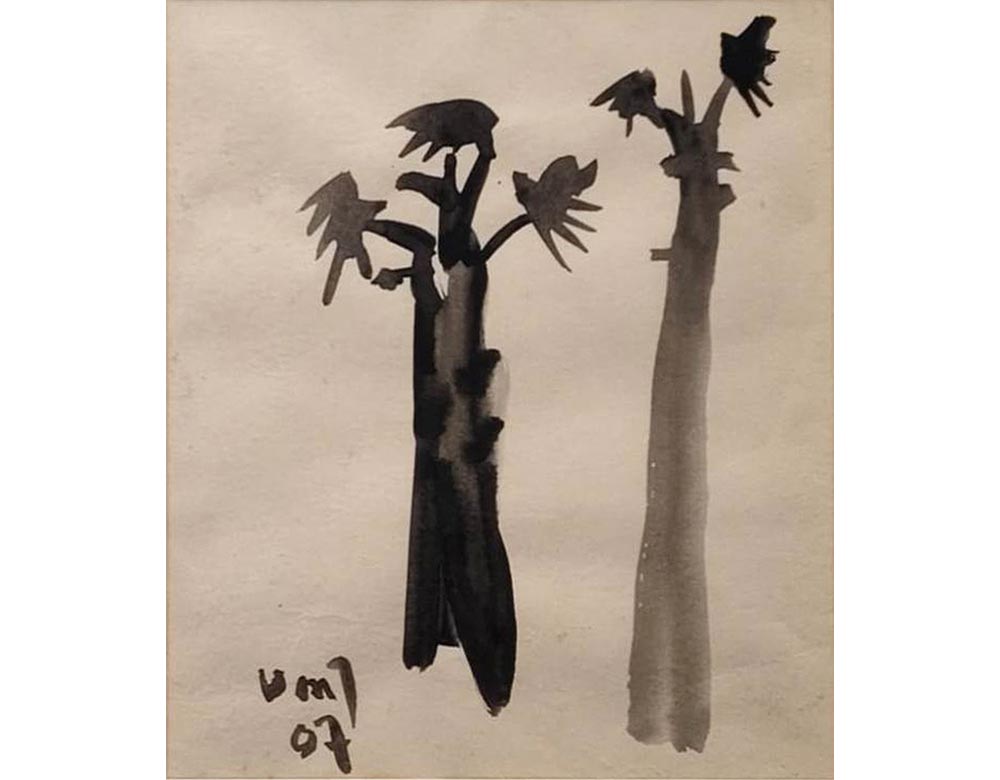
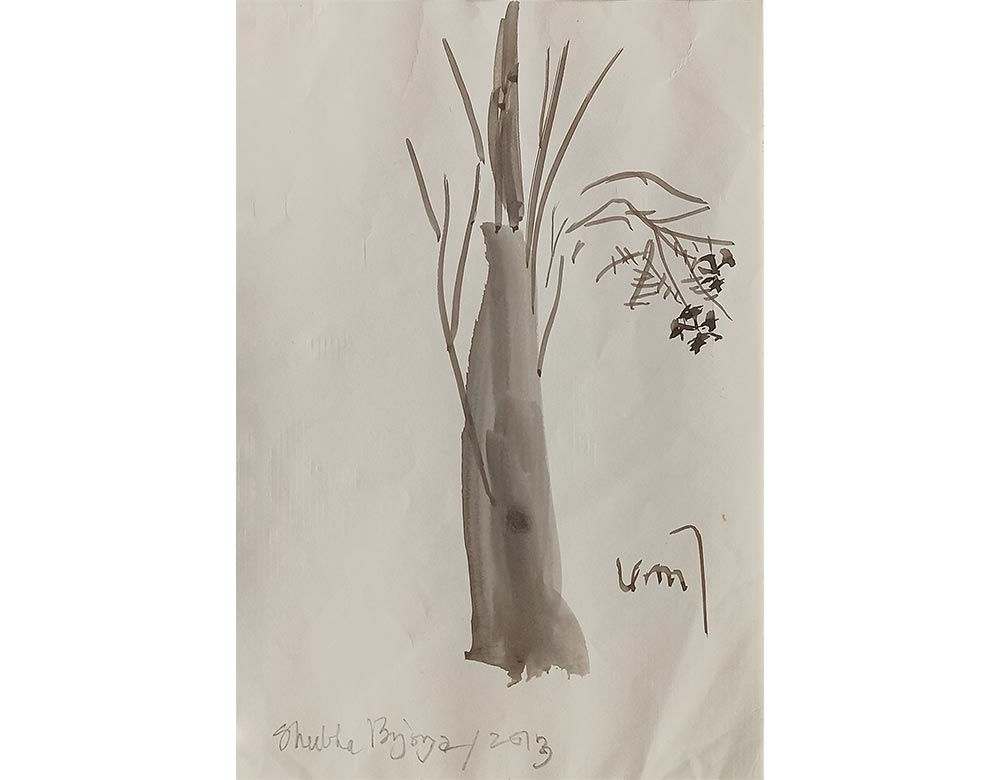
Born in Kerala on 15 February 1924, K. G. Subramanyan was studying economics at the Presidency College, Madras, when he joined India’s struggle for freedom, and was imprisoned and debarred from government colleges.
He joined Kala Bhavana at the Visva-Bharati University, Santiniketan, in 1944, a move regarded as a turning point in the life of the young man who would go on to become one of India’s most respected modern artists; he was also a sculptor, a muralist, a poet, a theoretician, and an author of repute.
At Santiniketan, Subramanyan trained under Nandalal Bose. He next joined the Faculty of Fine Arts, M. S. University, Baroda, where he would teach over several years — from 1951-59, and from 1961-80, with studying stints at Slade School of Fine Art, London, and as a John D. Rockefeller III Fund fellow in the U.S. in between. He also taught at Santiniketan from 1980-89.
A contemporary of the Progressives, Subramanyan created a different kind of modern Indian art, drawing on myths, fables and traditional narratives in a variety of mediums—from small-sized terracotta works to larger-than-life murals. He painted women, children, objects, and animals before a period of painting still-lifes exclusively in the 1960s, until the shift to the Terrace series in the ’70s.
Known for the sensuality of his imagery and figures, the nightly backdrops and reflective faces, Subramanyan’s paintings revealed a continued cubist influence. A major presence on the Indian art scene, he passed away on 29 June 2016 in Vadodara.