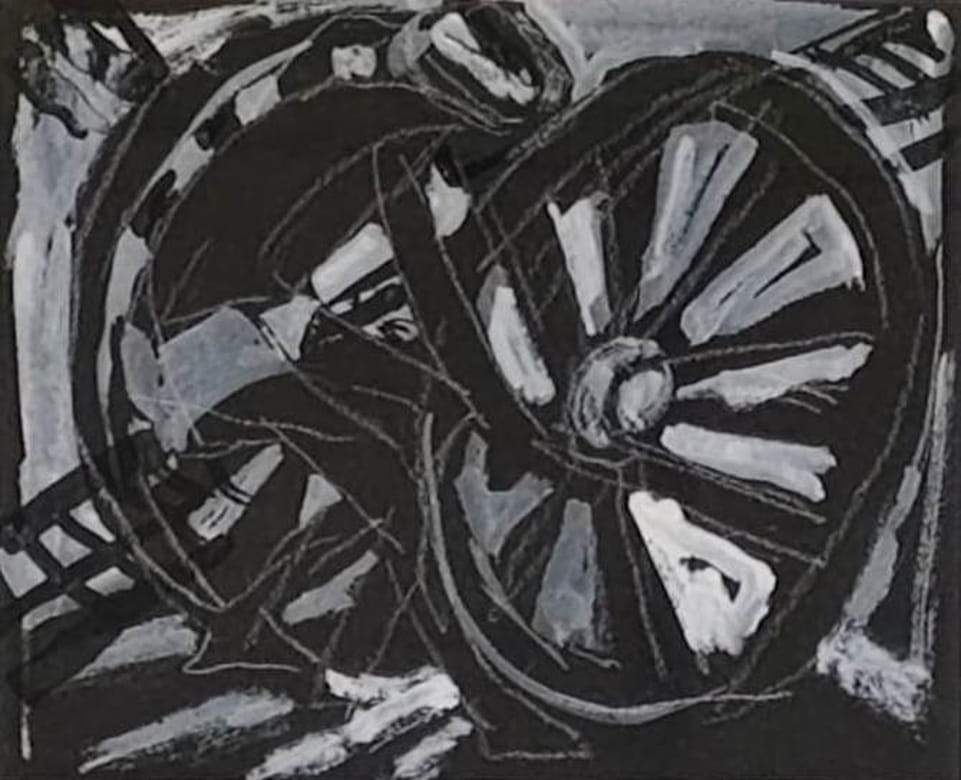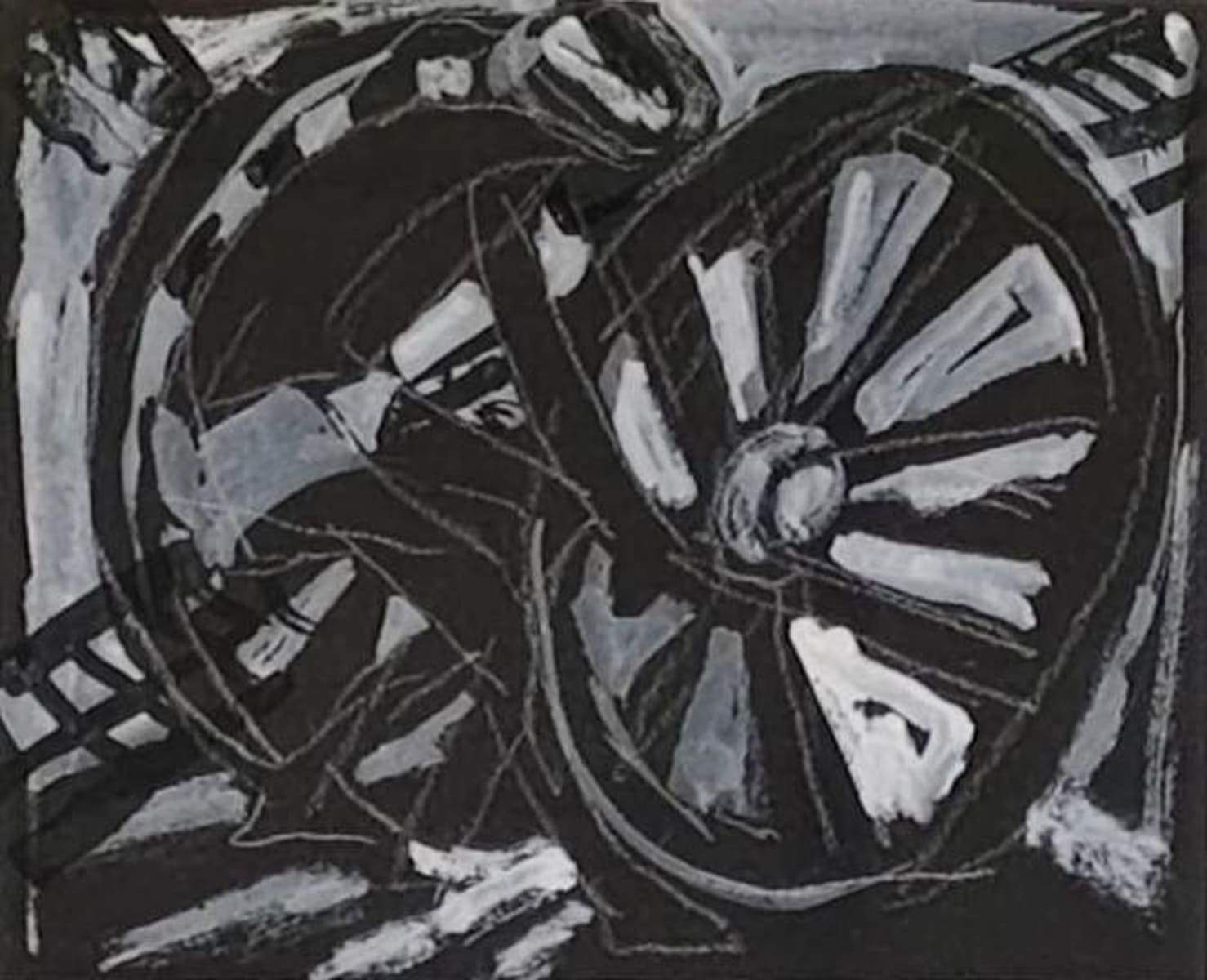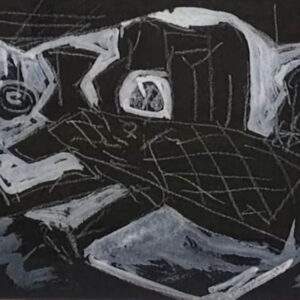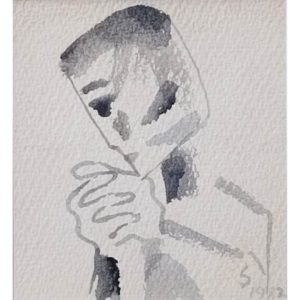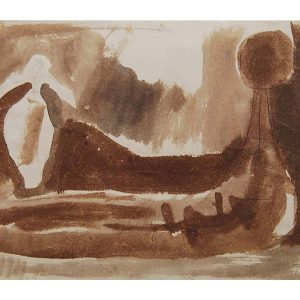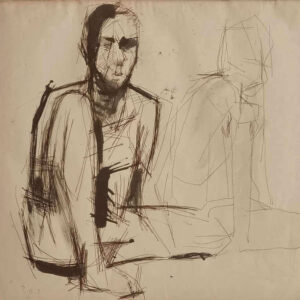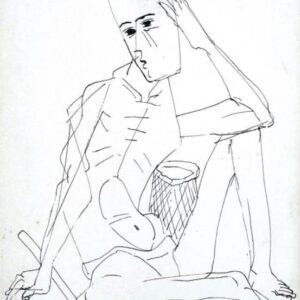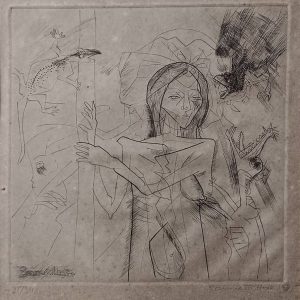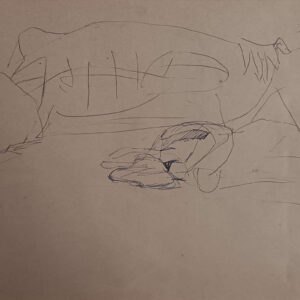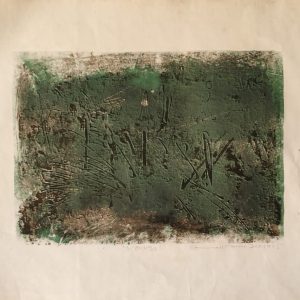
Somnath Hore | Wheel Series | Watercolour on Black Paper | 4.5 x 5.5 inches
This striking monochromatic artwork captures the powerful form of a large cart wheel through Somnath Hore’s distinctive visual language. Rendered in watercolour on black paper, the composition transforms an everyday object into a dynamic exploration of movement, labour, and memory. The bold contrasts of black, white, and grey create a dramatic interplay of light and shadow, while the sweeping, expressive brushwork gives the wheel a sense of motion and energy.
Rather than presenting a literal depiction, Hore abstracts the wheel into a network of intersecting lines, curved forms, and rhythmic spokes. The result is an image that feels both mechanical and deeply human—evoking themes of work, resilience, and the passage of time. The compact scale of the work draws the viewer closer, revealing subtle textures and layered marks that showcase the artist’s mastery of economy and expression.
This piece exemplifies Somnath Hore’s ability to find profound meaning in simple subjects, turning an ordinary wheel into a compelling symbol of endurance and life’s continuous cycle.
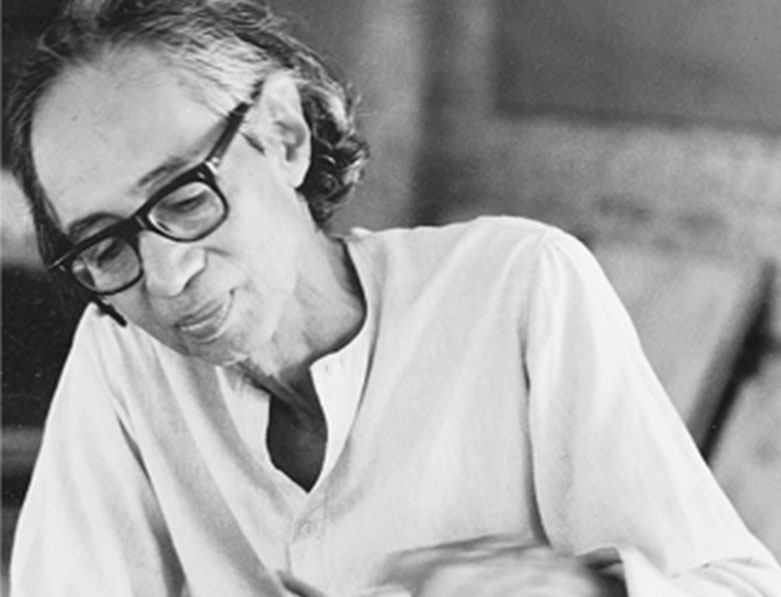
Somnath hore was the quintessential bengal artist deeply affected by the cataclysms that changed its history, such as the 1943 famine. a man-made crisis resulting in the death of two-three million people and the 1946 tebhaga peasant uprising.
A multifaceted artist who spent a lifetime exploring human suffering through his sketches, prints and sculptures, Somnath Hore was born in Chittagong in present-day Bangladesh in 1921.
Studying briefly at Government School of Art, Calcutta, in the mid-1940s, Hore trained under Zainul Abedin, and, later, under printmaker Saifuddin Ahmed. A participatory practice with fellow artists like Chittaprosad led to his intellectual growth. Hore’s early sketches were published in Janayuddha and People’s War, publications of the Communist Party; like many young men in the 1940s, Hore too joined the political party though he drifted away from it later.
Hore chose a distinctly formal, Western style of artmaking, distinguished by its strong linear quality, and guided by humanist concerns that foregrounded the indigent grappling with issues of survival. Distilled into iconic heads and emaciated bodies, his act of recovering the erased re-inscribed them into public memory. The anguished human form was reflected in Hore’s figuration through bold, minimal strokes enhanced by rough surfaces, slits and holes.
Over a thirty-year teaching career, Hore set up the printmaking department of Delhi Polytechnic in 1958. He joined Kala Bhavana, Santiniketan, as head of its printmaking department in 1968, where his own practice received a boost under the guidance of Ramkinkar Baij and Benodebehari Mukherjee.

If you’d prefer the artwork to arrive ready to hang, please get in touch with us to arrange framing and shipping at applicable charges.
Please note: Customs duties and import taxes may apply at your destination in accordance with your country’s regulations. Refer to our International Shipment document for guidance and support.
| Medium | |
|---|---|
| Height | |
| Width | |
| Surface | |
| Style |