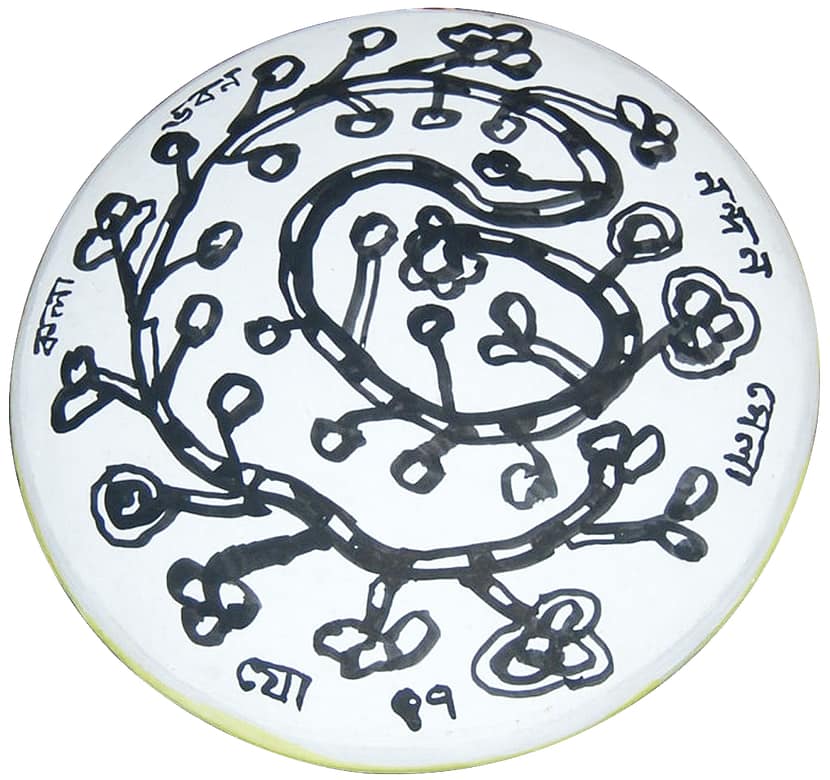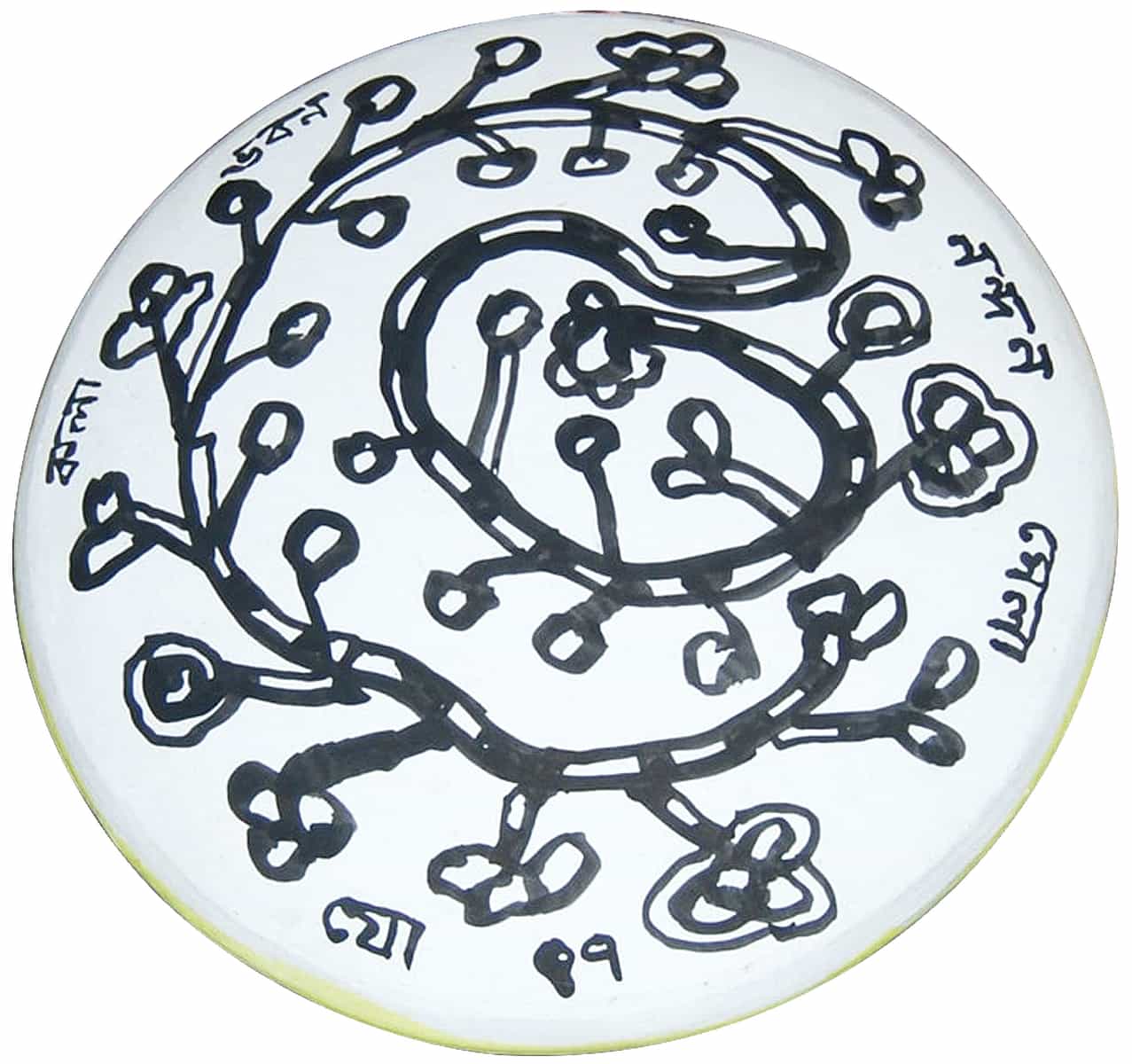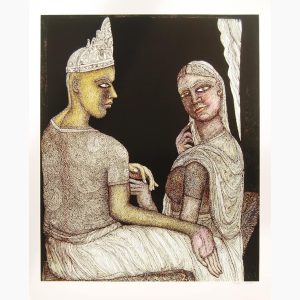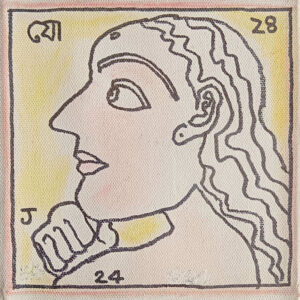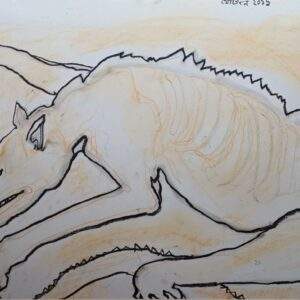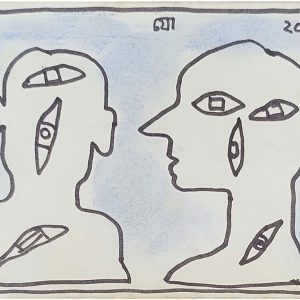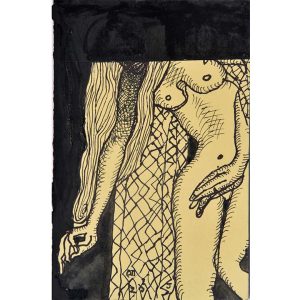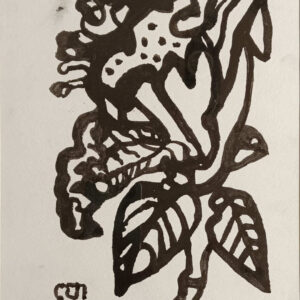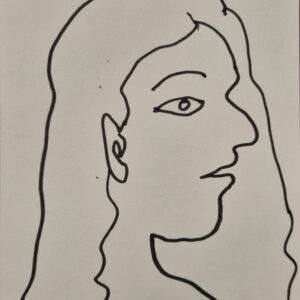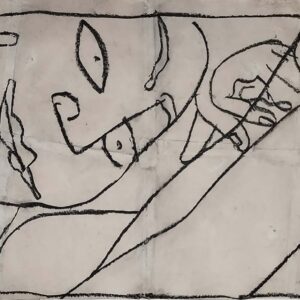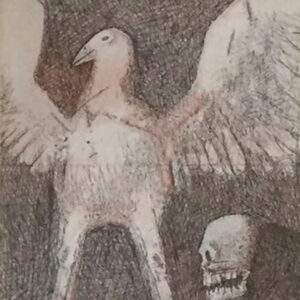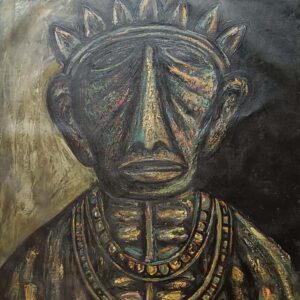
Jogen Chowdhury | Untitled (Shora) | Terracotta | 12 inches (Dia) | 2007
This striking hand-painted terracotta shora carries the timeless charm of Bengal’s folk art tradition, reimagined with bold simplicity and symbolic depth. Crafted on a circular terracotta base, the artwork features a strong black-and-white composition centered around a stylized tree-like form, surrounded by organic patterns, abstract motifs, and delicate hand-drawn details.
The bold black strokes create a sense of rhythm and movement, while the minimal palette enhances its raw, earthy elegance. The symbolic central motif evokes ideas of growth, life, and rootedness, making the piece feel both deeply traditional and refreshingly contemporary. Its circular form adds harmony and balance, making it a beautiful decorative object for walls, shelves, or curated art spaces.
Perfect for collectors of folk-inspired contemporary art, this terracotta shora reflects the beauty of handcrafted storytelling and the quiet power of simple forms. It is not just décor—it is a celebration of heritage, craftsmanship, and artistic expression.
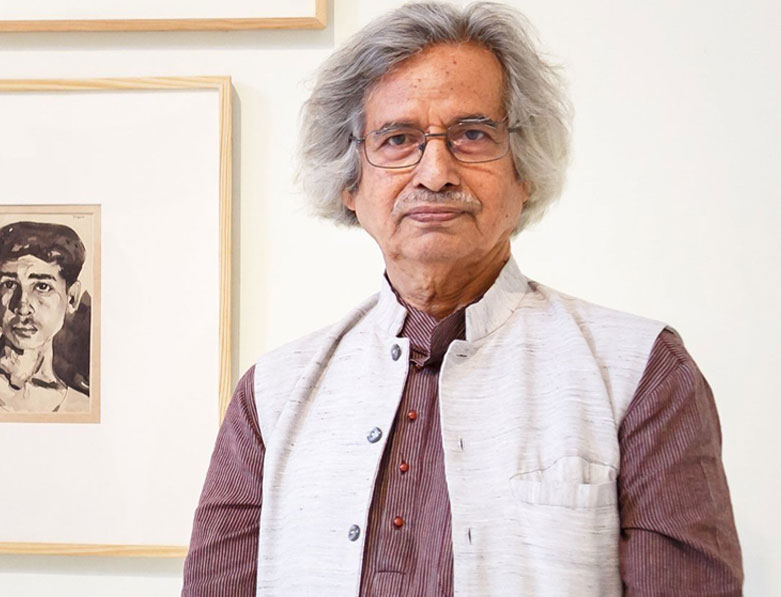 Born on 15 February, 1939 in Faridpur (now in Bangladesh), Jogen Chowdhury’s family moved to Calcutta following the partition.
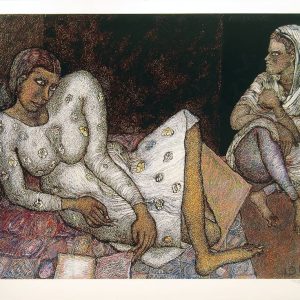
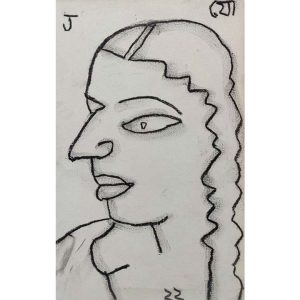
Chowdhury studied art at the Government College of Art and Crafts, Calcutta, and subsequently at École Nationale Supérieure des Beaux-Arts, Paris. A student of Prodosh Das Gupta, Chowdhury worked in the expressionist style of figuration in his early years. He created his own gallery of the grotesque, featuring lewd men with bellies like sacks and women with loose, hanging breasts. The Paris sojourn sharpened his creative thought process, helping in the evolution of his distinctive personal style.

If you’d prefer the artwork to arrive ready to hang, please get in touch with us to arrange framing and shipping at applicable charges.
Please note: Customs duties and import taxes may apply at your destination in accordance with your country’s regulations. Refer to our International Shipment document for guidance and support.
| Medium | |
|---|---|
| Surface | |
| Dia | 12 inch |
| Style |