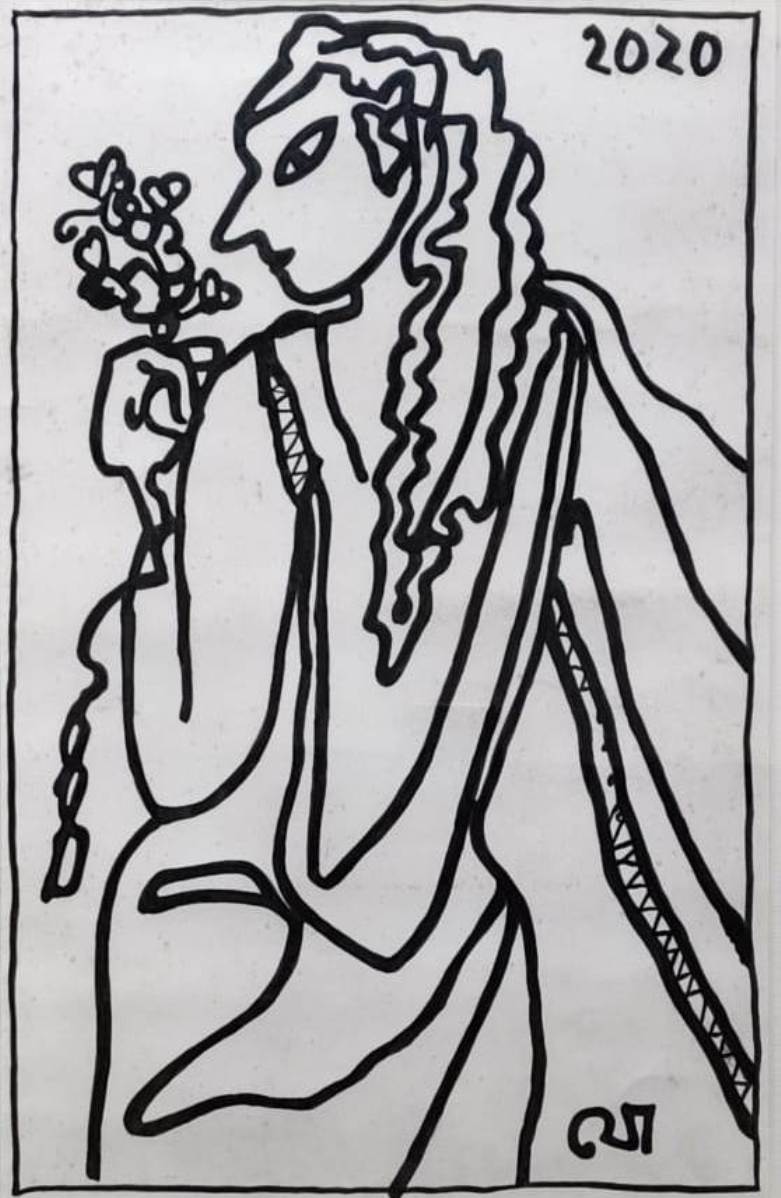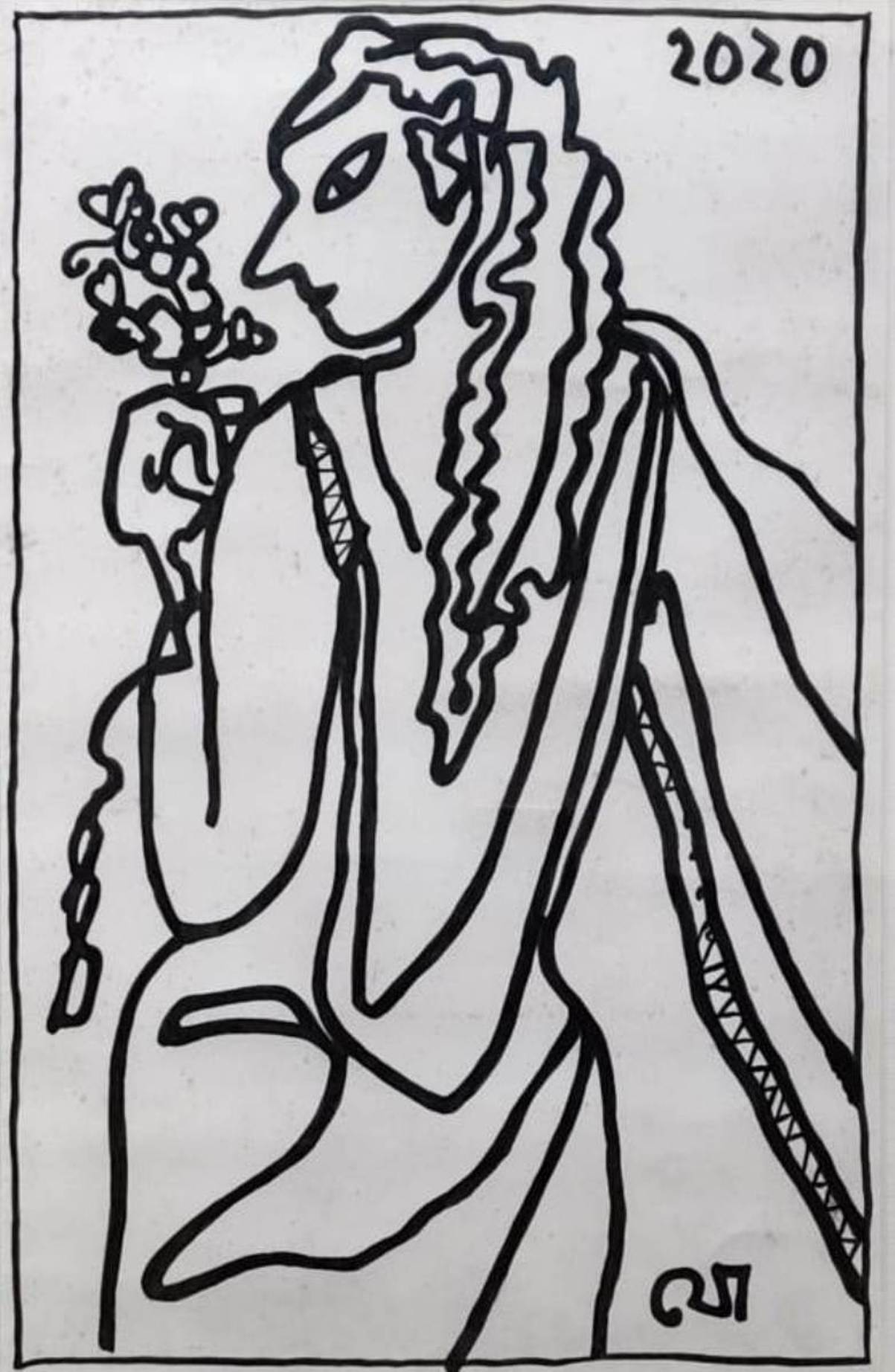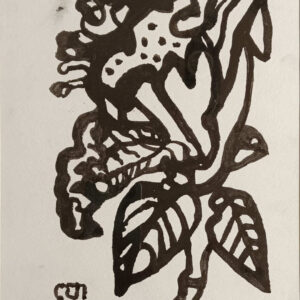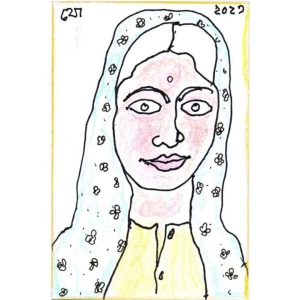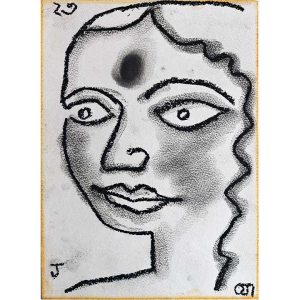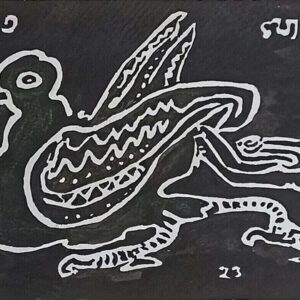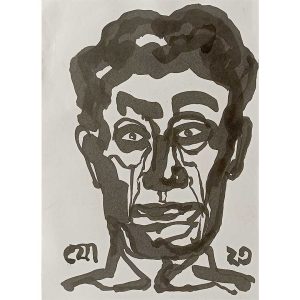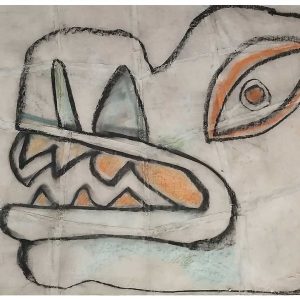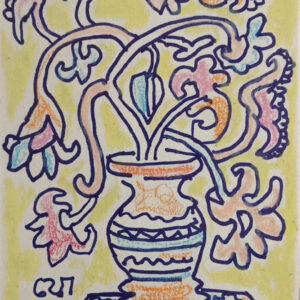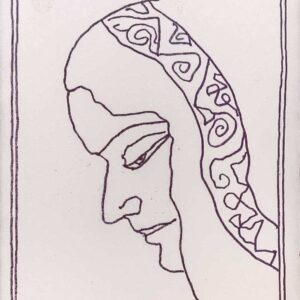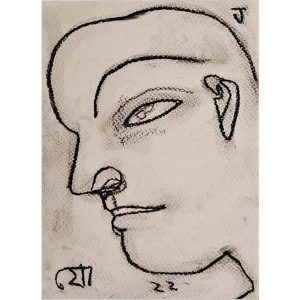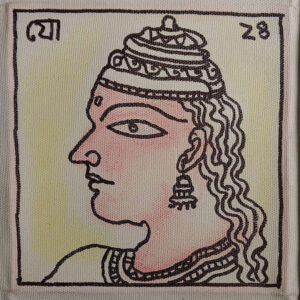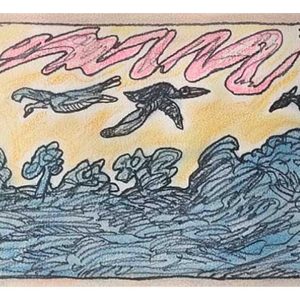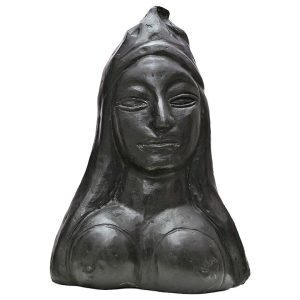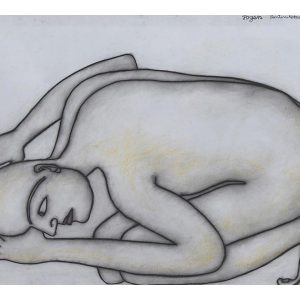
Jogen Chowdhury | Untitled | Ink on Paper | 23 x 17 inches | 2020
In this striking ink-on-paper work, Jogen Chowdhury distills emotion into the power of line. A young woman, draped in a flowing sari, gently lifts a small cluster of flowers toward her face — a gesture that feels intimate, almost meditative. Rendered entirely in bold, confident black contours, the figure emerges through rhythmic, undulating lines that define her profile, cascading hair, and the graceful folds of fabric.
There is a quiet strength in the simplicity. The absence of color draws attention to expression and posture — the elongated face, the stylized eye, the delicately bent wrist. The lines are not merely outlines; they breathe, pulse, and move, giving the figure both weight and tenderness. The composition feels timeless, echoing folk influences while remaining unmistakably contemporary.
This 2020 work is a beautiful example of Chowdhury’s mastery over minimalism — where a few deliberate strokes are enough to create mood, character, and story.
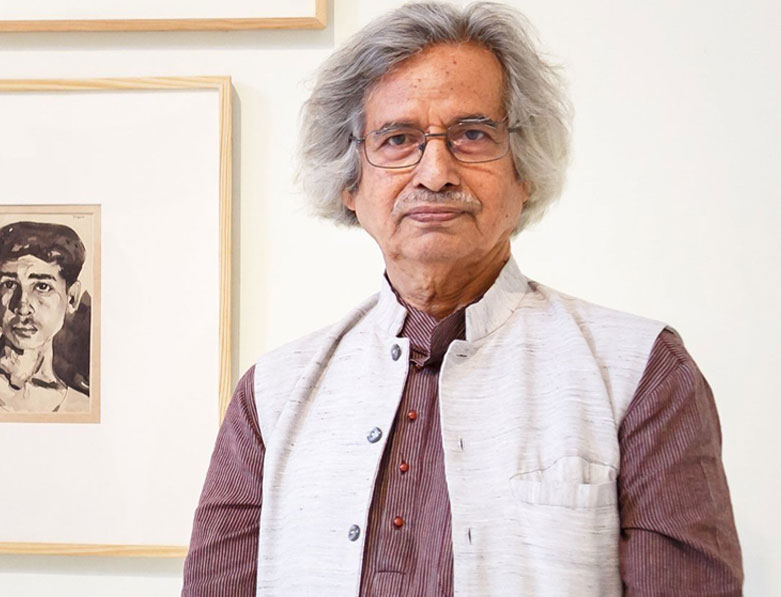 Born on 15 February, 1939 in Faridpur (now in Bangladesh), Jogen Chowdhury’s family moved to Calcutta following the partition.
Chowdhury studied art at the Government College of Art and Crafts, Calcutta, and subsequently at École Nationale Supérieure des Beaux-Arts, Paris. A student of Prodosh Das Gupta, Chowdhury worked in the expressionist style of figuration in his early years. He created his own gallery of the grotesque, featuring lewd men with bellies like sacks and women with loose, hanging breasts. The Paris sojourn sharpened his creative thought process, helping in the evolution of his distinctive personal style.

If you’d prefer the artwork to arrive ready to hang, please get in touch with us to arrange framing and shipping at applicable charges.
Please note: Customs duties and import taxes may apply at your destination in accordance with your country’s regulations. Refer to our International Shipment document for guidance and support.
| Medium | |
|---|---|
| Surface | |
| Height | |
| Width | |
| Style |