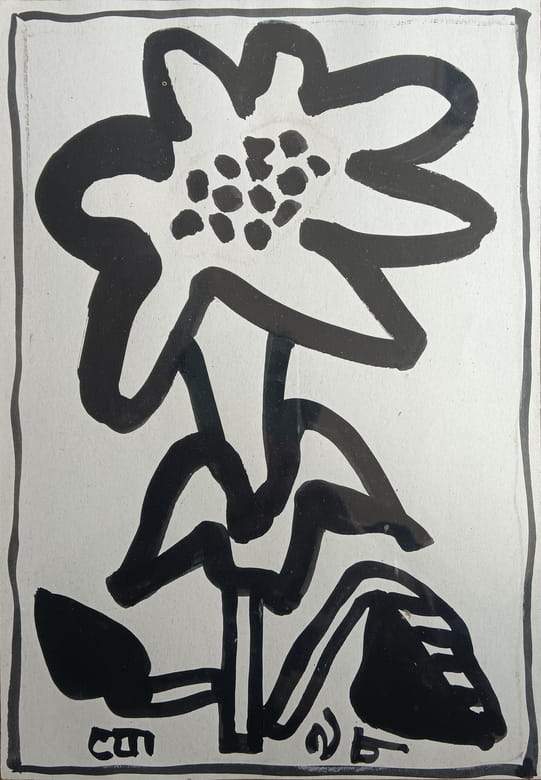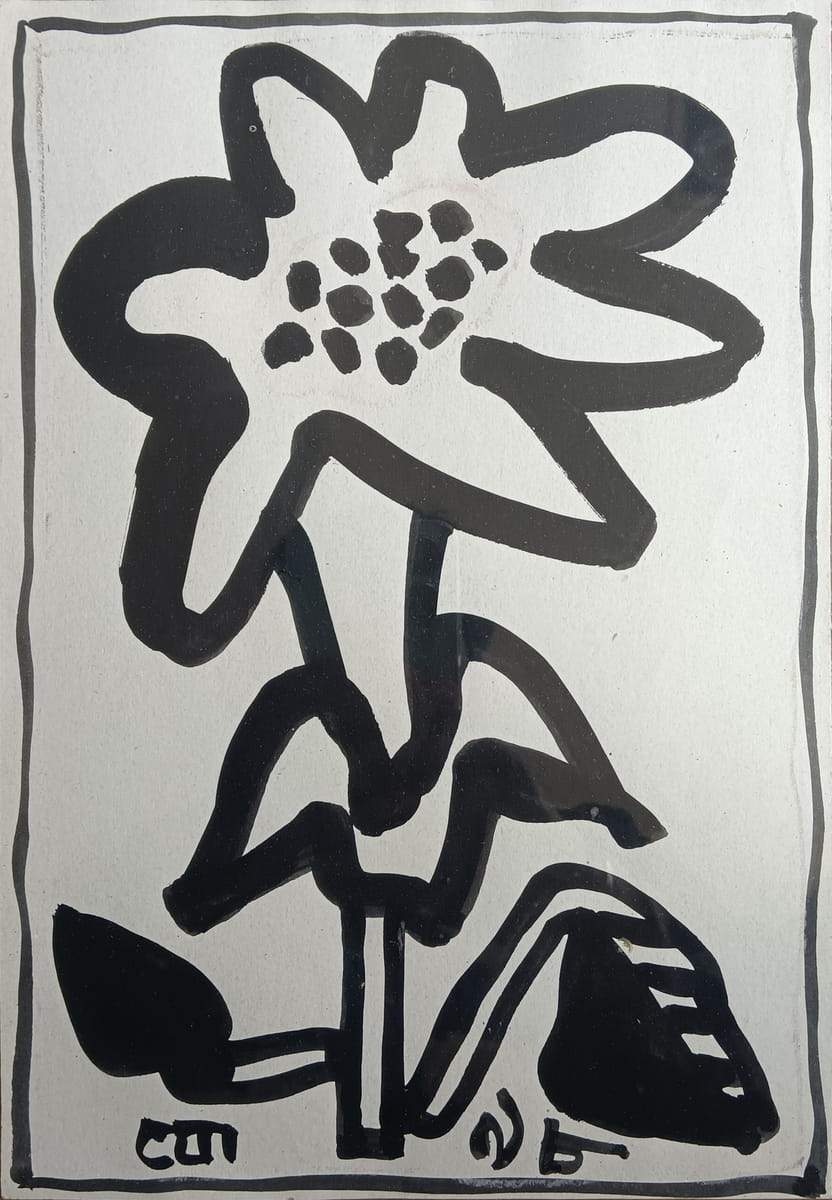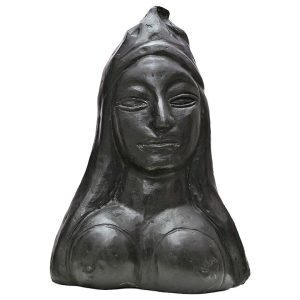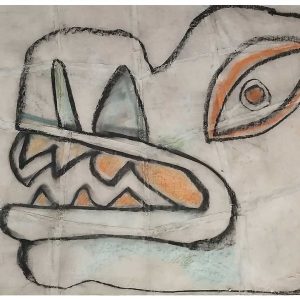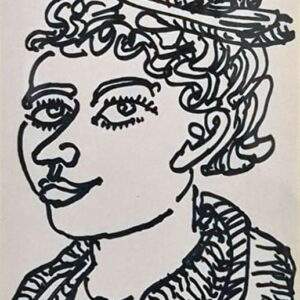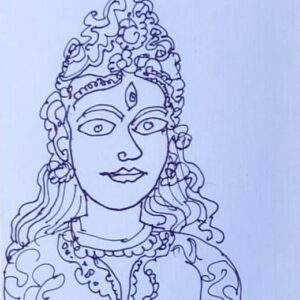
Jogen Chowdhury | Untitled | Ink & Brush on Paper | 11 x 7.5 inches | 1998
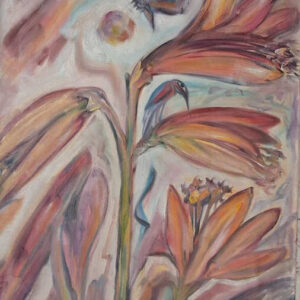
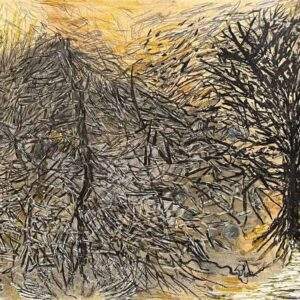
This striking ink-and-brush artwork demonstrates the beauty of simplicity, where a few bold, confident strokes are enough to create a powerful visual statement. Depicting a single blooming flower, the composition strips away unnecessary detail and focuses on form, rhythm, and balance, allowing the essence of the subject to take center stage.
The flower emerges through sweeping black lines that define its petals, stem, and leaves with remarkable spontaneity and energy. The bold contours create a sense of movement, as though the flower is gently swaying in an unseen breeze. At the center, clustered shapes suggest seeds or pollen, adding a subtle focal point that balances the open, flowing structure of the bloom.
The stark contrast between black ink and the untouched white paper enhances the artwork’s graphic quality, drawing attention to the artist’s masterful control of line and space. Every mark feels intentional yet effortless, reflecting a deep understanding of how minimal forms can evoke complex emotions and visual harmony.
Beyond its botanical subject, the artwork celebrates growth, resilience, and the quiet elegance found in nature. Its timeless simplicity invites viewers to slow down and appreciate the beauty of ordinary forms transformed through artistic vision. Refined yet expressive, this piece is a wonderful example of how less can truly become more.
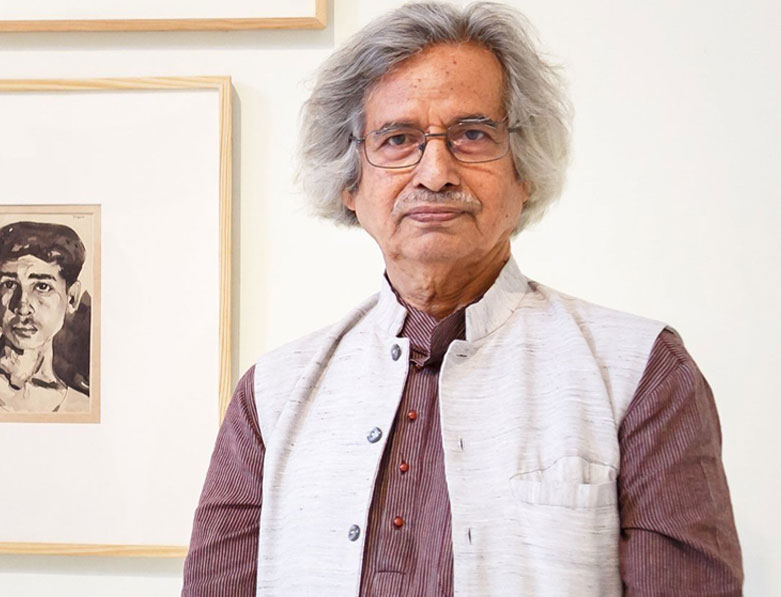 Born on 15 February, 1939 in Faridpur (now in Bangladesh), Jogen Chowdhury’s family moved to Calcutta following the partition.
Chowdhury studied art at the Government College of Art and Crafts, Calcutta, and subsequently at École Nationale Supérieure des Beaux-Arts, Paris. A student of Prodosh Das Gupta, Chowdhury worked in the expressionist style of figuration in his early years. He created his own gallery of the grotesque, featuring lewd men with bellies like sacks and women with loose, hanging breasts. The Paris sojourn sharpened his creative thought process, helping in the evolution of his distinctive personal style.

If you’d prefer the artwork to arrive ready to hang, please get in touch with us to arrange framing and shipping at applicable charges.
Please note: Customs duties and import taxes may apply at your destination in accordance with your country’s regulations. Refer to our International Shipment document for guidance and support.
| Medium | |
|---|---|
| Height | |
| Width | |
| Surface | |
| Style |