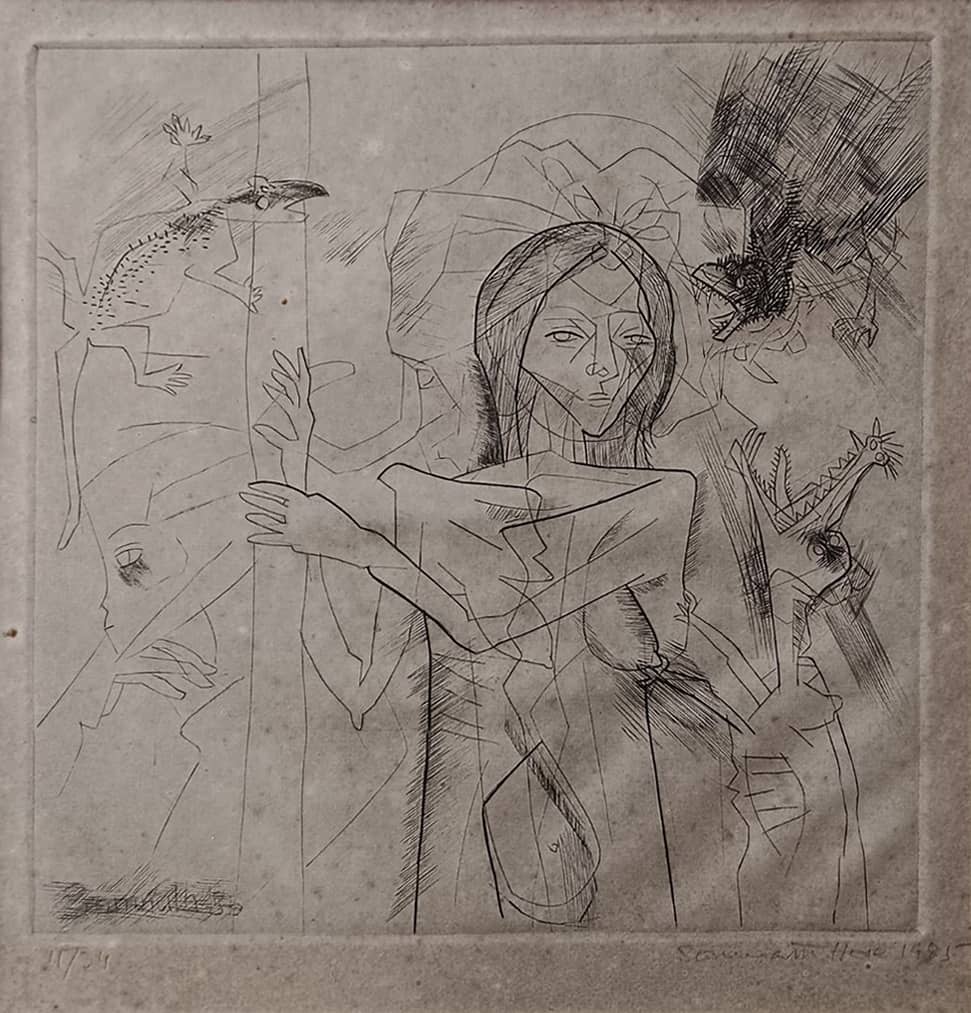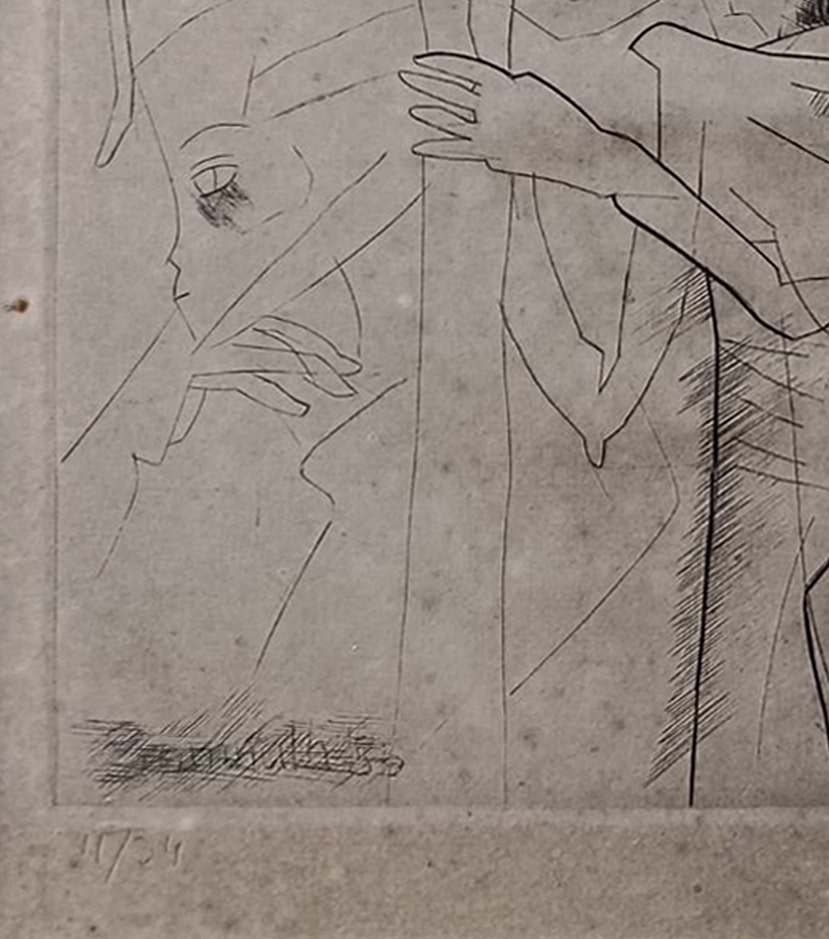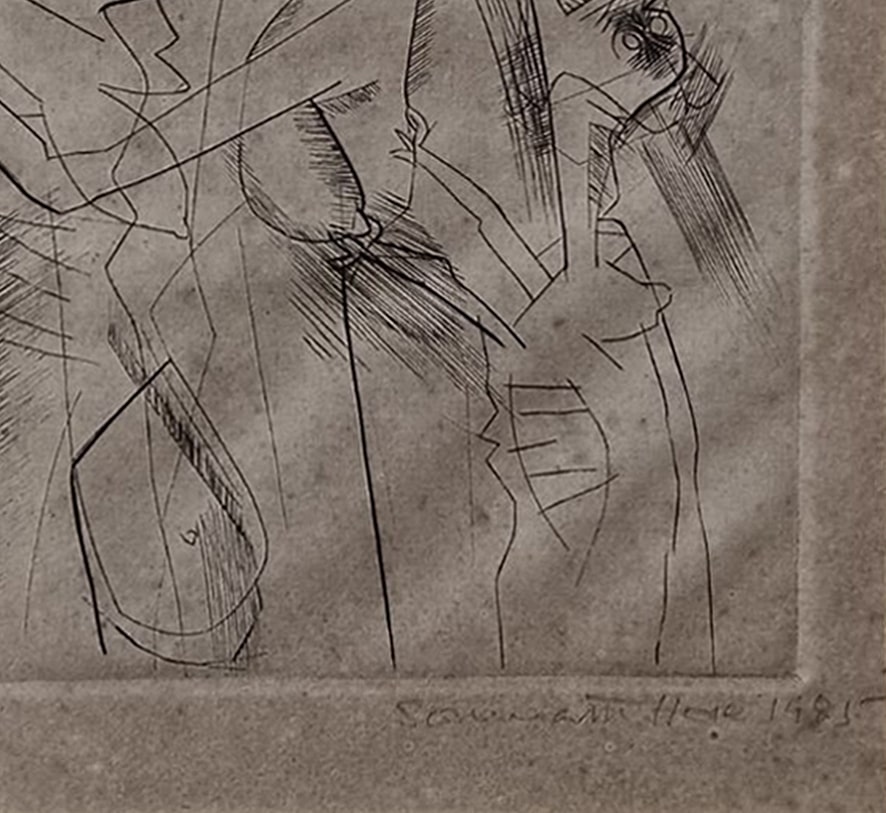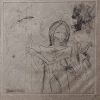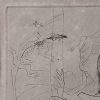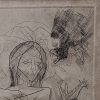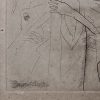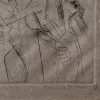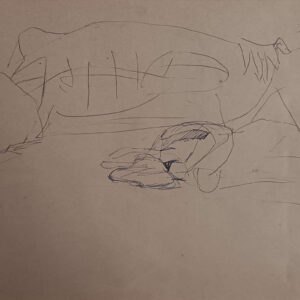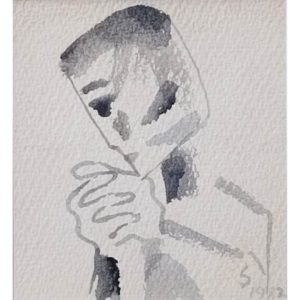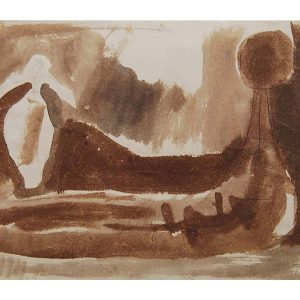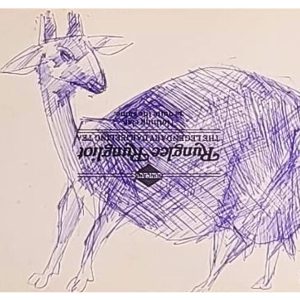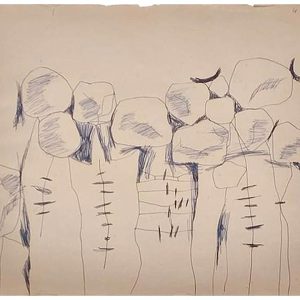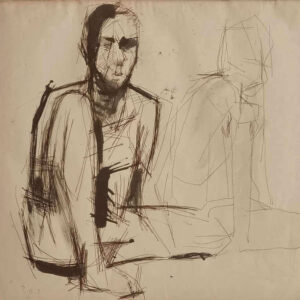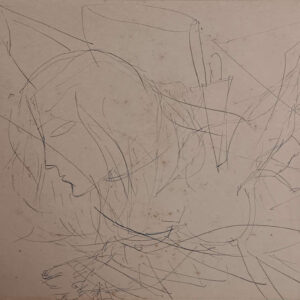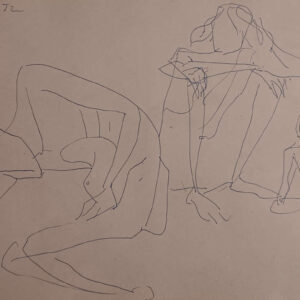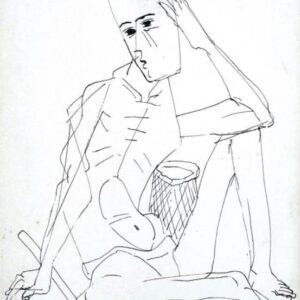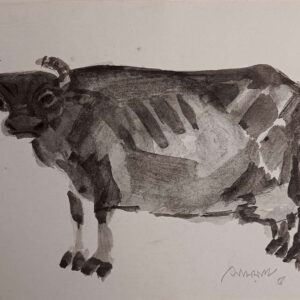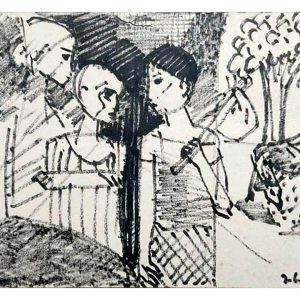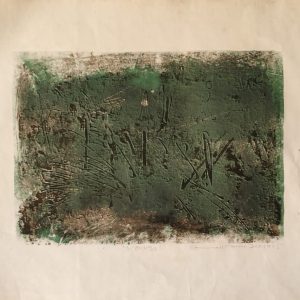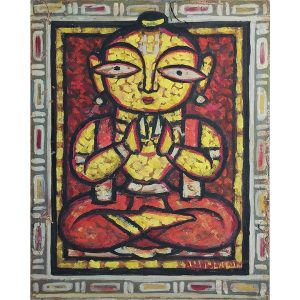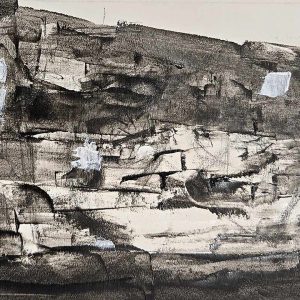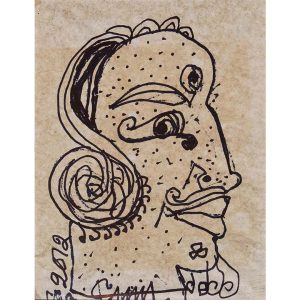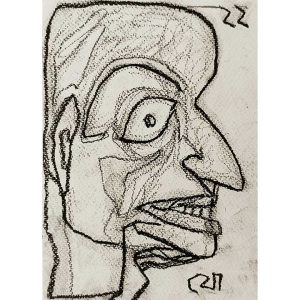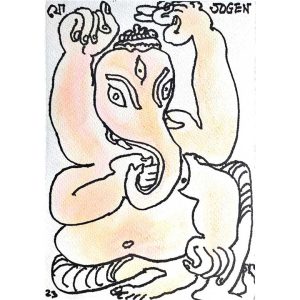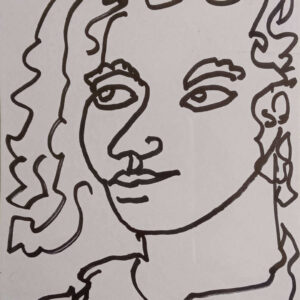
Somnath Hore | Untitled | AP – 11/34 | Etching on Paper | 11 x 10.5 inches | 1985
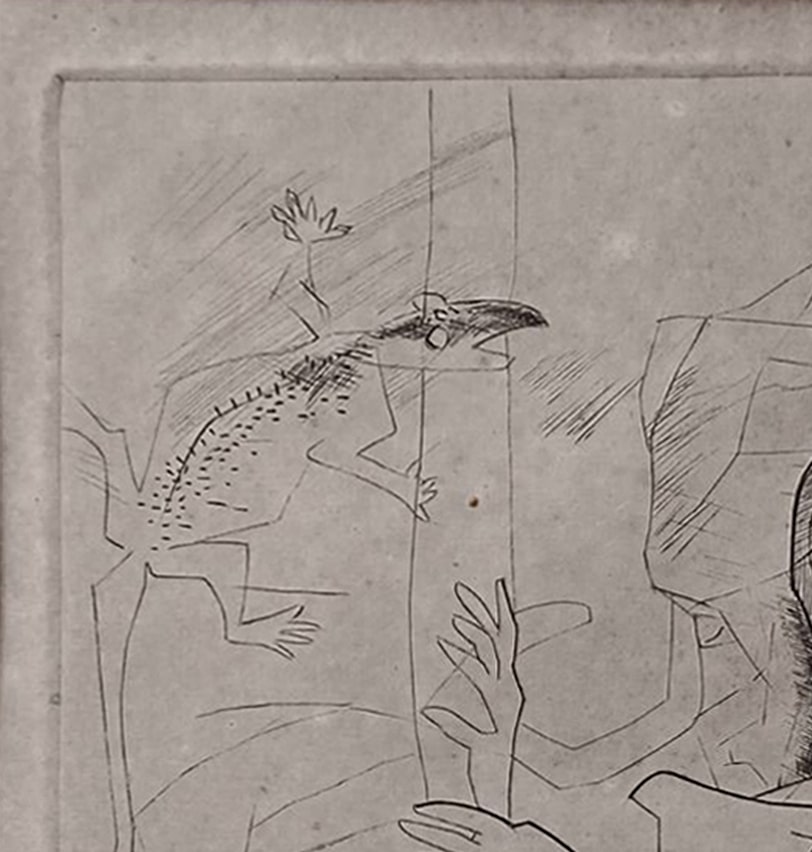
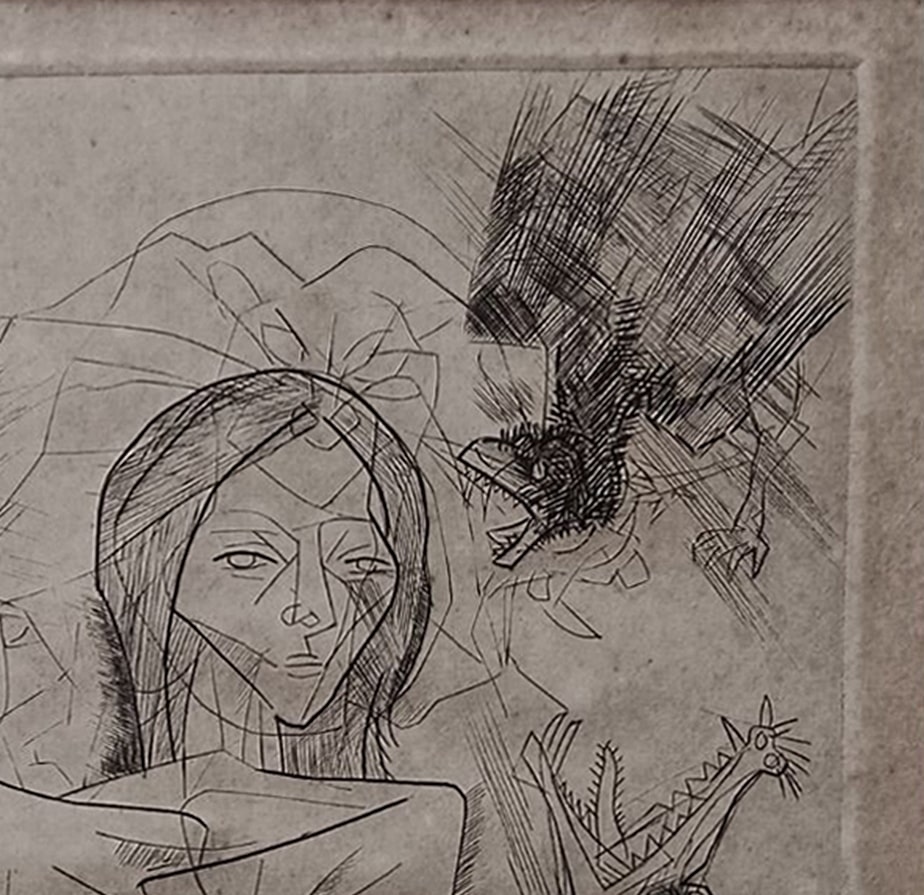
Somnath Hore, a towering figure in modern Indian art, was deeply influenced by human suffering and social injustice. This work, rendered in fine, expressive lines on a subdued, almost raw surface, is a striking example of his minimalist and emotionally potent visual language. At the center is a woman, drawn with fragmented, overlapping contours, caught in a surreal and disturbing scene where lizard-like creatures and strange figures surround her. The disjointed forms and etched textures evoke psychological distress, alienation, and violence — core themes in Hore’s oeuvre.
Created in the aftermath of political unrest and famine, this artwork resonates with the artist’s lifelong concern for the marginalized. His visual syntax avoids ornamentation, focusing instead on raw, expressive power. This print captures the vulnerability of the human figure within a fractured world — making it a profound work of socio-political commentary.
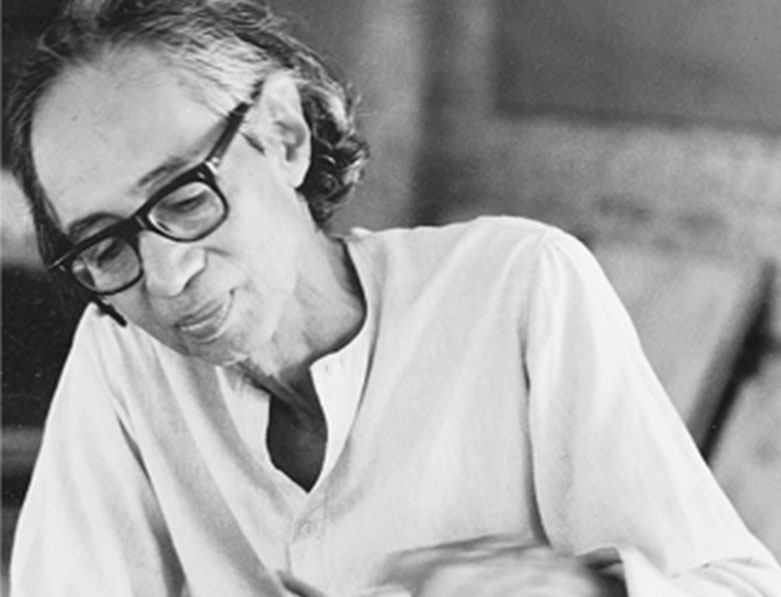
Somnath hore was the quintessential bengal artist deeply affected by the cataclysms that changed its history, such as the 1943 famine. a man-made crisis resulting in the death of two-three million people and the 1946 tebhaga peasant uprising.
A multifaceted artist who spent a lifetime exploring human suffering through his sketches, prints and sculptures, Somnath Hore was born in Chittagong in present-day Bangladesh in 1921.
Studying briefly at Government School of Art, Calcutta, in the mid-1940s, Hore trained under Zainul Abedin, and, later, under printmaker Saifuddin Ahmed. A participatory practice with fellow artists like Chittaprosad led to his intellectual growth. Hore’s early sketches were published in Janayuddha and People’s War, publications of the Communist Party; like many young men in the 1940s, Hore too joined the political party though he drifted away from it later.
Hore chose a distinctly formal, Western style of artmaking, distinguished by its strong linear quality, and guided by humanist concerns that foregrounded the indigent grappling with issues of survival. Distilled into iconic heads and emaciated bodies, his act of recovering the erased re-inscribed them into public memory. The anguished human form was reflected in Hore’s figuration through bold, minimal strokes enhanced by rough surfaces, slits and holes.
Over a thirty-year teaching career, Hore set up the printmaking department of Delhi Polytechnic in 1958. He joined Kala Bhavana, Santiniketan, as head of its printmaking department in 1968, where his own practice received a boost under the guidance of Ramkinkar Baij and Benodebehari Mukherjee.

If you’d prefer the artwork to arrive ready to hang, please get in touch with us to arrange framing and shipping at applicable charges.
Please note: Customs duties and import taxes may apply at your destination in accordance with your country’s regulations. Refer to our International Shipment document for guidance and support.
| Dimensions | 27.9 × 26.6 cm |
|---|---|
| Medium | |
| Height | |
| Width | |
| Surface | |
| Style |