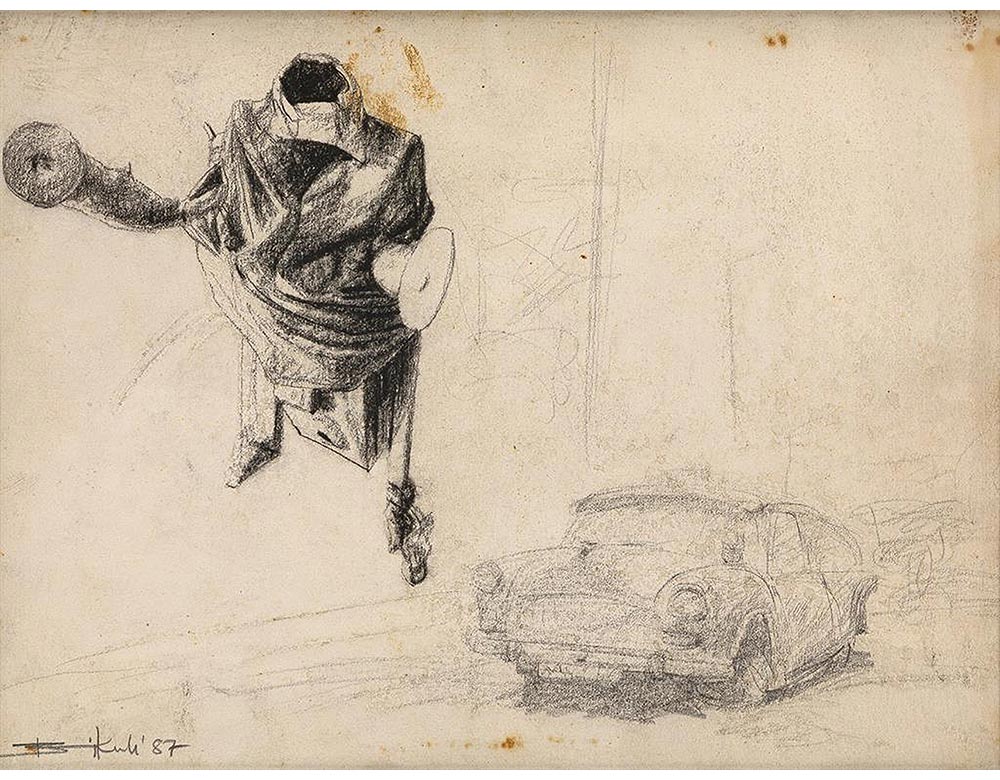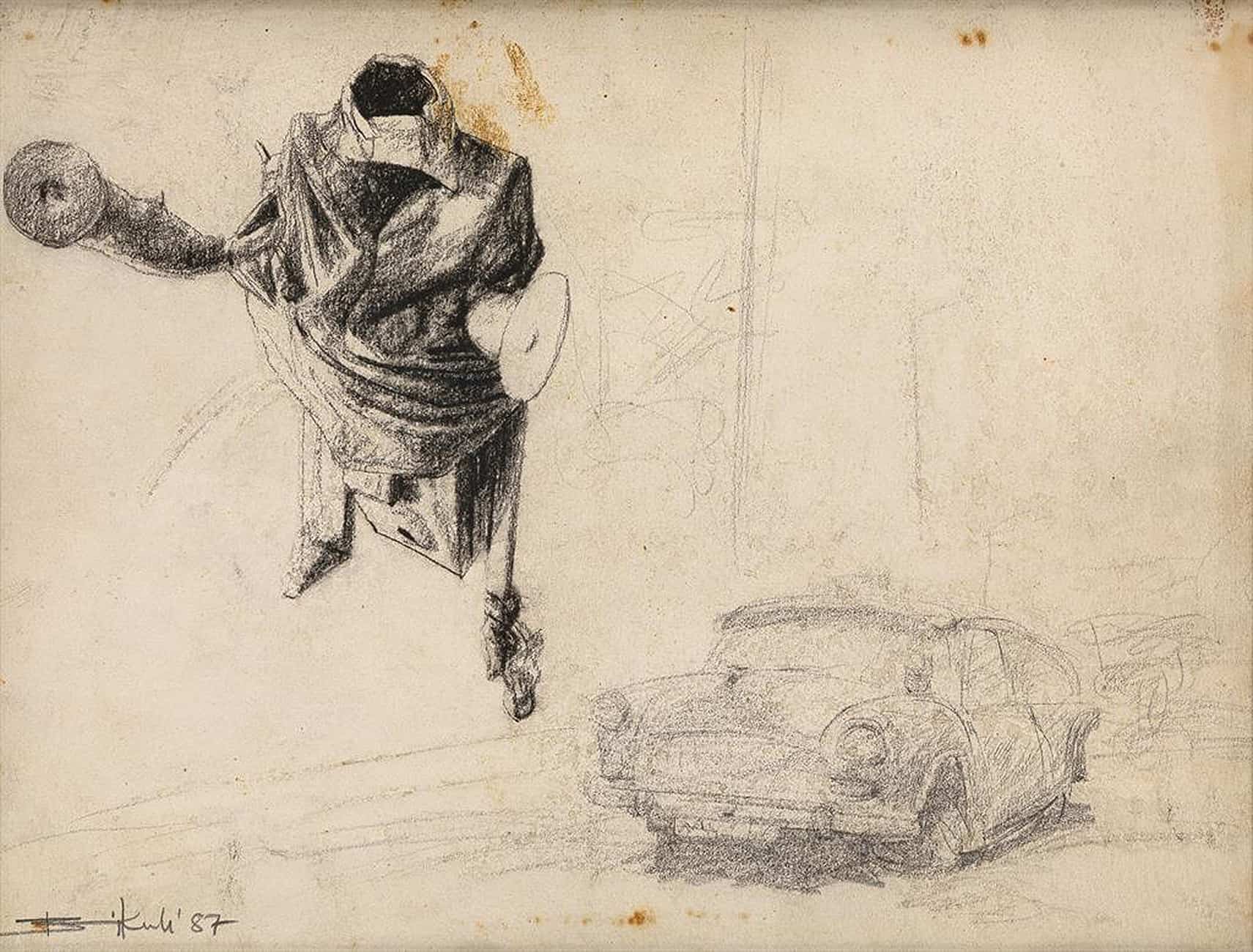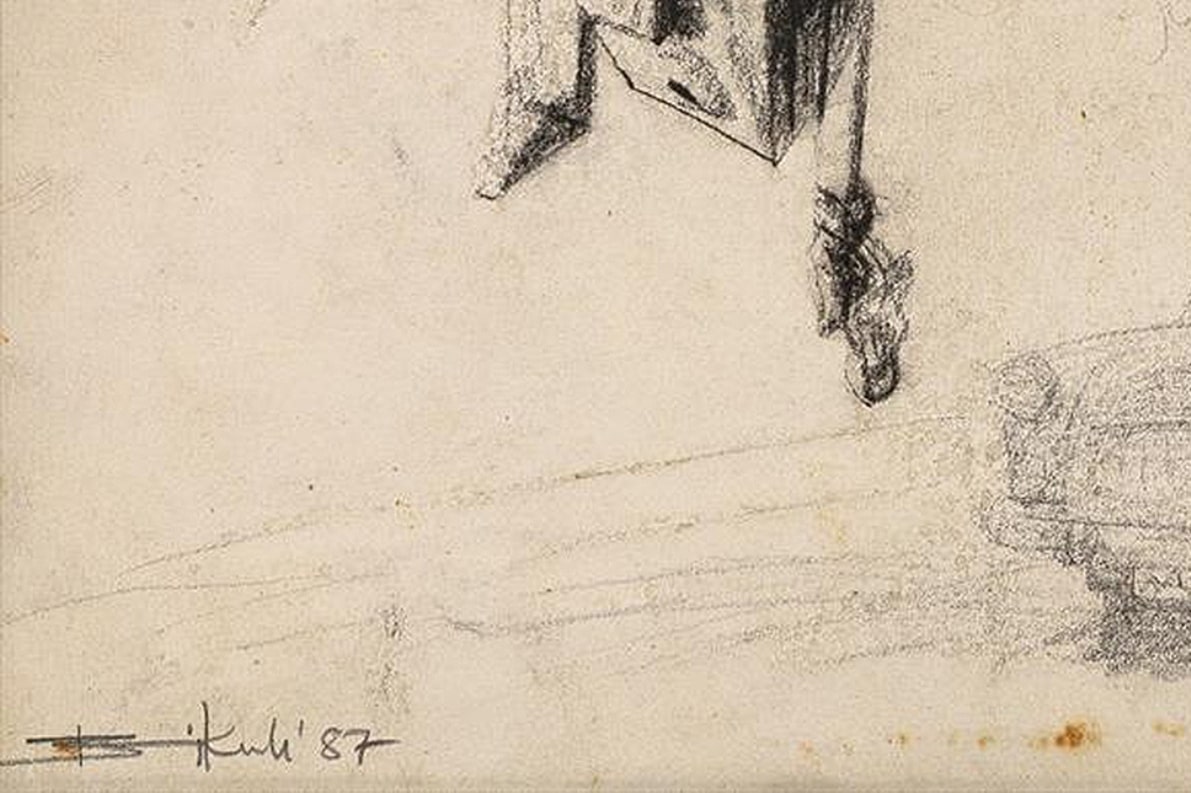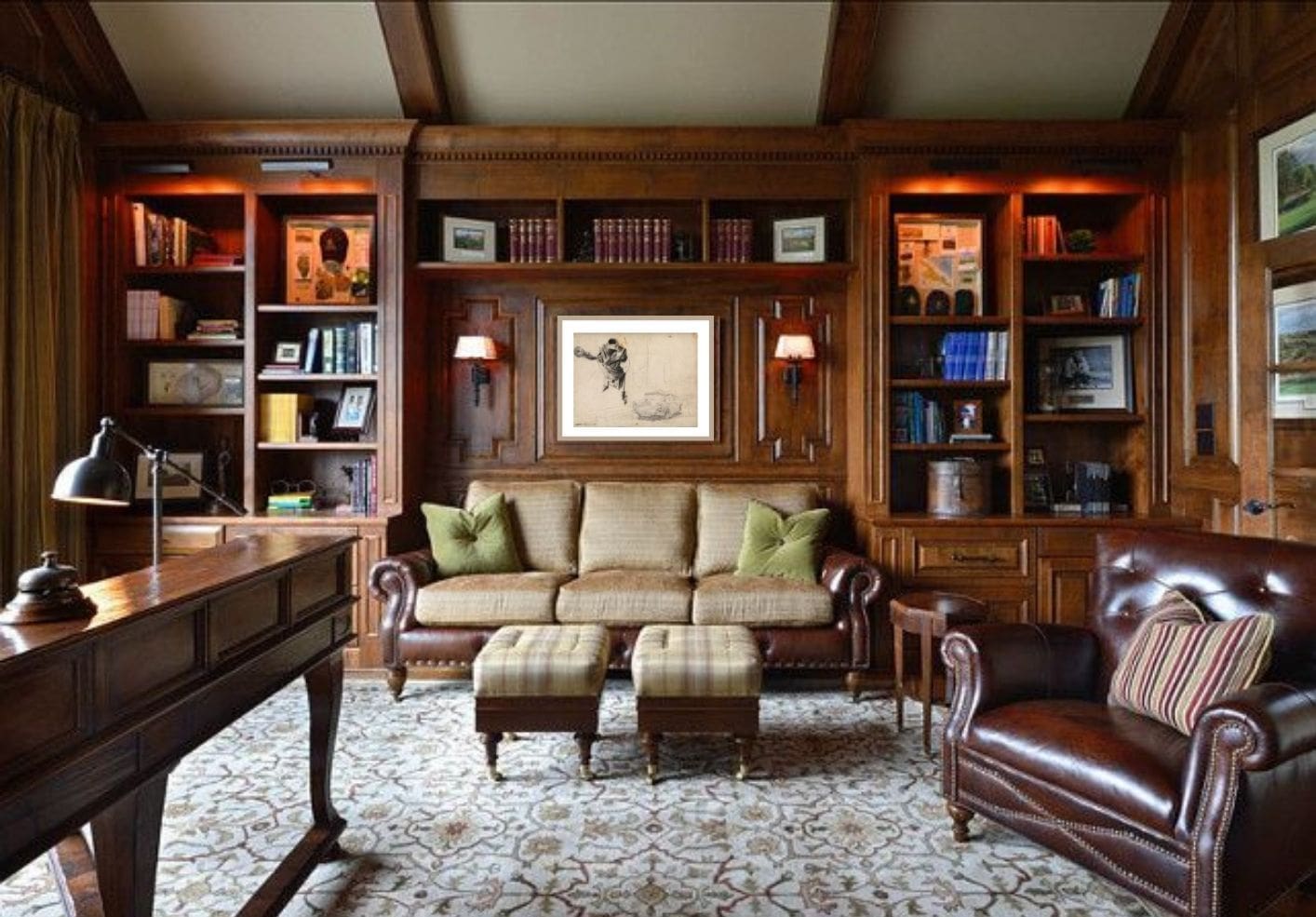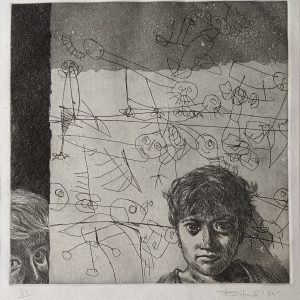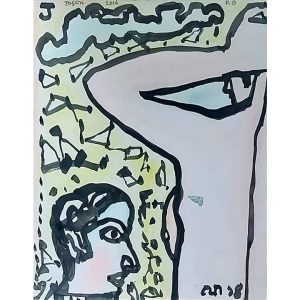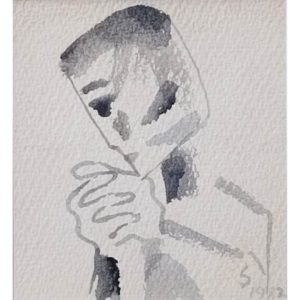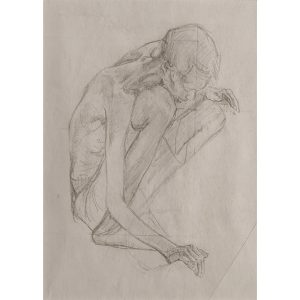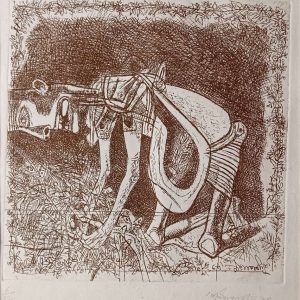
Bikash Bhattacharjee | Untitled | Charcoal & Pencil on Paper | 8.25 x 10.75 inches | 1987
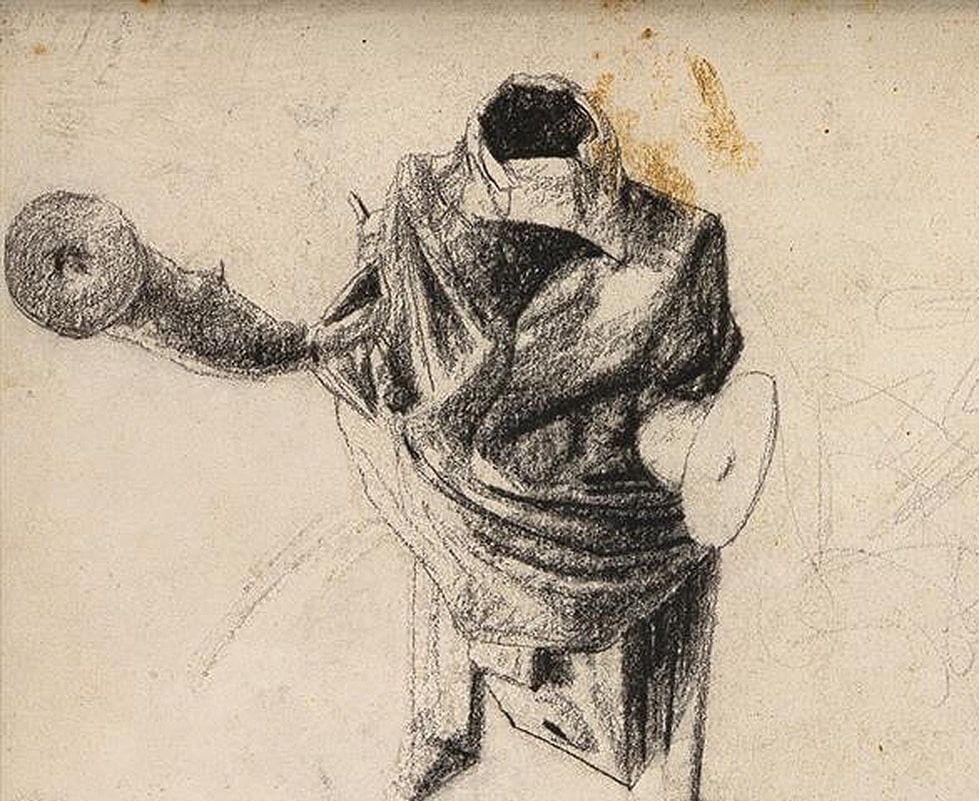
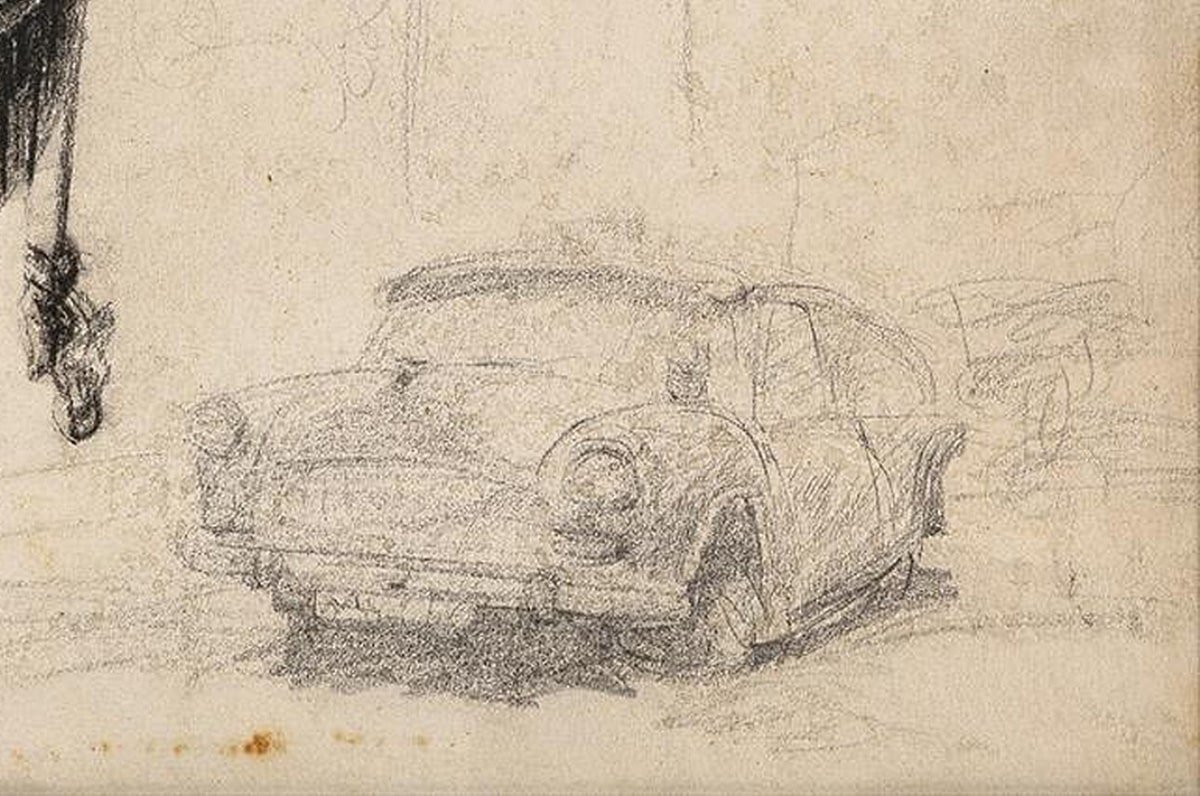
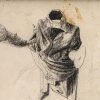
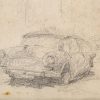
This untitled charcoal and pencil drawing by Bikash Bhattacharjee, dated 1987, is a haunting, surreal composition that juxtaposes realism with disquieting abstraction. On the left, a hyper-realistically rendered headless mannequin torso in formal attire appears suspended or floating, its outstretched arms evoking a puppet or effigy. On the right, a shadowy car—likely an Ambassador—emerges from a sketchy urban backdrop, barely defined yet suggestive of a familiar Indian cityscape. The absence of human figures and the uncanny presence of the mannequin create a sense of eerie stillness and societal critique. Bhattacharjee, known for his psychologically charged imagery, uses minimal elements here to comment on anonymity, alienation, and the mechanization of modern life.
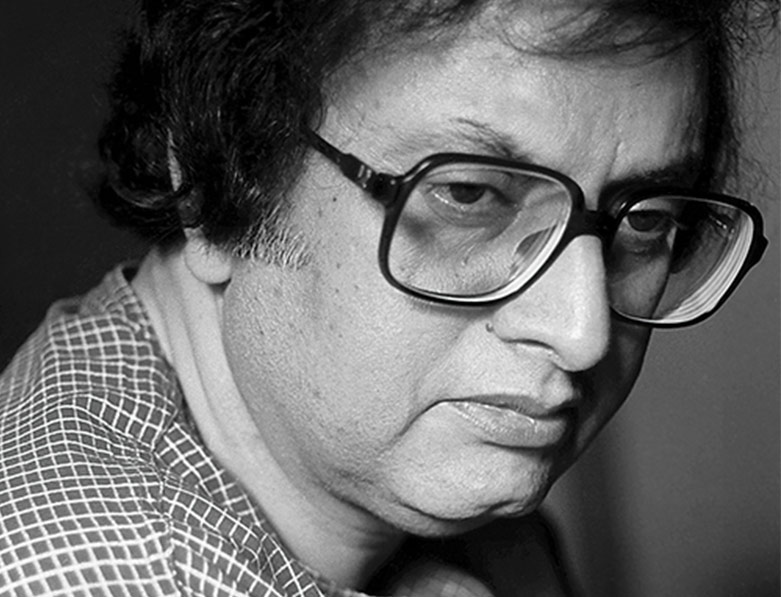 Born in a middle-class bengali family on 21 June 1940, Bikash Bhattacharjee gathered his visual and intellectual ideals from the politically charged atmosphere of calcutta during his growing up years.
Like many of his contemporaries, he was sympathetic to the principles and cultural values of the Communist Party. But his highly individualised perception of the world differed from the imagery representing either political leaders or suffering people. His characters were more than just representative of their class; they were imprinted as individuals, each with a well-etched subjectivity.
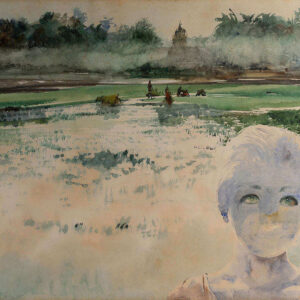
The end of the 1960s up to the mid-’70s was marked by a series of surreal paintings with a subtext of the demonic or subhuman in a setting of either dark fantasy or farce. The Doll series, conceived in 1971, was Bhattacharjee’s emotional response to the violence that erupted across Calcutta at the time as a result of the Naxal movement. Here, Bhattacharjee came close to the abstract mode by portraying humans as dolls with erased eyes, wiping out any individuality. The allegoric vision of the subverted feminine in his portraits of prostitutes, middle-class women, or women with extreme sexual appeal — rendered in photo-realist style — was another prominent theme in his work.
Bhattacharjee was honoured by the Academy of Fine Arts, Calcutta, in 1962, and received the Lalit Kala Akademi’s national award in 1971, the Bangla Ratna from the state government in 1987, and the Padma Shri from the Government of India in 1988. He passed away on 18 December 2006.

If you’d prefer the artwork to arrive ready to hang, please get in touch with us to arrange framing and shipping at applicable charges.
Please note: Customs duties and import taxes may apply at your destination in accordance with your country’s regulations. Refer to our International Shipment document for guidance and support.
| Dimensions | 27.305 × 20.955 cm |
|---|---|
| Medium | |
| Height | |
| Width | |
| Surface | |
| Style |