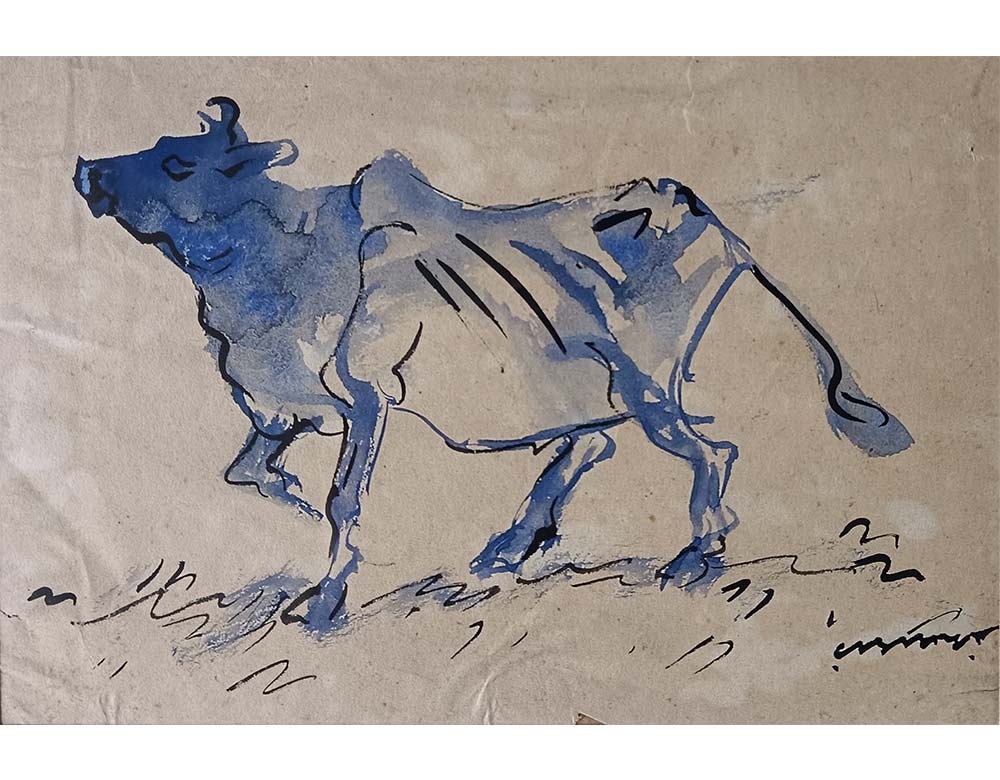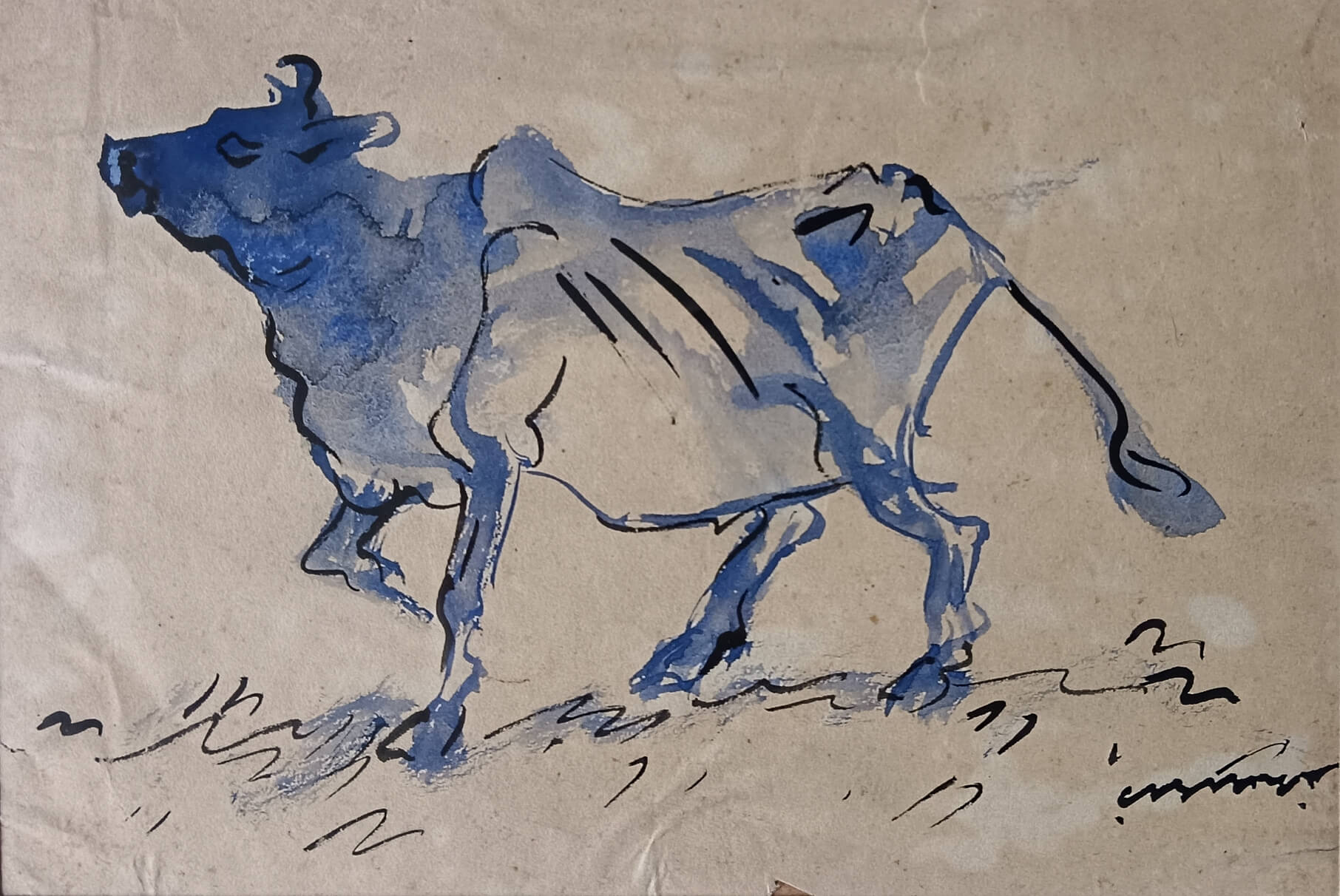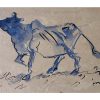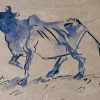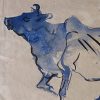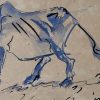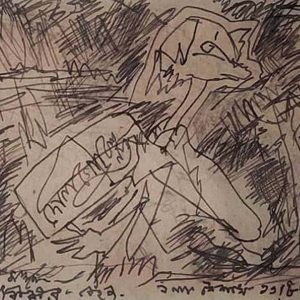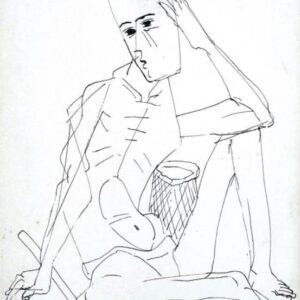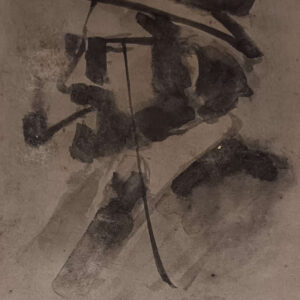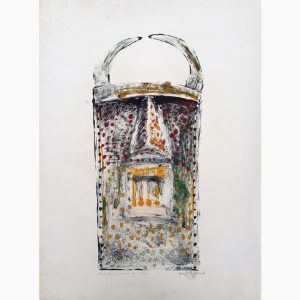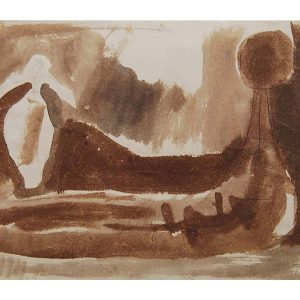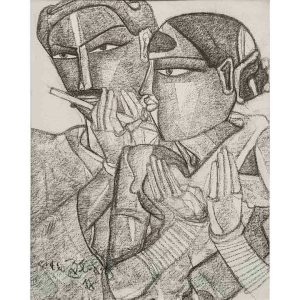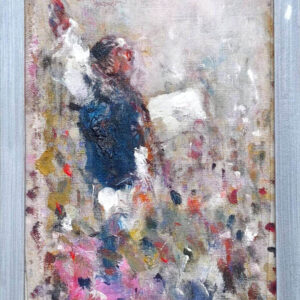
Ramkinkar Baij | Untitled | Ink & Brush on Paper | 5.5 x 3.5 inches
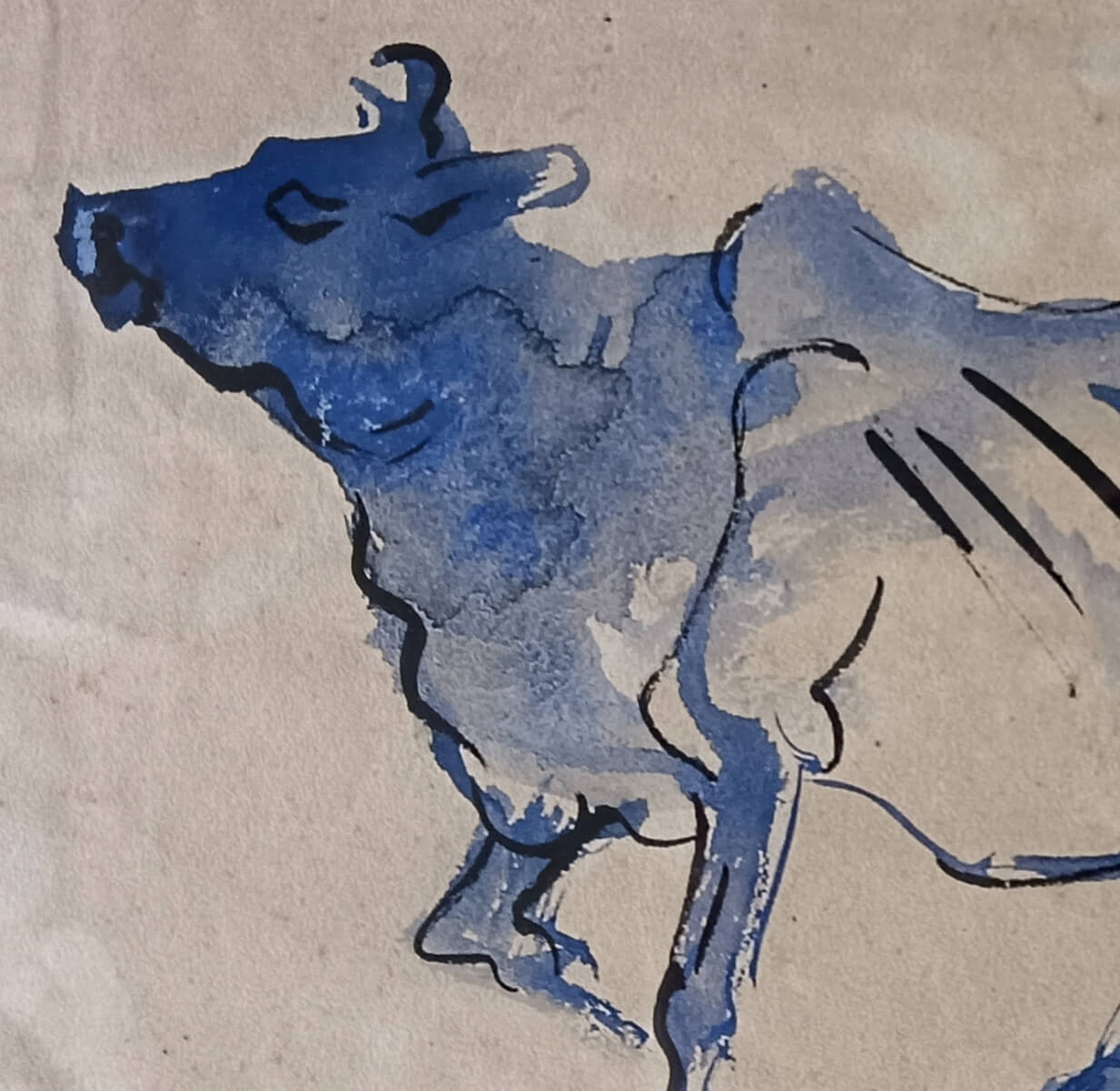
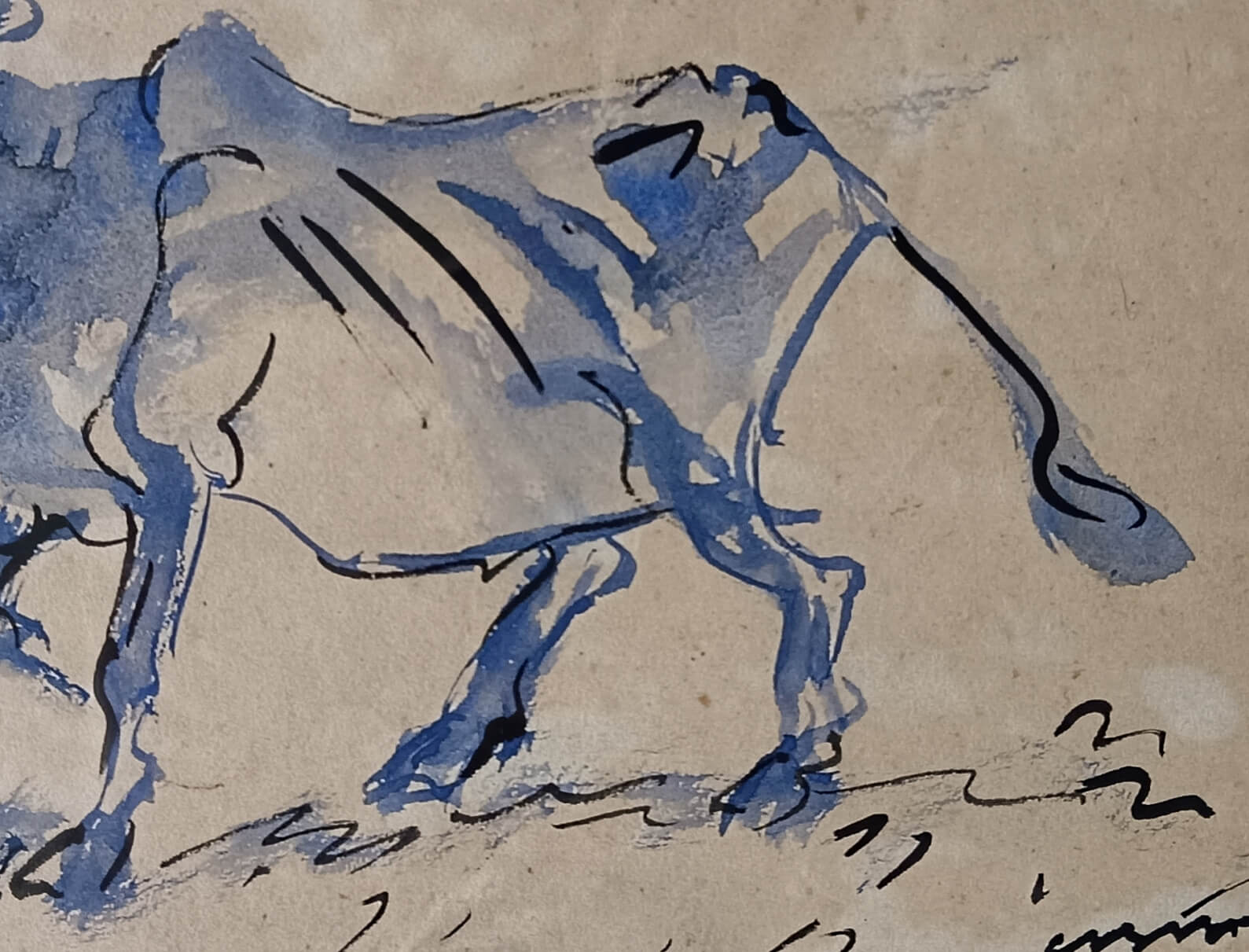
Baij’s Cow study in Ink and Wash exemplifies his gift for distilling movement into pure line and breath. With fluid brushwork and tonal washes, he animates the cow mid‑stride, embodying economy, rhythm, and empathy with rural life—an ethos central to Shantiniketan. Such animal studies, spanning cows, bulls, elephants, and birds, formed a continuum with his Haripura series and folk‑inspired works, teaching generations to see through rhythm and restraint rather than anatomy.
In the broader Indian modernist context, these drawings mark the Bengal School’s shift toward Asian ink traditions and living folk practice, dignifying rural India while modernizing its image. Resonances with Jamini Roy, Husain, and Ramkinkar Baij, as well as international masters like Qi Baishi, Matisse, and Picasso, situate Bose’s work within a global dialogue of line and empathy.
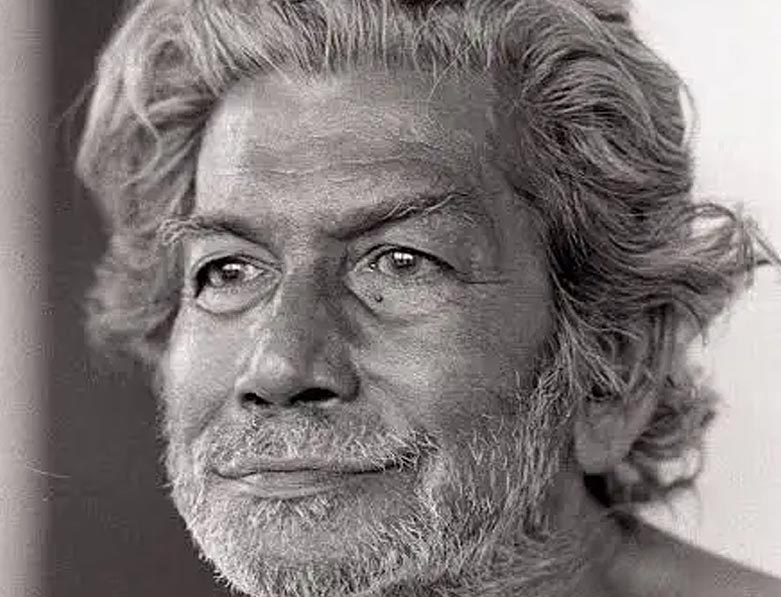
Born on 25 may 1906 in Bankura in Bengal, Ramkinkar Baij was an iconoclast who defied the artistic norms of santiniketan, where he had enrolled on the advice of journalist Ramananda Chatterjee.
One of the pioneers of modern Indian sculpture, Baij created art spontaneously, driven by intuition and energy and disregarding the artistic standards accepted by the institution.
A brief introduction to modelling by a visiting French sculptor led Baij to engage with clay in a unique manner and evolve a personal, innovative style that was largely untrained. He introduced cement concrete casting as an alternative to expensive plaster. The first artist in Santiniketan to use oil paint and create distinctly modern and abstract works, Baij painted on Santhal wraps with packet colours thinned with linseed oil and drew his figures on silk with a shoe brush as part of his innovations.

If you’d prefer the artwork to arrive ready to hang, please get in touch with us to arrange framing and shipping at applicable charges.
Please note: Customs duties and import taxes may apply at your destination in accordance with your country’s regulations. Refer to our International Shipment document for guidance and support.
| Medium | |
|---|---|
| Height | |
| Width | |
| Surface | |
| Style | Animal Drawing, Animals paintings, Figurative Drawings, Figurative Paintings |