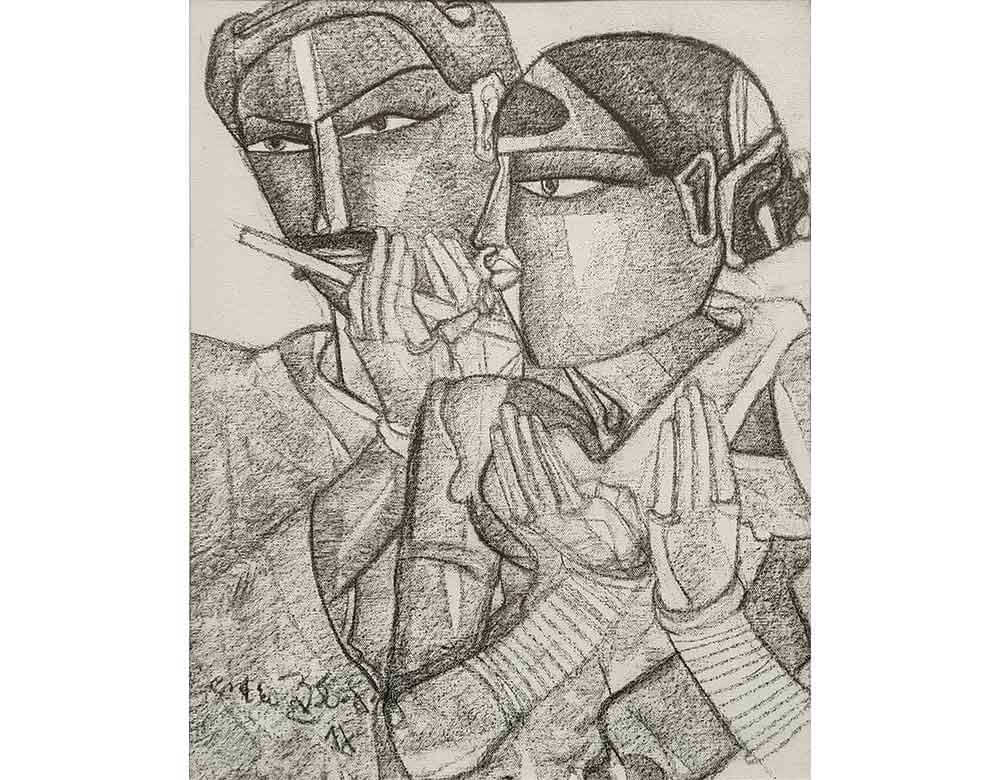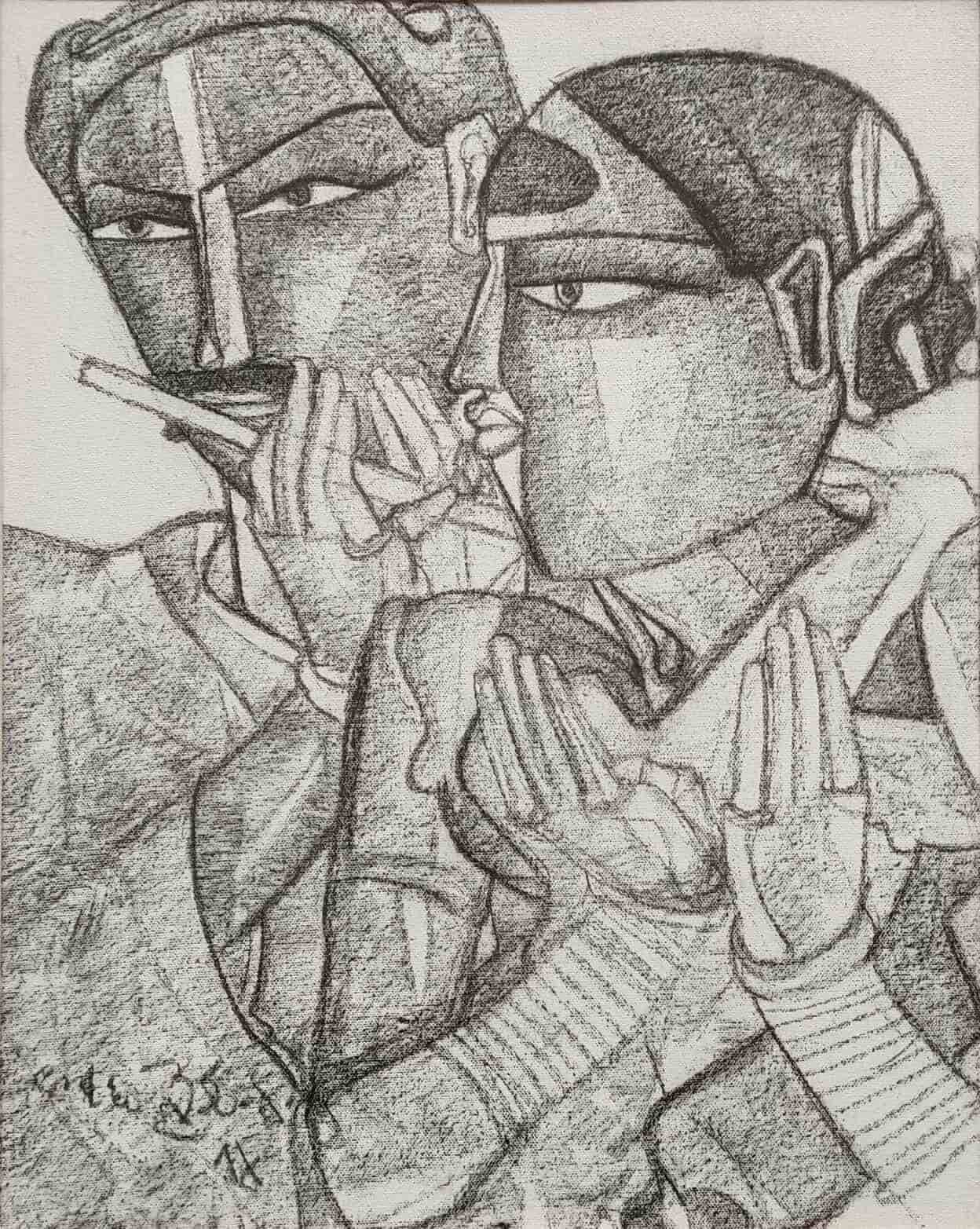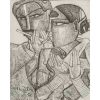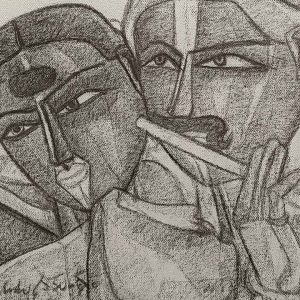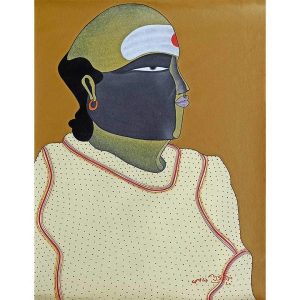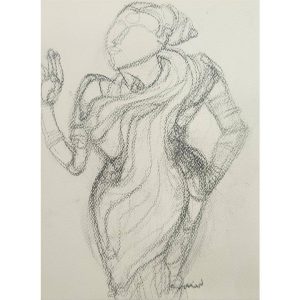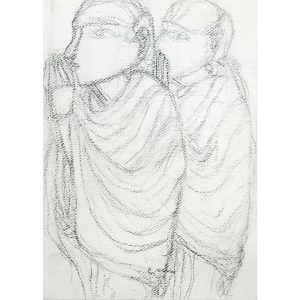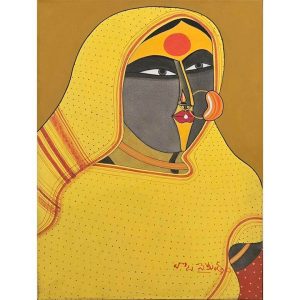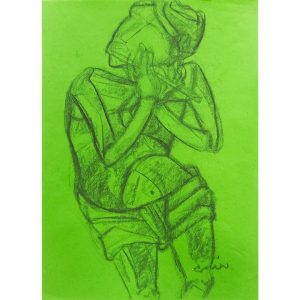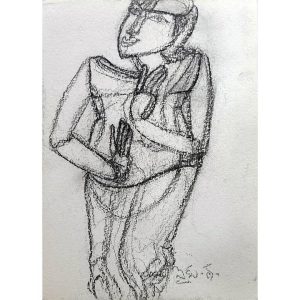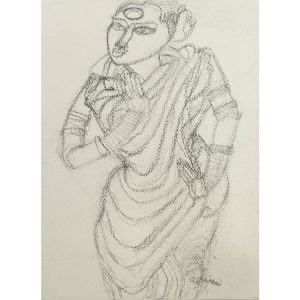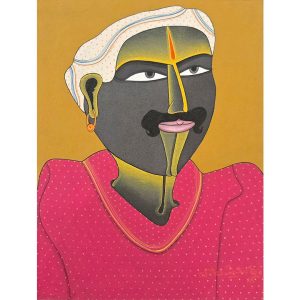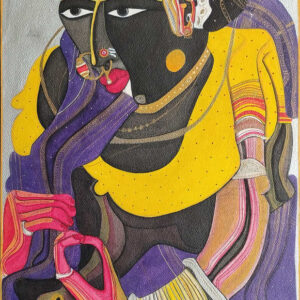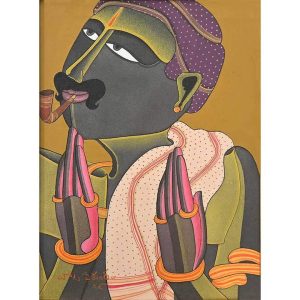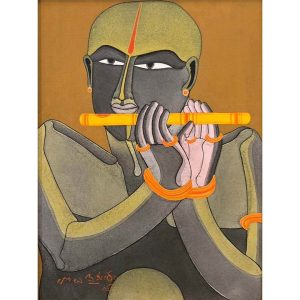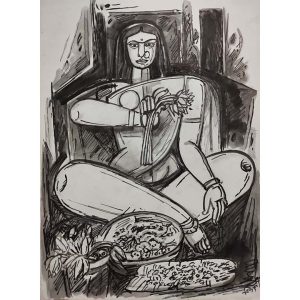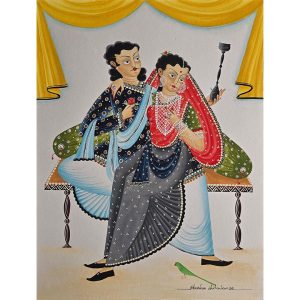
Thota Vaikuntam | Telangana Couple | Charcoal on Canvas | 17.2 x 13.5 inches | 2014
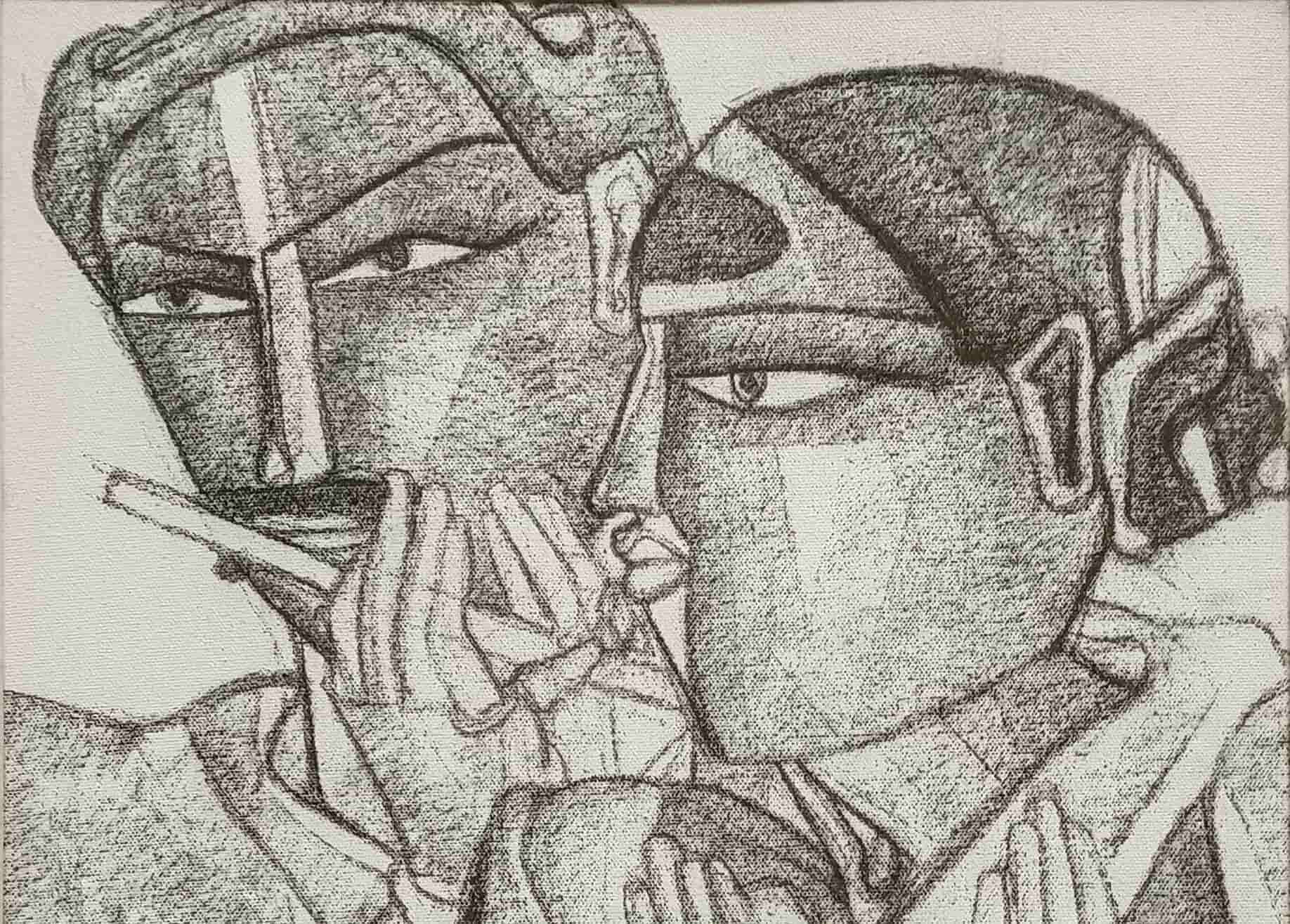
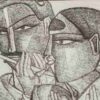
Thota Vaikuntam’s charcoal drawing, as seen in the image above, is a masterful example of his ability to distill the essence of rural Telangana into a striking visual narrative. The composition features two figures — likely a man and a woman — rendered in Vaikuntam’s signature style: bold, angular forms, exaggerated facial features, and hands held in expressive, almost sculptural gestures. The man’s head is adorned with a traditional tilak, while the woman’s hair is neatly parted and adorned, suggesting their cultural and regional identity.
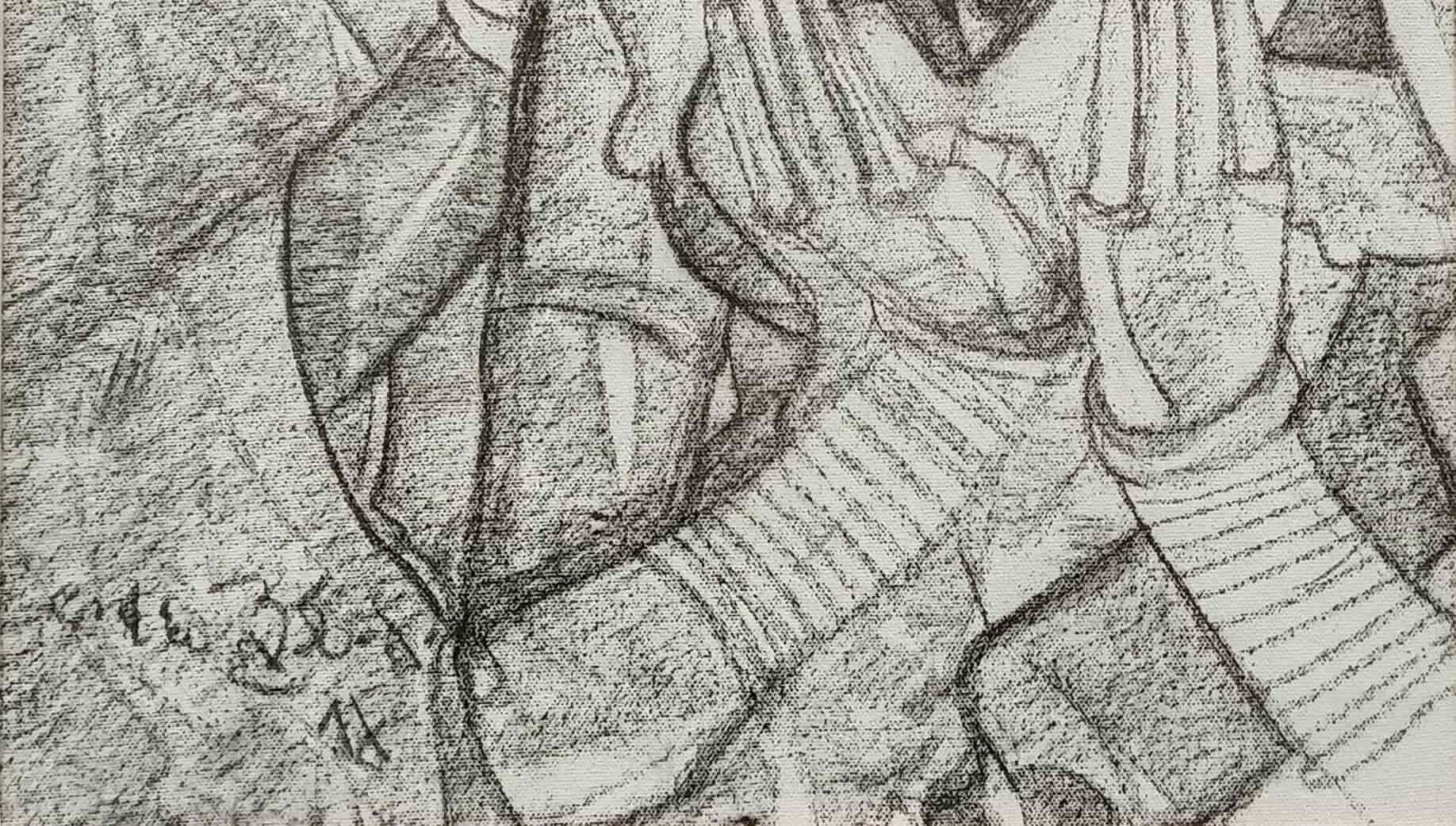
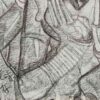
The choice of charcoal as the sole medium is significant. By eliminating color, Vaikuntam focuses the viewer’s attention on the interplay of line, texture, and form. The dense cross-hatching and stippling techniques create depth and volume, while the monochrome palette evokes a sense of timelessness and universality. This approach allows the emotional resonance of the figures—their intimacy, dignity, and quiet strength—to come to the forefront.
Contextually, this drawing likely originates from Vaikuntam’s early explorations in the 1970s and 1980s, a period when he was deeply influenced by his upbringing in rural Telangana and his formal training at the Faculty of Fine Arts, Baroda. The figures’ stylized features echo the visual language of Indian folk art and temple sculpture, yet are imbued with a modernist sensibility that speaks to Vaikuntam’s unique position within contemporary Indian art.
In the broader context of art history, this drawing is significant for its synthesis of tradition and modernity. It stands as a testament to Vaikuntam’s role in elevating regional identities within Indian contemporary art, bridging the gap between folk traditions and modernist abstraction, and highlighting the enduring vitality of rural Indian life.
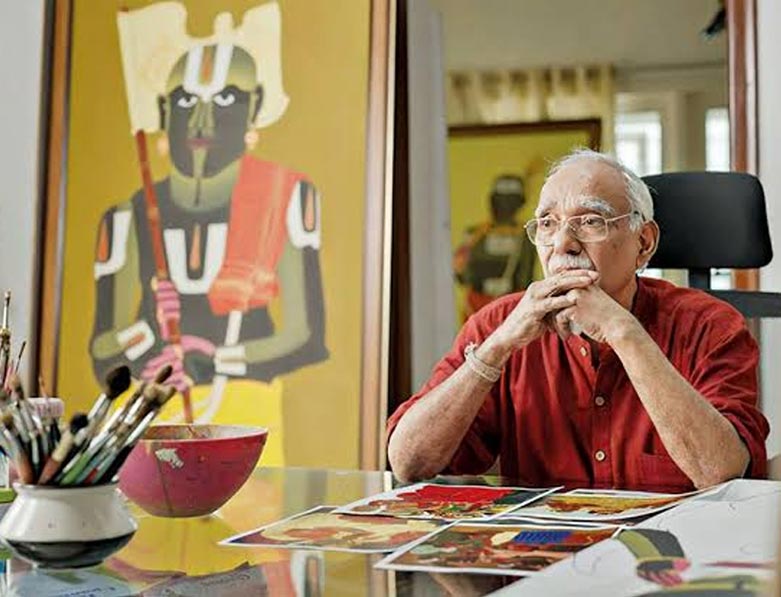 Born in 1942 in Boorugupalli, Andhra Pradesh, Thota Vaikuntam is a unique painter who captures the rustic beauty of rural Telangana. He studied at the College of Fine Arts and Architecture, Hyderabad, where he completed his diploma in 1970. He won the Lalit Kala Akademi Fellowship to study Painting and Printmaking at the Faculty of Fine Arts, M.S University, Baroda, in 1972 under the guidance of Prof. K.G. Subramanyan, after which he toyed with the idea of abstraction.Vaikuntam draws inspiration from the simple lives of the native women and men of Telangana and captures their essence. His paintings exude his fascination with the indomitable yet innocent spirit of women. His mastery is clearly visible in the use of rich primary colours, intricate lines, execution of the figures, and the detailed portrayal of their jewellery and apparel. Vaikuntam’s vibrant, women-centric universe results from the attempt to capture the sensuousness of his muses, the village women.
Thota Vaikutam paintings are known for his primary colours and his refusal to use composite colours. According to him, primary colours are found in nature, and he prefers to work with them. Dark faces, almond eyes, voluptuous women with vermillion bindis, rich ornaments, and intricate designs characterize his figures.
He portrays the people of his village with meticulous attention to detail. Sometimes, he remembers his mother, who used to wear big bindis and bright sarees. Thota Vaikuntam is also into music and incorporates men playing the flute and women listening to it as if they are enchanted with a parrot perching over their shoulders.
Thota Vaikuntam held his first solo exhibition at the Kalabhavan in Hyderabad in 1973. His most recent art exhibitions include ‘Thota Vaikuntam: Redefining The Cultural Gaze’at Art Alive Gallery (2024) ‘The Telangana Icons’ at Grosvenor Gallery in collaboration with Art Alive Gallery (2015), ‘Yes, I am He’ organized by India Fine Art at Jehangir Art Gallery, Mumbai and ‘Telangana: Inheritance of a Dream Lost’ at Art Alive, New Delhi (2007); and ‘Mukham’ at Sanskriti Art Gallery, Kolkata, (2006).
He also participated in numerous group shows including the India Art Fair, ‘Indian Harvest’ presented by Crimson – the Art Resource, Bangalore, at SG Private Bank, Singapore, ‘The Root of Everything’ at Gallery Mementos, Bangalore (2009); ‘Post Independence Masters’ at Aicon Gallery, New York (2008); ‘6 Artists Show’ at 1×1 Gallery, Dubai (2006); ‘Tradition and Change’ at Arts India, New York (2002); and ‘Ignition’ at Crimson Art Gallery, Mumbai, in 2000.
His distinctive style has earned him multiple awards, including the Bharat Bhavan Biennale Award in 1999; the National Award for Painting from the Government of India in 1993; the Hyderabad Art Society Award, Andhra Pradesh Lalit Kala Academy, 1982 & 1985; Chitra Kala Parishad Award, Bangalore, India in 1979 and Academy of Fine Arts Award, Kolkata in (1979).
Multiple art books featured his decades-long oeuvre; among them are Thota Vaikuntam- Art Alive Master Series Books, Rustic Ragas: Inner Melodies of Thota Vaikuntam, A Retrospective Book: Thota Vaikuntam, and Thota Vaikuntam: The Man and His Women.
He lives and works in Hyderabad, Andhra Pradesh.

If you’d prefer the artwork to arrive ready to hang, please get in touch with us to arrange framing and shipping at applicable charges.
Please note: Customs duties and import taxes may apply at your destination in accordance with your country’s regulations. Refer to our International Shipment document for guidance and support.