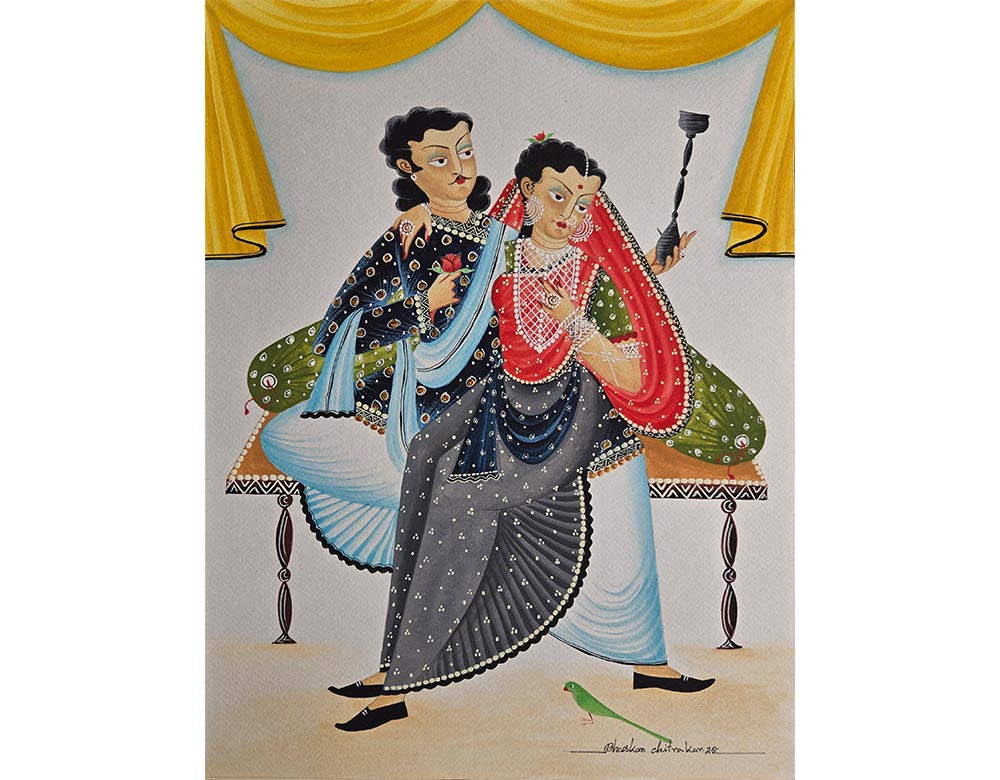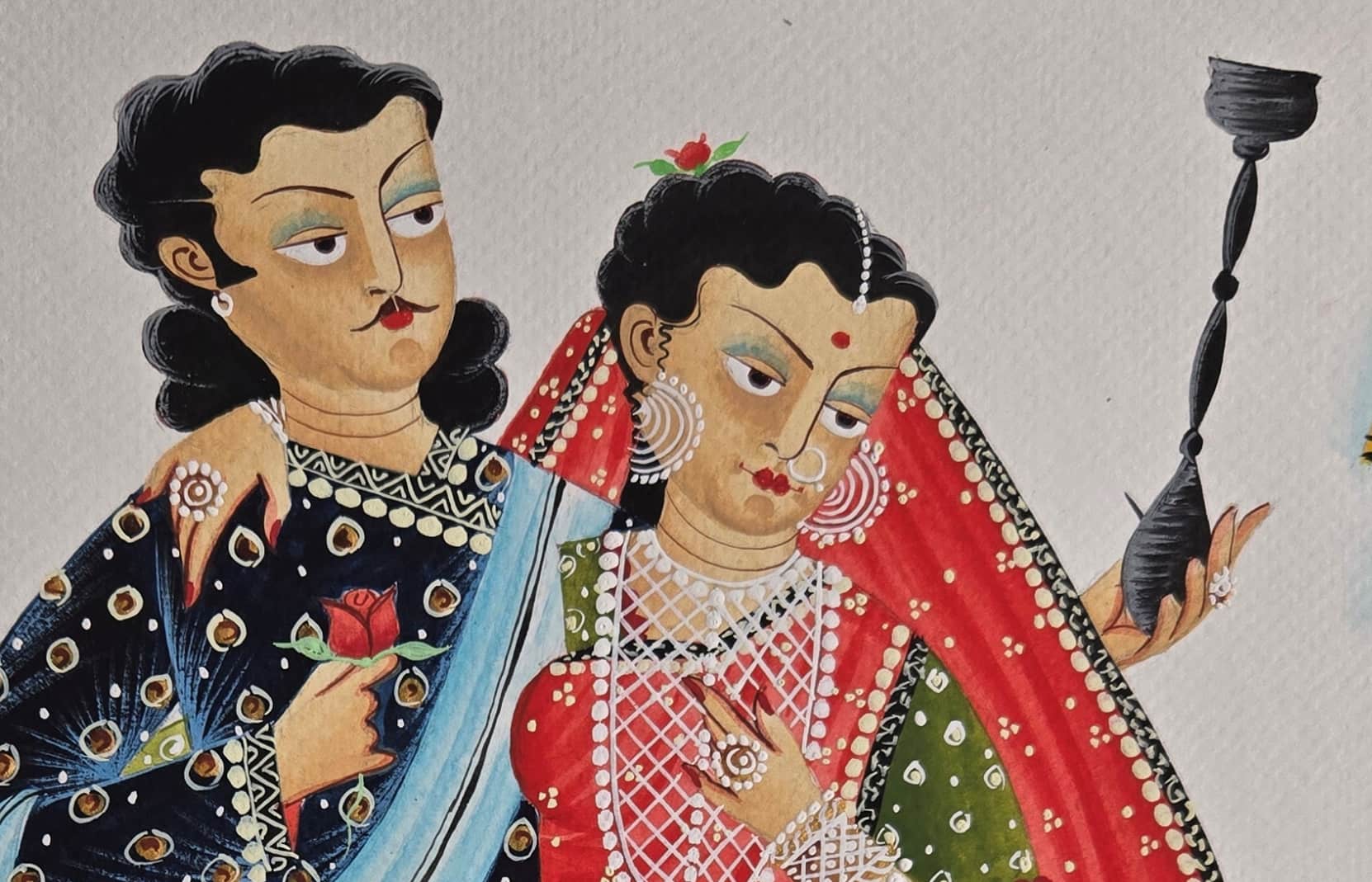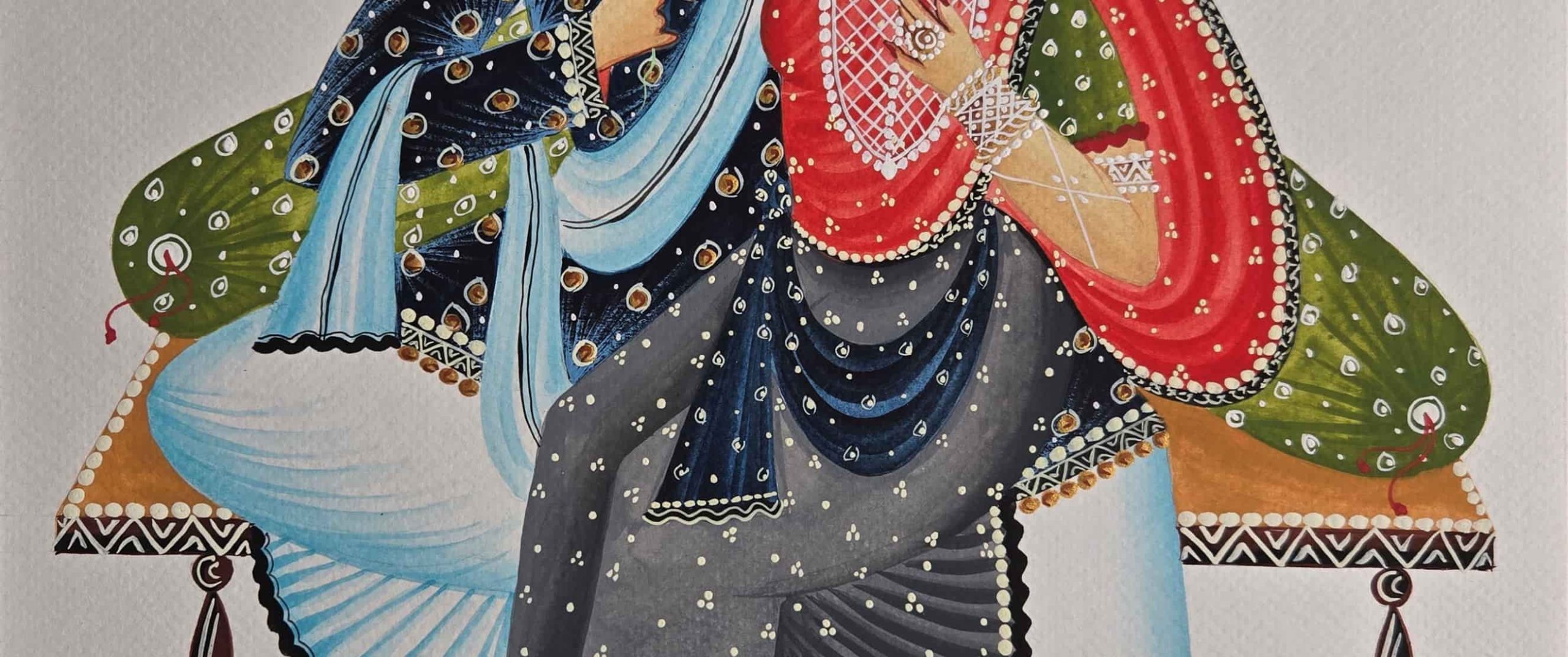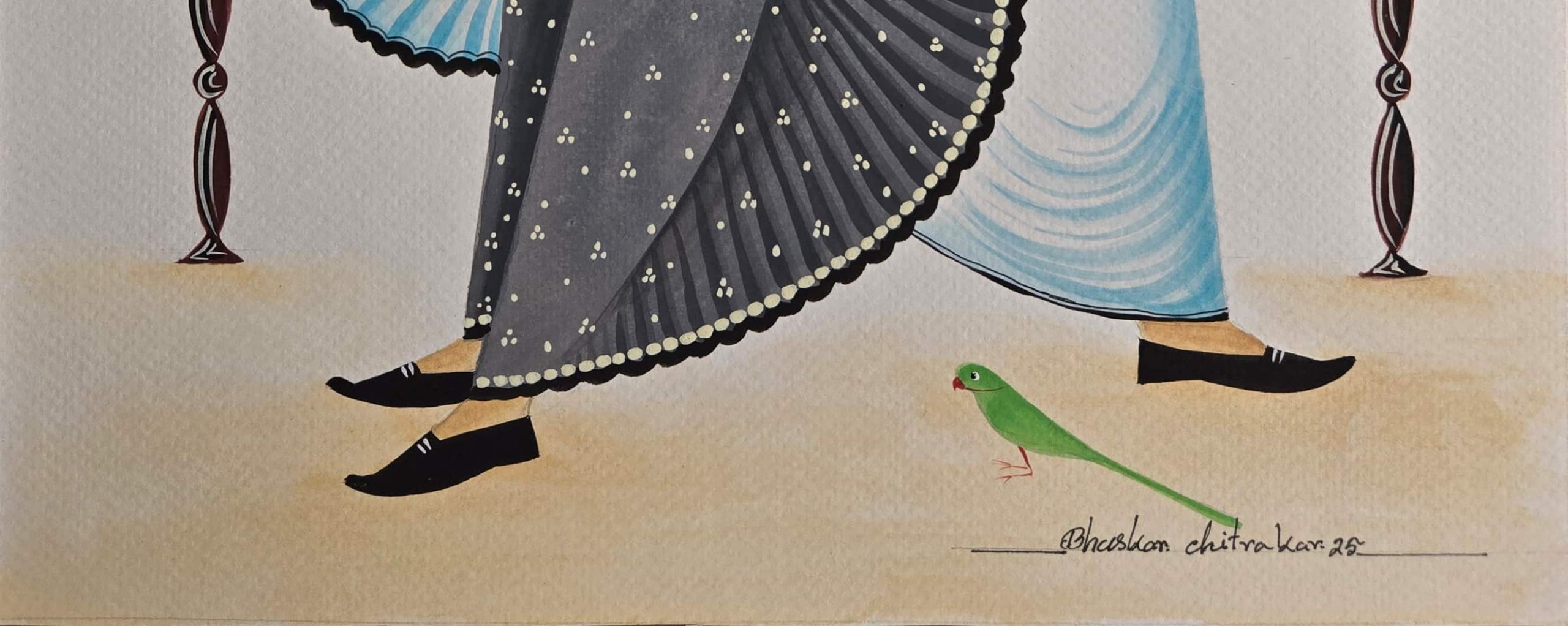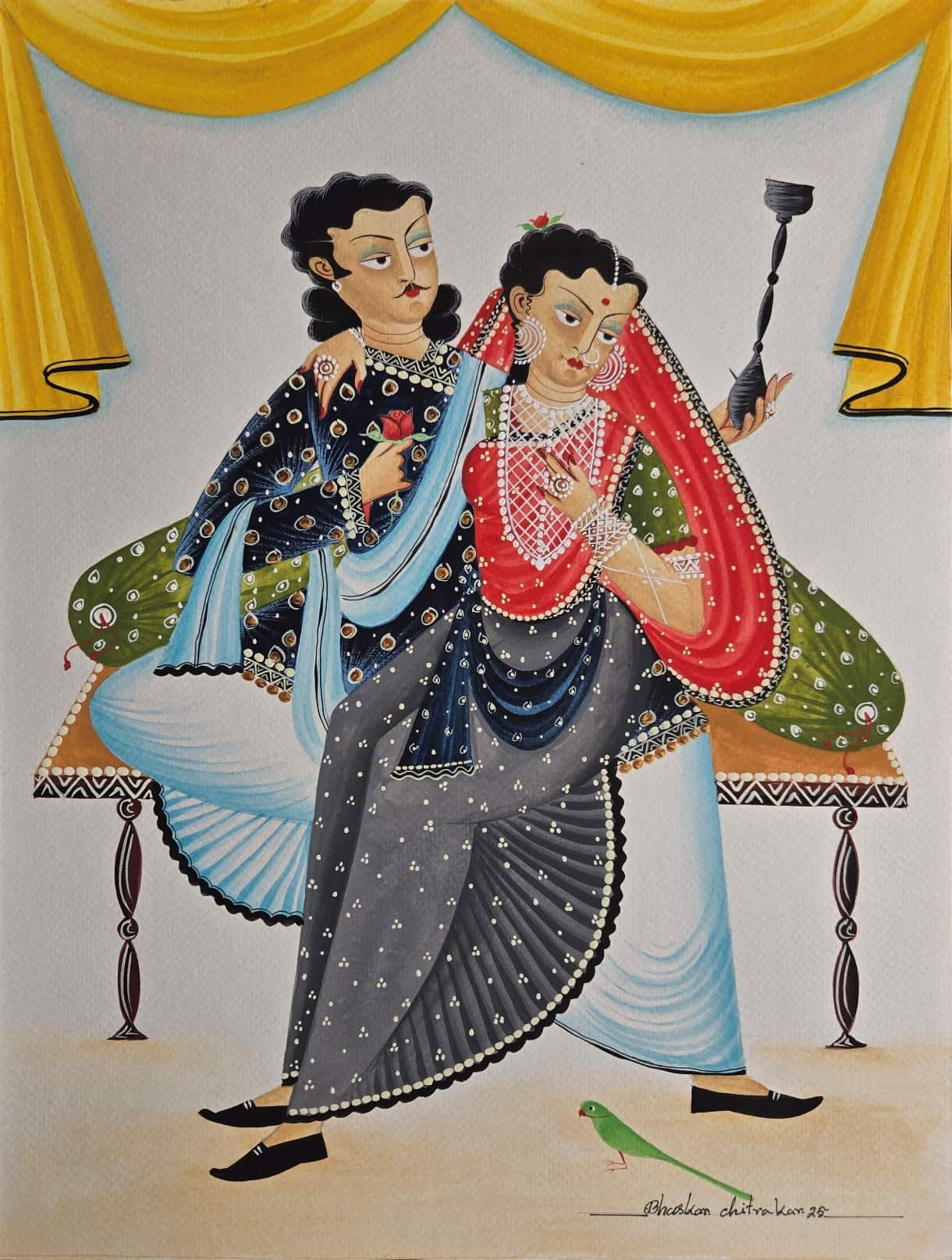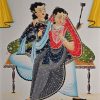
Bhaskar Chitrakar | Babu-Bibi | Watercolour on Paper | 14.5 x 10.5 inches | 2025
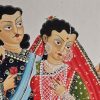
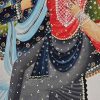
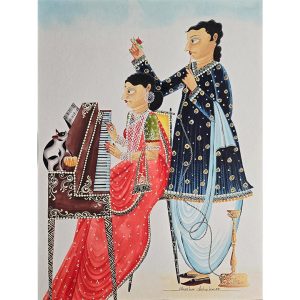
This delightful watercolor painting by Bhaskar Chitrakar captures a stylized, theatrical moment of romance and intimacy, set against the backdrop of draped yellow curtains. The central couple, dressed in elaborate traditional attire, share a close embrace. The man, adorned in a dark blue patterned kurta, holds a rose while gazing sideways, while the woman, equally ornately dressed in red and green, lifts a black hand mirror with graceful poise. Her expression suggests both confidence and contemplation. They are seated on a richly detailed bench with bolsters, and a green parrot at their feet adds a playful and symbolic touch—often representing love and communication in Indian art. Chitrakar’s distinct visual language, combining folk art motifs with urban storytelling, creates a charming tableau full of drama, detail, and affection.
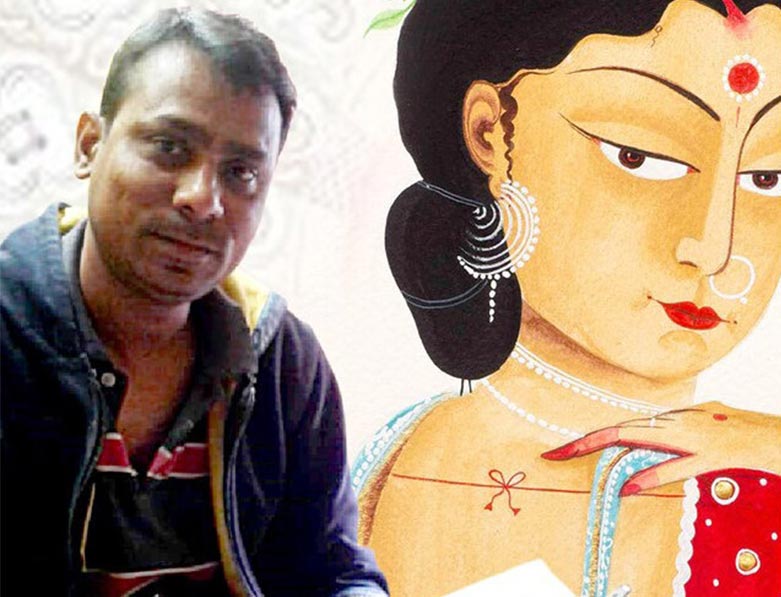 Bhaskar Chitrakar comes from a family of patuas, (painters from an artisan community in West Bengal) that have been practicing Kalighat painting since the 19th century. While his work upholds classical technique, he is the first to bring visions of contemporary society into this traditional art. Now isolated in the bystreets of Kalighat in South Kolkata, Chitrakar has introduced the coronavirus into his work, and his depictions of the virus have mutated and evolved along with its ever-widening grip.

If you’d prefer the artwork to arrive ready to hang, please get in touch with us to arrange framing and shipping at applicable charges.
📧 Email: enquiry@gallerykolkata.com
📞 Phone: +91 33 22873377
📱 Mobile: +91 9836515657 | + 91 8981031222
📱 Mobile: + 91 9339839386
🌍 International Buyers
Please Note: Customs duties and import taxes may apply at your destination in accordance with your country’s regulations. Refer to our International Shipment document for guidance and support.
| Dimensions | 26.67 × 36.83 cm |
|---|---|
| Medium | |
| Height | |
| Width | |
| Surface | |
| Style |